

Dust-Free Wood Floor Sanding in Cardiganshire: A Guide to a Cleaner Restoration
What if restoring a timber floor didn’t mean dust spreading through your home? It’s a fair concern: sanding can look disruptive, and it’s not always obvious whether an older floor has enough sound timber left to restore. Dust-free wood floor sanding Cardiganshire uses dust-controlled methods to capture much of the dust as it’s created, although no sanding process can promise a completely dust-free result.
A successful restoration starts with understanding the floor, not simply sanding its surface. This guide explains how dust-controlled sanding works, what affects a floor’s suitability and how preparation can help the project run smoothly. You’ll also learn what to expect from the sanding and finishing stages, and how the final appearance can be tailored to the timber and the character of your property. Restore-A-Floor provides wood floor sanding and refinishing for residential and commercial properties, bringing more than 20 years of industry experience to each project.
Table of Contents
Dust-Free Wood Floor Sanding in Cardiganshire: What the Service Means
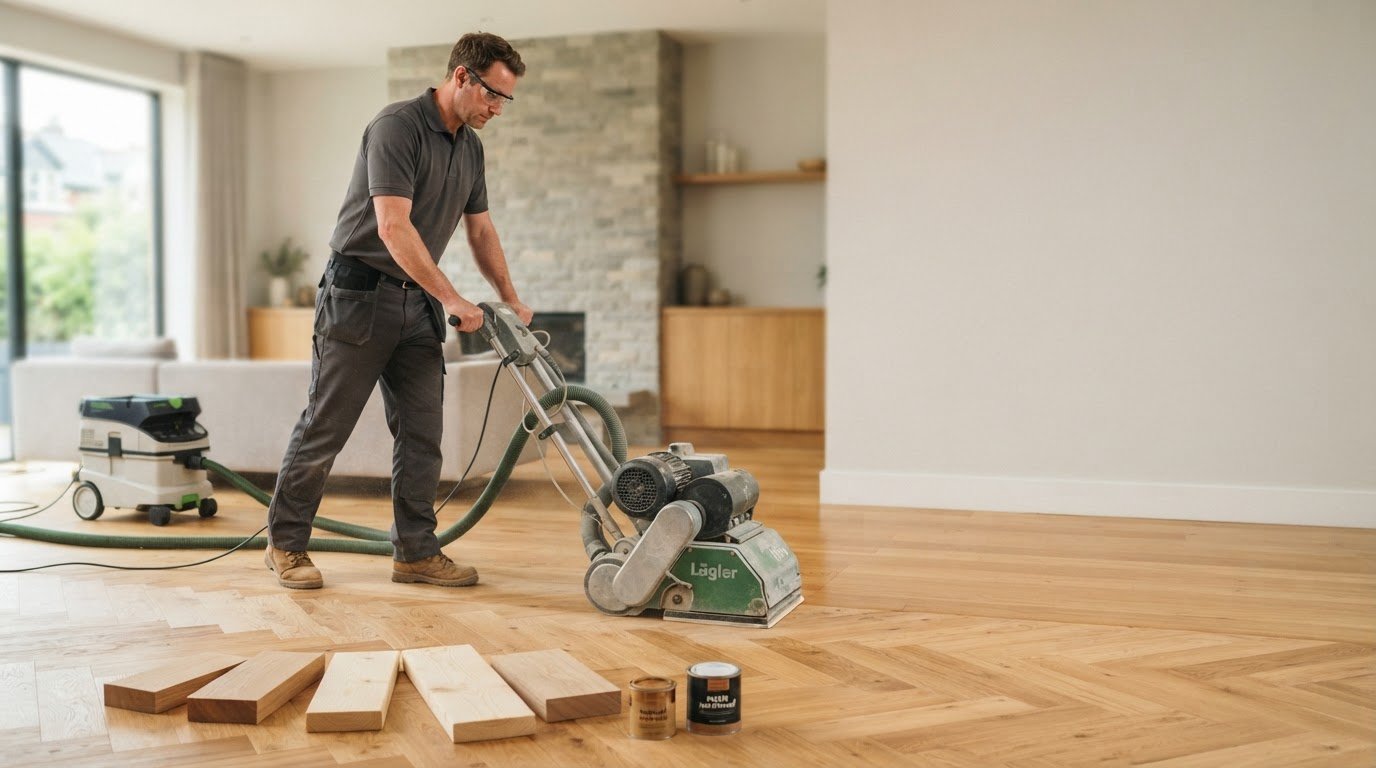
Dust-free sanding is a controlled restoration method in which extraction equipment works with the sanding process to collect dust close to where it is produced. The aim is to limit how much becomes airborne and travels beyond the work area, creating a cleaner working environment than sanding without dust control. It does not mean that every particle can be eliminated.
In brief, dust-controlled sanding uses extraction to capture sanding dust at source; uncontrolled sanding allows more of that dust to disperse into the surrounding space. This distinction matters in occupied homes and commercial premises, where managing the work area and protecting adjoining spaces can make restoration easier to plan.
What does dust-free wood floor sanding involve?
As the sanding equipment removes the old surface coating and worn timber, extraction helps collect the resulting dust rather than leaving it to settle around the room. The precise approach depends on the floor and the work required, not on a single setting or method applied to every property. Although dust control can reduce spread, some fine particles may remain, so the service shouldn’t be understood as a promise of a completely dust-free building.
Good sanding is more than removing a tired finish. Careful preparation of the timber creates a suitable surface for refinishing and can refresh the appearance of the floor whilst retaining the existing boards or parquet. The Floor Sanding Process varies according to the material and condition, which is why assessing the floor is an important part of planning the work.
Which Cardiganshire floors may benefit from sanding?
Timber floorboards and parquet can both be considered for restoration, but neither should be judged by appearance alone. A floor with worn coating may need a different approach from one with deep scratches, uneven areas or signs of movement. The existing finish, visible damage and floor construction all help shape the assessment and the level of sanding that may be appropriate.
Retaining a suitable floor can preserve its existing character, including the grain of boards or the pattern of parquet, while renewing a surface dulled by everyday use. However, sanding isn’t automatically the right answer for every timber floor. The amount and condition of the remaining timber, as well as the nature of any damage, influence what can be achieved. A careful assessment helps establish whether sanding is suitable and what refinishing work the floor needs.
For Cardiganshire property owners, the practical benefit is a restoration plan based on the actual floor rather than a generic promise. Restore-A-Floor’s professional wood floor sanding and dust-free restoration guide explains the broader service approach. Restore-A-Floor provides tailored wood floor sanding and refinishing for residential and commercial properties, considering the timber’s condition and how the space is used. The company also serves customers in Swansea, Cardiff, Bristol, Pembrokeshire and Haverfordwest.
How Dust-Free Wood Floor Sanding Works, From Preparation to Finish
A well-managed restoration follows a clear sequence, with each stage informed by the timber’s condition and the existing coating. For Dust-free wood floor sanding Cardiganshire, the aim is to prepare the space, restore the surface carefully and apply a finish suited to the floor, rather than use the same method in every property.
Preparation affects the final finish because a clear, accessible work area helps the sanding and finishing stages be carried out consistently across the floor. It also allows attention to edges, thresholds and nearby surfaces before work begins, rather than treating them as afterthoughts.
Assess: Consider the floor’s construction, condition, existing coating and any areas of damage to shape the work.
Prepare: Clear the work area and plan access, with care taken around room edges, thresholds and adjoining surfaces.
Sand: Remove worn coating and prepare the timber, using extraction alongside the sanding process to collect dust as it is produced.
Refine: Work over the surface to create a suitable base for the selected finish, paying attention to the floor’s particular features.
Finish: Apply a finish chosen for the project and allow it to dry or cure as directed before the floor returns to use.
Extraction is used during sanding to help control dust at the point it is generated. This supports a cleaner work area, although it can’t guarantee that no fine particles will remain. Dust control also has a health rationale: the National Institute for Occupational Safety and Health’s report on Health Hazards of Wood Dust discusses exposure concerns associated with wood dust and lead during hardwood floor sanding and buffing.
How is a room prepared for floor sanding?
Before work begins, furniture, rugs and personal belongings need to be moved from the floor so the sanding area is accessible. The plan should also account for room entrances, thresholds and adjoining surfaces, as well as how people and materials will move through the property. In a home, this may mean organising access around nearby rooms; in a commercial space, the work area and surrounding operations may need to be considered together.
Preparation is tailored to the property and the project. Clearing the room is a useful starting point, while the floor layout and nearby features help determine how the work is organised and where extra care is needed.
What happens after sanding is complete?
Once the timber has been prepared, a suitable finish is applied to complete the restoration. Its appearance contributes to the character of the floor, so the choice should work with the timber and the needs of the space. Drying and curing instructions matter: allowing the finish to set as directed helps protect the completed surface. Exact timings depend on the finish used, so follow the guidance provided for the project.
Restore-A-Floor provides tailored wood floor sanding and refinishing for residential and commercial properties. To explore the service and arrange a free online quotation, visit Restore-A-Floor’s wood floor sanding service.
Is Your Cardiganshire Wood Floor Suitable for Sanding or Repair?
A worn finish doesn’t automatically mean a timber floor needs replacing. Sound boards with surface wear may be candidates for sanding, while movement, missing sections or extensive damage can call for a different plan. Dust-free wood floor sanding Cardiganshire starts with assessing the floor as it is, rather than assuming every surface can be restored in the same way.
Construction matters too. Solid and engineered floors have different timber layers, and the amount of usable timber remaining can affect whether sanding is appropriate. Previous sanding may also have reduced how much material can be removed. These details aren’t always clear from photographs, so a proper assessment is needed to determine a suitable restoration approach.
What floor conditions affect sanding suitability?
Assessment considers the pattern and extent of wear, old coatings, gaps between boards and any damaged or loose areas. A tired coating over stable boards presents a different picture from boards that move underfoot or have broken edges. Floor construction and history, including previous sanding, also help establish what preparation may be needed and whether sanding is a reasonable option.
Dust extraction is part of a controlled sanding process, but it doesn’t determine whether the floor itself is suitable. The Benefits of Vacuum Sanding resource from Mass.gov outlines dust-management benefits; the timber’s condition and construction still need to guide the restoration decision.
When might repair or replacement be considered instead?
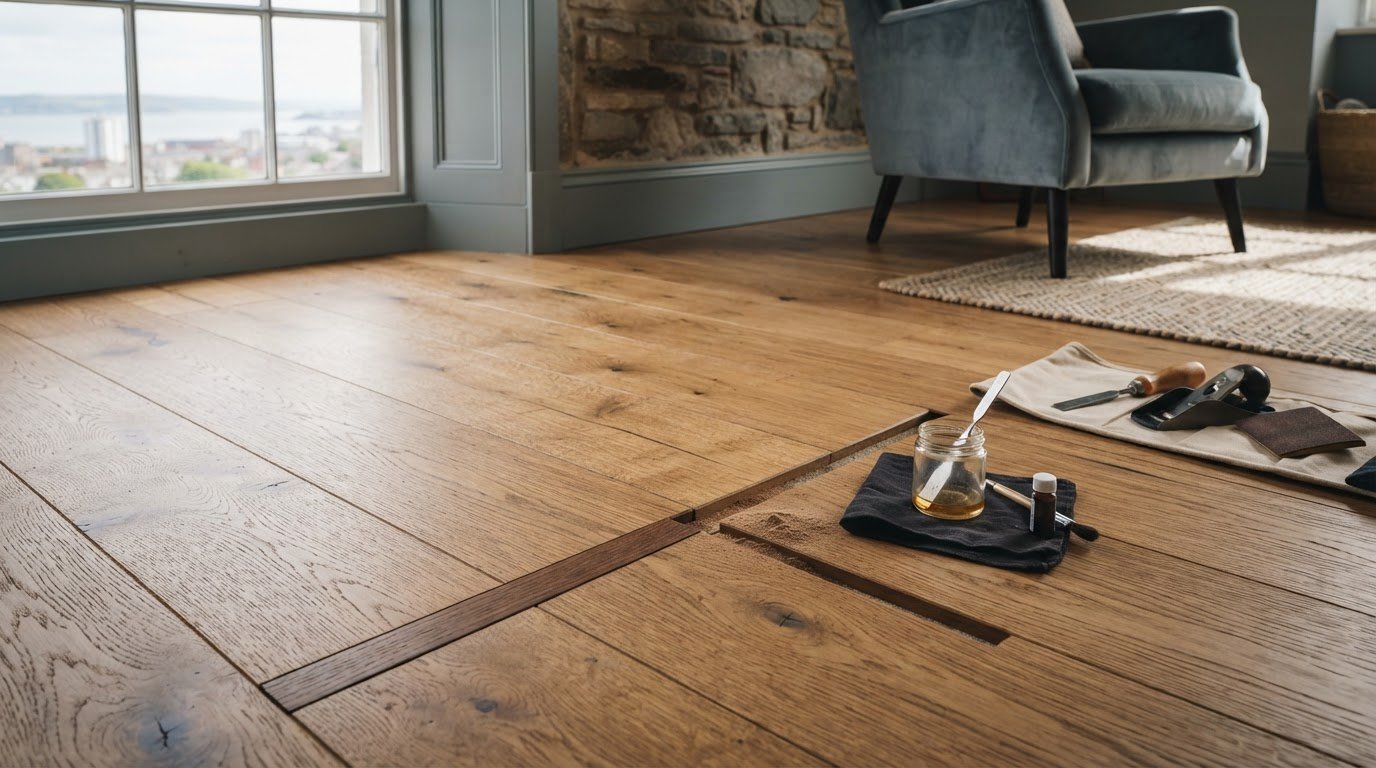
Localised damage, such as one badly affected area amongst otherwise sound boards, may lead to consideration of a targeted repair before wider restoration. By contrast, widespread movement, extensive damage or missing sections can mean sanding alone won’t address the underlying problem. These signs don’t automatically dictate replacement; they indicate that the floor needs a broader assessment before a plan is chosen.
Repair and full replacement are different decisions. Repair focuses on a specific area, whilst replacement changes more or all of the floor. The right route depends on the extent of damage, the condition of surrounding boards and whether the floor can provide a sound surface for refinishing. These details need to be considered as part of the floor assessment.
This comparison is a guide, not a diagnosis. Restore-A-Floor assesses the floor’s construction, visible condition and restoration goals, then tailors the next step to the property rather than defaulting to sanding or replacement.
Preparing for Dust-Controlled Sanding in Cardiganshire
A little planning before work starts can make a sanding project easier to manage, particularly if the room connects to busy parts of the home or workplace. Dust-controlled methods help limit the spread of sanding dust, but they don’t remove the need to prepare the area or plan how people will move around it. The best arrangements depend on the property, floor size and condition.
What should homeowners do before the sanding team arrives?
Clear the work area so the floor is accessible and furniture or personal belongings won’t obstruct the restoration. A practical checklist includes:
Remove movable furniture, rugs and ornaments from the rooms being worked on.
Take down or tie back curtains that touch the floor.
Plan a clear route to the room for the team and equipment.
Consider what needs to be moved or protected in adjoining spaces.
Access and room layout can influence how the work is organised. A hallway leading to the sanding area, for instance, may need to remain clear, whilst a doorway opening directly into another room calls for thought about how that space will be used. Preparation can be tailored to the property and project, with practical details discussed as part of the quotation process.
How can the project be organised around daily routines?
Some rooms may need to be unavailable during parts of the work, so consider where household or business activities can take place whilst the floor is being restored. If the room is used for cooking, working or access between other spaces, plan an alternative arrangement that suits the schedule agreed for your property. Dust control is designed to reduce spread, not to guarantee that every adjoining area remains untouched.
Project duration and disruption depend on factors such as the floor’s size and condition, as well as the work required. A straightforward room and a larger area with worn or damaged sections won’t necessarily follow the same timetable. Discussing the areas involved and how they connect helps shape realistic arrangements without assuming a fixed completion time.
Also plan for children, pets and belongings that may be sensitive to noise, activity or dust. Keeping them away from the work area can help maintain a clear space and reduce interruptions. Put fragile or valuable items somewhere secure, especially if they’re near access routes or adjoining rooms.
Before work begins, agree which rooms will be affected, how access will be managed and what preparation is needed. For Dust-free wood floor sanding Cardiganshire, these details help Restore-A-Floor tailor the project to the property, whether it’s a home or commercial space. The company also provides flooring services in Swansea, Cardiff, Bristol, Pembrokeshire and Haverfordwest. To discuss your floor and request a free online quotation, arrange a wood floor sanding quotation.
Arrange Dust-Free Wood Floor Sanding in Cardiganshire
Restoring a timber floor is a considered project, not simply a matter of sanding away a tired surface. An assessment helps establish the floor’s condition and the work it needs; controlled sanding prepares suitable timber, while a tailored finish completes the restoration. Each stage informs the next, helping shape a plan around the property rather than applying a standard approach to every floor.
Restore-A-Floor provides wood floor sanding and refinishing for residential and commercial properties in Cardiganshire, including dust-controlled restoration. With over 20 years of industry experience, the team understands how timber condition, room use and the desired appearance affect the work. Whether your floor is in a home or a commercial setting, the project is tailored to its requirements.
What can a tailored wood floor restoration project include?
For a suitable existing timber floor, sanding and refinishing form the core of the restoration. The assessment considers the floor’s construction, visible wear and existing surface, along with the needs of the property. Those details guide the work required and the selection of an appropriate finish, without assuming that every floor needs the same treatment or will suit the same result.
This tailored approach is useful when a floor has distinctive features or when the space has particular practical demands. Timber boards in a frequently used commercial room, for example, may call for different project considerations from boards in a quieter part of a home. The aim is to establish a suitable scope for the floor and setting, with dust control integrated into the sanding work.
How do you take the next step?
To help establish a project-specific scope, share a few clear details when requesting a free online quotation. Include the floor type, the property’s location in Cardiganshire and any visible concerns, such as worn areas, old coatings or damaged boards. A description of how the space is used can also help explain the priorities for the restoration. These details provide a useful starting point for understanding the project.
A quotation gives you a practical route to discuss the work required for your property. It can help clarify how assessment, controlled sanding and refinishing relate to your floor, rather than leaving you to guess what the restoration involves. Dust-free wood floor sanding Cardiganshire is available through Restore-A-Floor’s local wood floor sanding service, tailored for residential and commercial projects.
Ready to take the next step? Request a free flooring quotation and share details of your Cardiganshire floor to begin planning its restoration.
Take the Next Step Towards a Renewed Timber Floor
A restored floor can shape how a room feels, bringing warmth and character back into everyday spaces. Before planning work, consider what you’d like the finished floor to contribute: a refreshed look for a well-used living room, or a more considered appearance for a commercial interior. These priorities help guide a restoration that feels right for the property, rather than following a one-size-fits-all approach.
For Dust-free wood floor sanding Cardiganshire, sharing your aspirations alongside practical details gives the project a clear starting point. Restore-A-Floor brings over 20 years of industry experience to dust-free wood floor sanding and refinishing, with work tailored to the floor and setting. Take the next step towards giving your timber floor renewed purpose. Request a free flooring quotation and begin planning a restoration that suits your space.
Frequently Asked Questions
Is dust-free wood floor sanding completely dust-free?
No. Dust-controlled sanding reduces the amount of dust that spreads, but fine particles may still settle, particularly around doorways or on nearby surfaces. Keep delicate belongings and items that are difficult to clean away from the work area where practical. For Dust-free wood floor sanding Cardiganshire, understand “dust-free” as a cleaner, controlled approach, not a promise that no dust will be present.
Can engineered wood flooring be sanded and refinished?
Sometimes, but it depends on the thickness and condition of the real-wood layer above the engineered core. If that layer is too thin, sanding could expose the material beneath and damage the floor. Previous sanding also matters because it may have reduced the remaining timber. The floor’s construction and surface need to be assessed before deciding whether refinishing is suitable.
How much does dust-free wood floor sanding cost in Cardiganshire?
The cost depends on the specific floor and the work involved, so a project quotation is the best way to understand the scope without relying on a generic rate. Floor area, condition, layout and the finish required can all affect the work. Restore-A-Floor offers a free online quotation for projects in Cardiganshire, Swansea, Cardiff, Bristol, Pembrokeshire and Haverfordwest.
How long should I wait before putting furniture back after floor sanding?
Wait until the finish is ready for furniture, following the drying or curing guidance provided for the specific project. The surface may feel dry before it’s ready to bear the weight of furniture or rugs, so don’t use touch alone as a guide. Moving items back too soon can mark or disturb the new finish. Lift furniture carefully rather than dragging it across the restored floor.
Can scratched or stained floorboards be restored by sanding?
Often, sanding can improve the appearance of surface scratches and marks in the finish, but deeper damage or staining may remain if it extends into the timber. For example, a dark mark caused by a spill may behave differently from a scuff in the surface coating. The location and depth of the affected area, along with the condition of surrounding boards, help determine what restoration can achieve.
Is dust-free floor sanding suitable for parquet flooring?
It can be suitable for parquet, subject to the blocks’ condition, stability and remaining timber. Because parquet is made up of individual pieces arranged in a pattern, loose blocks, uneven areas or previous repairs can affect how the floor should be treated. An assessment helps identify these details before sanding begins, so the restoration approach can account for the pattern as well as the surface.
Can I stay in my home while wood floor sanding is taking place?
That depends on which rooms are being worked on, how they connect to the rest of the home and your household’s needs. You may be able to use unaffected rooms, but access routes or essential spaces could be disrupted. Dust control doesn’t guarantee that every adjoining area remains untouched. Plan around the agreed work schedule, and consider alternative arrangements for children, pets or anyone sensitive to noise and activity.
Comments