

Expert Concrete Floor Polishing in Swansea: The Complete 2026 Guide
What if your grey, industrial subfloor wasn't a problem to be hidden but the most sophisticated design feature in your home? Many property owners across South Wales assume that achieving a high-gloss, architectural finish requires a brand-new pour or involves weeks of disruptive, airborne debris. You're likely looking for a way to upgrade your space without the mess, whilst wondering if your existing slab is even salvageable. Professional concrete floor polishing Swansea isn't just a surface treatment; it's a structural refinement process that turns standard masonry into a durable, light-reflecting masterpiece.
We understand the hesitation surrounding heavy grinding equipment, particularly the fear of fine dust infiltrating every corner of your property. This guide will show you how modern, dust-free technology and over 20 years of expertise make these concerns a thing of the past. You'll learn how we manage thermal comfort, ensure slip-resistant safety, and deliver a seamless finish that's far easier to maintain than traditional floorboards or tiles. From heritage restorations to modern kitchen extensions, we'll walk you through the journey of creating a bespoke floor that balances technical performance with high-end aesthetics.
Table of Contents
Understanding Concrete Floor Polishing in Swansea Properties
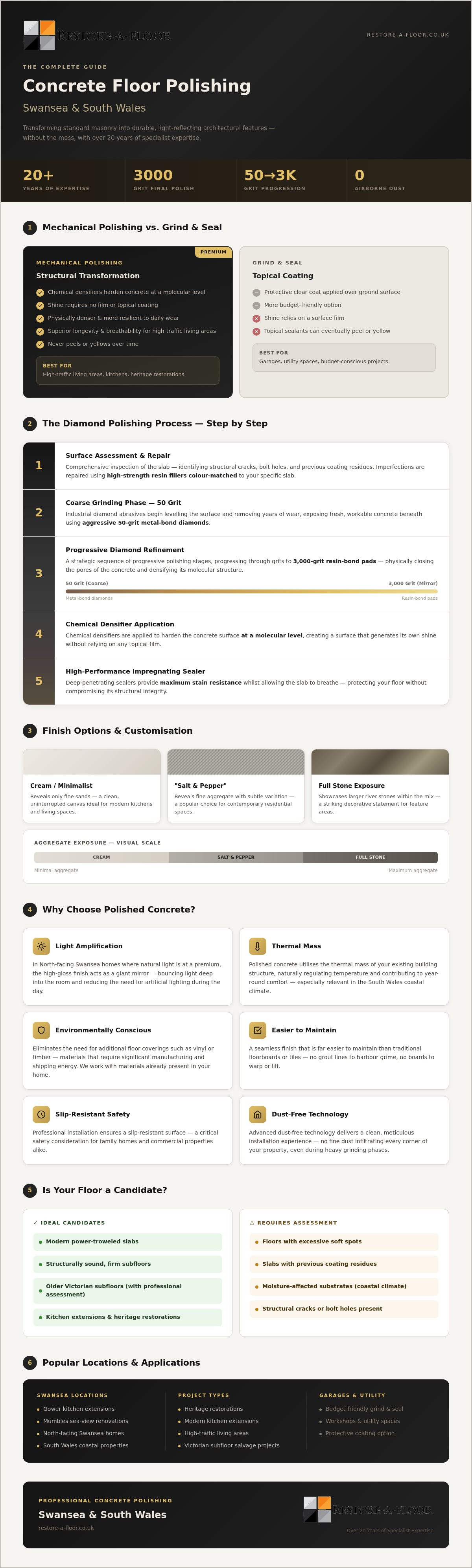
Swansea's architectural landscape is changing. Homeowners are increasingly moving away from high-maintenance carpets and traditional tiles in favour of something more permanent. True polished concrete isn't a mere coating or a paint; it's a structural transformation of the slab itself. Unlike topical sealants that sit on the surface and eventually peel or yellow, mechanical polishing involves a series of progressive grinding steps using industrial diamond abrasives. This process refines the concrete to a specific level of gloss, creating a surface that's physically denser and far more resilient to daily wear.
Choosing concrete floor polishing Swansea allows you to utilise the thermal mass of your existing building. It's an environmentally conscious choice because it eliminates the need for additional floor coverings like vinyl or timber, which require significant manufacturing and shipping energy. Instead, we work with the materials already present in your home. To determine if your floor is a candidate, we look for structural integrity and a lack of excessive soft spots. Whilst most modern power-troweled slabs are perfect, even older Victorian subfloors can often be salvaged with the right technical approach and professional assessment.
The Rise of Modern Industrial Aesthetics in South Wales
The shift towards minimalist design has seen polished concrete become a staple in Gower kitchen extensions and Mumbles sea-view renovations. It provides a clean, uninterrupted canvas that makes spaces feel larger and more cohesive. In North-facing Swansea homes, where natural light is often at a premium, the high-gloss finish acts as a giant mirror. It bounces light deep into the room, reducing the need for artificial lighting during the day. This aesthetic bridges the gap between the raw industrial past of South Wales and the sophisticated, modern comfort expected in 2026.
Mechanical Polishing vs. Grind and Seal
It's vital to distinguish between a full mechanical polish and a "grind and seal" finish. Mechanical polishing is a premium, multi-stage refinement process where we use chemical densifiers to harden the concrete surface at a molecular level. This results in a floor that doesn't rely on a film for its shine. Conversely, a grind and seal involves grinding the surface and then applying a protective clear coat. Whilst the latter is often more budget-friendly for garages or utility spaces, mechanical polishing offers superior longevity and breathability for high-traffic living areas.
The Technical Process: How We Achieve a Mirror Finish
Achieving a mirror-like sheen through concrete floor polishing Swansea is a methodical journey that demands precision at every stage. We begin with a comprehensive surface assessment, identifying structural cracks, bolt holes, or previous coating residues that could compromise the final aesthetic. These imperfections are meticulously repaired using high-strength resin fillers colour-matched to your slab. Once the substrate is stabilised, we initiate the coarse grinding phase. This initial pass levels the surface and removes years of wear, exposing the fresh, workable concrete beneath.
The refinement process involves a strategic sequence of progressive diamond polishing stages. We move from aggressive 50-grit metal-bond diamonds through to 3000-grit resin-bond pads, effectively closing the pores of the concrete as we go. This isn't a superficial shine; it's a physical closing of the material's molecular structure. To ensure long-term durability, we apply high-performance impregnating sealers. These penetrate deep into the concrete to provide maximum stain resistance whilst allowing the slab to breathe. If you're unsure which finish suits your property, our team can provide a professional assessment of your slab's potential.
The Importance of Heavy-Duty Diamond Grinding
Flatness is everything. Without industrial-grade planetary grinders, it's impossible to eliminate the subtle waves often found in hand-finished concrete. Our equipment allows us to control the level of aggregate exposure with absolute precision. You might prefer a "salt and pepper" look, which only reveals fine sands, or a full stone exposure that showcases the larger river stones within the mix. Achieving this consistency from the centre of the room right to the skirting boards requires specialised edge-grinding machinery and a steady, experienced hand.
Dust-Free Technology: A Restore-A-Floor Standard
Cleanliness is a core pillar of our operational philosophy. We utilise advanced, high-filtration vacuum systems that are directly coupled to our grinding heads, capturing 99.9% of airborne particles at the point of creation. This meticulous approach protects your property's HVAC systems and ensures that other trades can continue their work in a safe, breathable environment. It also means you won't be finding fine grey dust in your cupboards months after we've finished. Dust-free grinding is the non-negotiable benchmark for all high-end residential flooring projects in 2026.
Finish Options and Customisation for Your Swansea Home
One of the most rewarding aspects of concrete floor polishing Swansea is the ability to tailor the final aesthetic to match your specific interior design vision. Unlike off-the-shelf flooring products, polished concrete is inherently bespoke. The final result depends on the quality of the original pour and the level of refinement you select during the grinding process. We act as your expert guide, helping you navigate the delicate balance between visual impact and practical daily maintenance requirements.
Beyond the texture and shine, we can introduce subtle colour shifts using specialised concrete dyes. These translucent pigments penetrate the open pores of the slab before the final polishing stages, ensuring the hue remains a permanent part of the floor rather than a surface layer that could chip or peel. Additionally, polished concrete is the ultimate partner for underfloor heating. Because concrete possesses high thermal mass, it absorbs and retains heat efficiently, keeping your Swansea property warm and comfortable even during the dampest winter months.
Choosing the Right Level of Shine
The gloss level you choose significantly affects both the mood of the room and the amount of cleaning required. Matt finishes offer a raw, understated texture that hides dust and footprints remarkably well, making them ideal for high-traffic family kitchens or rustic barn conversions. Satin finishes provide a soft, velvety sheen that strikes a sophisticated balance; it remains the most popular choice for residential projects across South Wales. High-gloss finishes transform the floor into a highly reflective surface that maximises brightness, though they require more frequent buffing to maintain that pristine, showroom perfection.
Aggregate Exposure and Aesthetic Control
This stage determines how much of the internal stone and sand is visible on the surface. We categorise these into three distinct styles:
Surface Cream Finish: This minimalist approach preserves the natural swirls and character of the original power-trowelled surface, offering a sleek, cloud-like appearance.
Salt and Pepper: A light grind reveals the fine sands and small pebbles just beneath the surface, providing a speckled texture that adds depth without being overwhelming.
Full Aggregate Exposure: This requires deep, heavy grinding to showcase the larger stones within the mix, creating a decorative, multi-coloured effect similar to traditional terrazzo flooring.
Your choice should reflect the architectural era of your home. A cream finish often suits ultra-modern extensions, whilst full aggregate exposure can add a sense of heritage and texture to older properties.
Preparation and Maintenance in the South Wales Climate
Success in concrete floor polishing Swansea depends heavily on how the slab is managed before the first diamond pad touches the floor. The damp, coastal air of the Bristol Channel introduces specific environmental challenges that inland projects rarely face. Before our grinding team arrives, we require the area to be completely cleared of furniture and skirting boards, whilst other trades should be scheduled to avoid cross-contamination. This pre-project discipline ensures we can focus entirely on the precision of the grind without environmental interference.
Sub-Floor Preparation and Damp Management
Moisture is the primary adversary of any high-end floor finish in South Wales. In older Swansea properties, particularly heritage homes near the seafront, the absence of a modern damp proof membrane (DPM) can lead to efflorescence or clouding beneath the surface. We meticulously check for moisture vapour transmission rates before proceeding with any mechanical refinement. For newer extensions, we provide guidance on sub floor preparation services to ensure the slab has cured sufficiently. Properly managing this foundation prevents the "sweating" common in poorly executed coastal installations.
Daily Care for Polished Concrete
Maintaining the lustre of your floor is surprisingly straightforward if you follow a disciplined routine. The most critical rule is the use of pH-neutral cleaners; acidic or highly alkaline solutions will chemically etch the surface over time, dulling the mirror finish we've worked hard to achieve. We recommend using a microfibre mop for daily dust removal, as grit can act like sandpaper underfoot. Avoid abrasive scouring pads or bleach-based products at all costs. In high-traffic kitchen areas, spills should be blotted immediately to prevent staining, even though our impregnating sealers provide a robust line of defence.
Whilst the mechanical polish itself is a permanent structural change, the protective sealer may require a professional refresh every few years depending on footfall. A high-speed burnish and reseal can restore that original brilliance without the need for a full regrind. If you're planning a renovation, it's best to contact our Swansea specialists early in the design phase to coordinate these technical requirements and ensure your subfloor is fit for purpose.
Why Choose Restore-A-Floor for Concrete Polishing in Swansea?
Selecting a contractor for concrete floor polishing Swansea requires more than just finding someone with a grinder. It's about partnering with a team that respects the structural nuances of your property. As a family-owned business with over 20 years of industry experience, we've built our reputation on a foundation of precision and technical integrity. We aren't merely service providers; we're craftsmen who take immense pride in the final aesthetic outcome of every slab we touch. Our local roots mean we understand the specific building stock across South Wales, from the sand-rich concrete of Gower coastal builds to the dense, aged slabs found in Swansea's industrial heritage sites.
Bespoke Solutions for Every Project
No two concrete floors are identical. The hardness of the matrix and the type of aggregate used can vary significantly, requiring a tailored approach to diamond selection and grinding pressure. We conduct detailed consultations to ensure our mechanical refinement methods align perfectly with your design vision. If your renovation involves multiple surfaces, such as a modern concrete kitchen floor adjoining a traditional hallway, you might also be interested in our wood floor sanding Swansea services. This integrated expertise allows us to manage complex, mixed-material projects with a cohesive focus on quality and site protection.
Our commitment to a dust-free environment remains a cornerstone of our service. By utilising high-filtration extraction systems during every stage of concrete floor polishing Swansea, we ensure that the transformative process doesn't become a burden on your home's cleanliness. This meticulous attention to detail extends to our site protection protocols, where we treat your property with the same care we would our own.
Commercial and Residential Excellence
Whether we're refining an intimate residential kitchen or a large-scale commercial unit, our qualified technicians prioritise professional standards and safety. We've successfully delivered high-end finishes for a diverse range of clients across Swansea and Cardiff, always maintaining a steady, purposeful pace to meet project deadlines. We value long-term satisfaction over quick fixes, ensuring that your investment in polished concrete continues to add value to your property for decades. To begin your project journey, contact Restore-A-Floor for a free Swansea quotation and discover how our expertise can transform your space.
Elevate Your Space with Architectural Precision
Investing in a polished finish is more than an aesthetic choice; it's a commitment to long-term property value and structural integrity. You've seen how professional concrete floor polishing Swansea provides a seamless, dust-free installation experience that traditional flooring simply cannot match. By choosing a bespoke level of aggregate exposure and shine, you can transform a standard subfloor into a light-reflecting masterpiece that's perfectly suited to the South Wales climate. Our team brings over 20 years of specialist experience to every project, ensuring that technical challenges like moisture management are handled with expert care.
As local Swansea-based experts, we take pride in delivering meticulous craftsmanship that respects the unique character of your home. We use industrial-grade, dust-free technology as standard, ensuring your renovation remains clean and efficient from start to finish. Ready to discover the potential hidden beneath your feet? Request a free quotation for your Swansea concrete project and take the first step toward a sophisticated, low-maintenance floor that will last for decades. We look forward to bringing your vision to life.
Frequently Asked Questions
Is polished concrete flooring slippery when wet?
Polished concrete is generally no more slippery than other hard surfaces like stone or ceramic tile. The mechanical polishing process closes the material's pores, but the surface maintains enough friction for safe daily use. For high-traffic areas or commercial environments, we apply specialised anti-slip treatments or impregnating sealers that enhance grip without compromising the high-gloss aesthetic. It is often a safer alternative to waxed timber floors when managed correctly by experienced professionals.
Can any existing concrete floor in Swansea be polished?
Most structural slabs are suitable candidates for concrete floor polishing Swansea, though a professional assessment is vital before work begins. We evaluate the concrete's hardness and integrity to ensure it can withstand the heavy grinding process. Whilst older subfloors or damaged slabs might require extensive repair work, most modern power-trowelled concrete is ideal. If a surface is too soft or contaminated with oil, we provide honest guidance on the best restoration path for your property.
How long does the concrete floor polishing process take?
A typical residential project usually spans three to five days, depending on the square meterage and the complexity of the desired finish. The initial grinding and repair stages consume the most time, followed by the progressive polishing and sealing phases. Larger commercial units across South Wales may require more extensive timelines. We provide a clear schedule during our initial consultation to ensure our craftsmanship doesn't disrupt your other renovation trades or your daily routine.
Is polished concrete colder than other flooring types?
Concrete possesses high thermal mass, meaning it adopts the ambient temperature of the room rather than feeling inherently cold. Whilst it lacks the natural warmth of timber, it is far more efficient at retaining heat than ceramic tiles. Once a room is warmed, the slab acts as a thermal battery, releasing heat slowly over time. Many of our clients find that using area rugs or integrating underfloor heating creates an exceptionally comfortable and energy-efficient environment.
How much dust is created during the grinding and polishing process?
We operate a strictly dust-free environment by using industrial-grade vacuum systems that connect directly to our grinding machinery. These high-filtration extractors capture 99.9% of airborne particles at the source, preventing fine grey debris from settling on your furniture or walls. This technology is a standard part of our service, ensuring that the air remains breathable and your Swansea property stays meticulously clean throughout the entire mechanical refinement and polishing journey.
Can I polish concrete that has cracks or previous damage?
Yes, we specialise in restoring damaged slabs through precise repair techniques before the polishing begins. We use high-strength resins and colour-matched fillers to stabilise cracks and fill bolt holes, often turning these imperfections into unique features that highlight the building's character. With over 20 years of experience, we can determine whether a crack is merely superficial or a sign of deeper structural issues that require attention before we proceed with the grinding stages.
Does polished concrete require a lot of maintenance?
Polished concrete is one of the lowest-maintenance flooring options available for modern homes. Daily care involves a simple sweep or microfibre mop to remove grit, followed by an occasional clean with a pH-neutral solution to preserve the lustre. Unlike wood, it doesn't require regular waxing or sanding, and there is no grout to scrub as you would with tiles. A professional burnish every few years will maintain the original brilliance, making it a highly cost-effective choice.
Is it possible to polish concrete with underfloor heating?
Polished concrete is the ideal partner for underfloor heating due to its superior thermal conductivity. The slab absorbs heat from the pipes and distributes it evenly across the floor surface, acting as an efficient radiator for the entire room. This synergy is particularly effective in new extensions, where the polished surface provides a sleek aesthetic whilst significantly improving the home's energy efficiency. It is a popular choice for sustainable, forward-thinking property owners throughout the Swansea area.
Comments