

Oak Floor Restoration Specialists Near Me: A Local Guide to Restoring Your Floor
A worn oak floor doesn’t automatically need replacing. If you’re searching for Oak floor restoration specialists near me, the first question is whether the boards can be restored, not how quickly they can be covered up. Scratches, dullness and everyday wear may be suitable for professional sanding and refinishing, while the condition of the boards helps determine the right approach.
It’s understandable to want a clear idea of what the work involves, how dust and disruption are managed, and what finish will suit your home or commercial space. This guide explains how to assess an oak floor, what professional restoration can achieve and which details help a specialist prepare a project-specific quotation.
Restore-A-Floor brings over 20 years of industry experience to bespoke wood-floor restoration, with a qualified team and a dust-free refinishing approach. We serve Swansea, Cardiff, Bristol, Pembrokeshire, Haverfordwest and Cardiganshire. Read on to understand the journey from preparation to final finish, and how to request a free online quotation.
Table of Contents
Oak Floor Restoration Near Me: What Wear and Damage Can Tell You
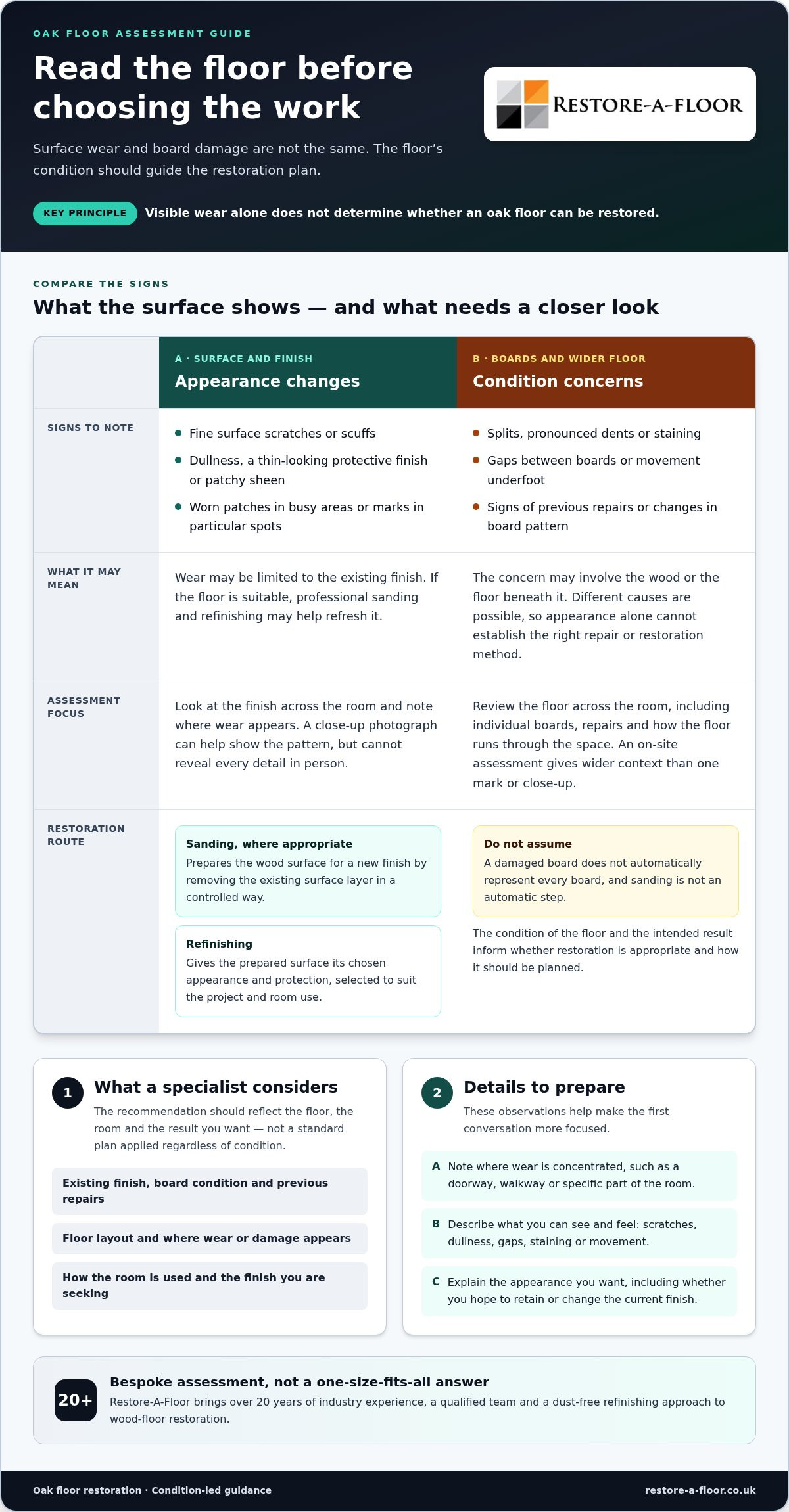
Scuffs from everyday use, a dull finish, worn patches in busy areas or damage confined to a few boards are common reasons to seek advice. These signs show that the floor’s appearance has changed, but they don’t, by themselves, tell you whether restoration is suitable. Consider the floor as a whole, paying attention to both its surface and the condition of its boards.
Which signs suggest an oak floor may benefit from restoration?
Look for fine surface scratches, areas where the protective finish appears thin, or a patchy sheen that makes the floor look uneven in different light. Hallways and other frequently used spaces may show wear sooner than less-used rooms, while furniture and repeated movement can leave marks in particular spots. Oak’s grain and natural characteristics affect its appearance, but the properties of oak wood don’t reveal the condition of a specific floor without assessment.
Wear to the surface finish is different from deeper board damage. A tired-looking finish may be limited to the surface, whereas splits, pronounced dents, staining or movement can involve the wood or the floor beneath it. This distinction matters because sanding and refinishing address the floor differently from concerns that need closer investigation. A damaged board shouldn’t automatically be treated as representative of every board. Its location and relationship to the wider floor are part of the picture.
When does oak flooring need closer assessment?
Movement underfoot, gaps between boards, staining and signs of previous repairs are useful details to raise with a specialist. They can have different causes, so avoid assuming from appearance alone that a particular repair or restoration method will be suitable. Photographs can show the room, the pattern of wear and close-ups of concern areas, giving helpful context before a visit, but they can’t show every detail in person.
An on-site assessment allows the floor to be viewed across the room, rather than judged from one close-up. It helps establish whether the concern appears limited to the finish, affects individual boards or calls for a wider project discussion. That’s more useful than deciding on restoration or replacement from a single mark.
Note where wear appears: record whether it’s concentrated in a doorway, walkway or specific part of the room.
Describe what you can see and feel: include dullness, scratches, gaps, staining or movement underfoot.
Share the result you want: explain whether you’re aiming for a refreshed appearance or a change to the overall finish.
When you search for Oak floor restoration specialists near me, these observations help make the first conversation more focused. Restore-A-Floor assesses wood-floor projects individually, drawing on over 20 years of experience to develop a recommendation around the floor and the intended result. An on-site assessment then helps shape the project scope and a tailored quotation, without assuming every worn or damaged oak floor has the same answer.
How Professional Oak Floor Restoration Assessment Works
A condition-led assessment means reviewing the existing floor before recommending restoration work. The aim is to understand what the oak needs and how you want it to look, rather than assume every project follows the same sequence. The floor’s condition should guide the finish, not the other way round.
What does a specialist consider during an oak-floor assessment?
A specialist considers the visible finish, the boards and the layout together. That includes where wear appears, the condition of individual boards, any previous repairs and how the floor runs through the room. A repaired area or a change in board pattern can affect how a consistent result is planned, so it’s useful to discuss what you know about the floor’s history.
How the room is used matters too. A home hallway and a commercial space may experience different levels and patterns of foot traffic, which can inform the project plan and finish selection. The recommendation should reflect the actual floor, how the room is used and the appearance you’re seeking, rather than apply a standard package regardless of condition. Guidance such as the National Wood Flooring Association guidelines can provide a technical reference for wood-floor work, alongside an assessment of the specific oak surface.
How do sanding and refinishing contribute to restoration?
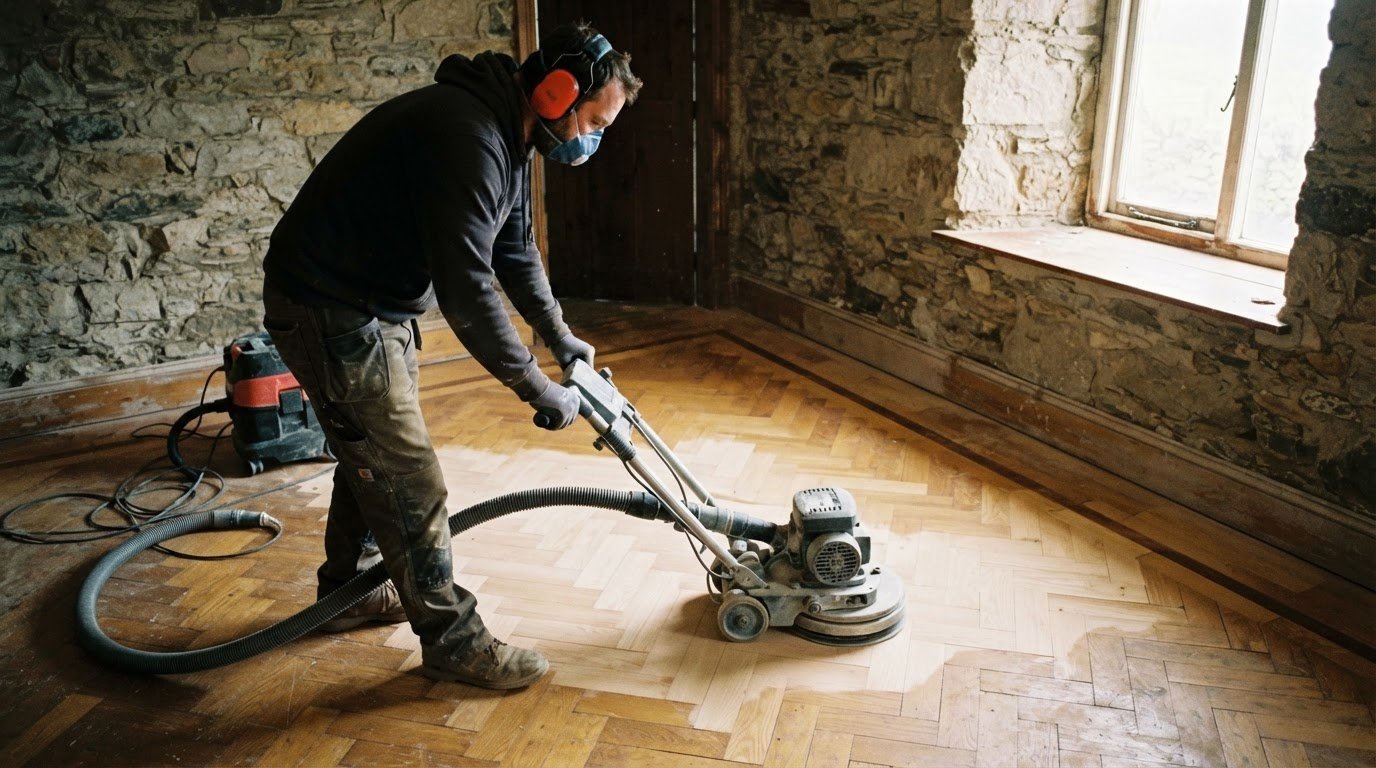
Where the floor is suitable, sanding prepares the wood surface for a new finish by removing the existing surface layer in a controlled way. It isn’t an automatic step: the floor’s condition and the intended result inform whether sanding is appropriate and how the work should be planned. Refinishing then gives the prepared surface its chosen appearance and protection, with the finish selected to suit the project and how the room is used.
For a clearer picture of how sanding is carried out, Restore-A-Floor’s guide, Professional Wood Floor Sanding in Swansea: Dust-Free Restoration Experts, explores the process and its dust-free refinishing approach. For an oak project, assessment still comes first, so the work is tailored to the boards rather than assumed from a general description of sanding.
Before arranging an assessment, gather a few practical details:
Whether the floor is in a home or commercial property, and how the room is used.
What appearance you’re aiming for, including whether you want to retain the oak’s current look or change the finish.
Any known history of repairs or refinishing that could help explain the floor’s present condition.
This gives the specialist useful context, while seeing the floor in person helps shape a project-specific recommendation and quotation. If you’re looking for Oak floor restoration specialists near me, Restore-A-Floor brings over 20 years of experience to bespoke wood-floor sanding and refinishing. You can request a tailored oak-floor quotation with the details of your project.
Oak Floor Restoration or Replacement: How to Weigh the Options
There isn’t a single answer for every oak floor. Restoration may be worth considering if the existing boards are suitable for the planned work and you want to refresh their appearance. Replacement may better suit a project where the floor’s condition or your design goals call for a more extensive change. Make the decision after an assessment, not on the blanket assumption that every worn floor can be saved or must be removed.
Use this comparison to organise the discussion. It’s a guide to the factors involved, not a diagnosis of your particular floor.
When might restoration be a practical option?
Restoration may be practical where assessment indicates the oak boards are suitable for the planned refinishing and the aim is to renew their appearance rather than change the floor entirely. For example, if your main goal is to address a tired-looking surface while keeping the existing timber, restoration may fit your preference. Suitability still depends on the specific floor, including any damage or previous treatment.
What should shape a restoration-versus-replacement decision?
Start with the condition of the existing boards, then consider how each option fits the room’s use, your preferred finish and the extent of work involved. A residential room and a commercial space may have different practical priorities. Be clear about what you want to retain or change; this helps ensure the proposed scope reflects your goals rather than assuming restoration or replacement is automatically preferable.
A tailored quotation helps clarify the recommended work. It can set out the project scope in relation to the floor and desired result, giving you a clearer basis for weighing the options without relying on a generic cost estimate. Oak floor restoration specialists near me should be able to discuss the existing floor in context, rather than treat restoration as a standard package. Bring together your preferred outcome and the assessment of the boards, then review the proposed work against the changes you want from the room.
Planning Oak Floor Restoration With a Local Specialist
A well-planned restoration starts with useful information, then moves from discussing your preferred result to assessing the floor and setting out the work in a tailored quotation. This gives you and the project team a clearer understanding of the job before preparation begins. The sequence is straightforward, but the details matter: oak floors differ, and the agreed scope needs to reflect the specific room and its condition.
Restore-A-Floor serves customers in Swansea, Cardiff, Bristol, Pembrokeshire, Haverfordwest and Cardiganshire. If you’re searching for Oak floor restoration specialists near me in these areas, sharing a clear description of the project is a practical first step. The company’s dust-free refinishing approach is part of its service, although restoration still involves work in your property, so discuss access and room arrangements as part of the plan.
What information helps shape a project-specific quotation?
Start with the property’s location and the room or rooms involved. Describe the oak floor, where wear or damage is visible, and any repairs or previous work you know about. It’s also helpful to explain the result you’re hoping for, such as refreshing the existing appearance or choosing a different finish. These details give the team context, while an assessment helps define what the floor and project require.
A quotation should relate to the agreed project scope, not an assumed standard package. The proposed work may depend on the floor, the rooms included and the finish you have in mind. Restore-A-Floor offers free online quotations, giving you a way to share project details and begin planning the work.
How can you prepare for the restoration work?
Once the project scope has been discussed, agree practical arrangements with the team. Consider how they’ll access the room, whether it needs to remain in use and what preparation is appropriate for your property. The details depend on the planned work and your circumstances, so avoid relying on a generic checklist. Discuss the schedule and stages with the project team as part of organising the job.
Before the work is arranged, make sure you have a shared understanding of:
Rooms and access: which areas are included and how the team will reach them.
Room use: whether people need to use the space during the project and what arrangements may help.
Work stages: what preparation, restoration and finishing involve for the agreed scope.
Schedule: how the project timing will be planned around the floor and the work required.
Timescale and preparation depend on the floor and the work agreed, so a project-specific discussion is more useful than a general estimate. Restore-A-Floor brings over 20 years of industry experience to residential and commercial wood-floor projects, with a qualified team and a tailored approach. Request a free online oak-floor quotation to share your location, floor details and preferred result.
Restore-A-Floor: Oak Floor Restoration Across South Wales and Bristol
Finding a local specialist should lead to more than a name in a directory. You need a team that can consider the floor, understand the result you want and shape the work around both. Restore-A-Floor provides bespoke wood-floor sanding, refinishing and restoration for residential and commercial properties, drawing on over 20 years of industry experience.
Its qualified team takes an assessment-led approach to oak-floor projects. Rather than assume every floor needs the same treatment, the proposed scope responds to the existing boards, their condition and your intended appearance. The conversation can focus on what’s appropriate for your floor, whether you’re looking to refresh a surface or plan a broader refinishing project.
What to expect from Restore-A-Floor’s restoration service
The project is shaped around your floor, from assessing the work and planning preparation through to sanding and refinishing where appropriate. Restore-A-Floor uses a dust-free refinishing approach, while recognising that work in a home or business still requires practical planning. The finish and scope are tailored to the floor and the result you’re seeking, rather than presented as a fixed package for every oak surface.
Local coverage includes Swansea, Cardiff, Bristol, Pembrokeshire, Haverfordwest and Cardiganshire. This gives people searching for Oak floor restoration specialists near me in these areas a direct route to a team experienced in wood-floor projects. As each floor and property is different, discussing the project helps establish the work involved and practical arrangements for your space.
Request a quotation for your oak floor
To start the conversation, share your location, a description of the floor’s condition and what you’d like the finished room to look like. Mention visible wear, any known repairs and which rooms are involved. These details give the project context, so the quotation can be tailored to the work proposed rather than based on an assumed scope.
A free online quotation offers a practical next step towards discussing your oak floor and the restoration approach that may suit it. Set out your goals to begin planning the work. Whether the floor is in a home or commercial property, clear details help guide the conversation from initial enquiry towards an agreed scope.
Request a free flooring quotation for your oak-floor project.
Take the Next Step Towards a Floor That Feels Right
The most useful next move is to turn your ideas into a clear project brief. Think about how you want the room to feel, which features of the oak you’d like to retain and how the space is used day to day. These priorities can guide a focused conversation about the finish and work involved, rather than leaving you to choose based on appearance alone.
If you’re still searching for Oak floor restoration specialists near me, Restore-A-Floor’s qualified team can shape a bespoke approach, using a dust-free refinishing method as part of its service. Share the details that matter to you and take the next step towards a considered plan for your floor.
Request a free flooring quotation and start planning with confidence.
Frequently Asked Questions
Can an oak floor be restored if it has deep scratches or stains?
Possibly, but deep scratches or stains need to be assessed in context rather than judged by appearance alone. Their depth, spread and position, along with the condition of nearby boards, can affect the options. A mark confined to one area may call for a different plan from damage across a room. Share clear photographs for initial context, but an in-person view is more useful for shaping a recommendation.
Is oak floor restoration suitable for homes and commercial properties?
Yes, oak-floor restoration can be planned for both homes and commercial properties. The setting helps shape practical decisions: a family living room, for example, has different day-to-day use from a business reception area. Tell the specialist how the space is used and whether it needs to remain accessible during the project. That information helps align the proposed work and finish with the property’s needs.
How long does professional oak floor restoration take?
There isn’t one reliable duration for every project. The time involved depends on factors such as the rooms included, the floor’s condition, the agreed work and the finishing stages. A single room with a straightforward scope will differ from a larger or more complex project. Discuss the schedule with the project team once the work has been assessed, and plan room access around the stages they outline.
How much does oak floor restoration cost in the UK?
The cost depends on the specific floor and agreed scope, so a general figure may not reflect your project. The area involved, condition of the boards, preparation required and finish you want can all inform the quotation. Restore-A-Floor provides free online quotations for project-based flooring work. Share details about the property and floor so the proposed scope can be considered for a tailored quote, rather than relying on a broad estimate.
Can oak flooring be restored without sanding?
Sometimes a floor may be suitable for a surface treatment without sanding, but this depends on the existing finish, its condition and the result you want. A new coating may not be appropriate over every worn or previously treated surface. Don’t choose a method based only on a small test patch or the floor’s appearance in one area; an assessment can help establish whether sanding or another approach fits the project.
Does dust-free floor restoration mean there will be no dust or disruption?
No. A dust-free refinishing approach is intended to manage dust during the work, but it shouldn’t be taken to mean absolutely no dust or disruption. The room may still need preparation, access and time set aside for the agreed stages. Before work begins, discuss how the space will be used, what practical arrangements are needed and how the project will be organised around your household or business.
Which areas does Restore-A-Floor serve for oak floor restoration?
Restore-A-Floor serves Swansea, Cardiff, Bristol, Pembrokeshire, Haverfordwest and Cardiganshire. If you’re looking for Oak floor restoration specialists near me in one of these areas, include your location when describing the project. Sharing the property type, the rooms involved and your preferred result gives useful context for an oak-floor enquiry and a free online quotation.

Comments