

Solid Wood Floor Installation in Bristol with Supply and Fitting
Solid wood flooring rewards careful preparation as much as a considered choice of timber. A solid wood floor installation in Bristol can provide a long-lasting surface: correctly fitted, maintained and refinished solid wood flooring can last approximately 40-100 years or longer. The sub-floor and the room’s conditions matter too, because they influence how the boards perform after fitting.
Choosing a natural wood floor involves more than colour and finish. Consider the timber’s character, how the room is used and whether the existing base is suitable. A professional installation should address these practical details, not simply lay boards over the surface.
This guide explains how to assess solid wood flooring, what professional supply and fitting involves, and how installers check and prepare sub-floors. It also covers factors that can affect installation, helping you make informed decisions about the finish and the work required.
Table of Contents
Flooring advice and product selection
Choosing timber means balancing the appearance of the boards with the room’s conditions and the installation pattern. For solid wood floor installation in Bristol, consider the sub-floor, heating and intended finish before selecting a product.
Solid wood flooring advice
Solid wood flooring is made from a single piece of timber, so each board shows the natural character of that wood. It can also be sanded multiple times, allowing its surface to be refreshed over its lifetime. In a showroom, compare samples in the room’s light and alongside existing colours.
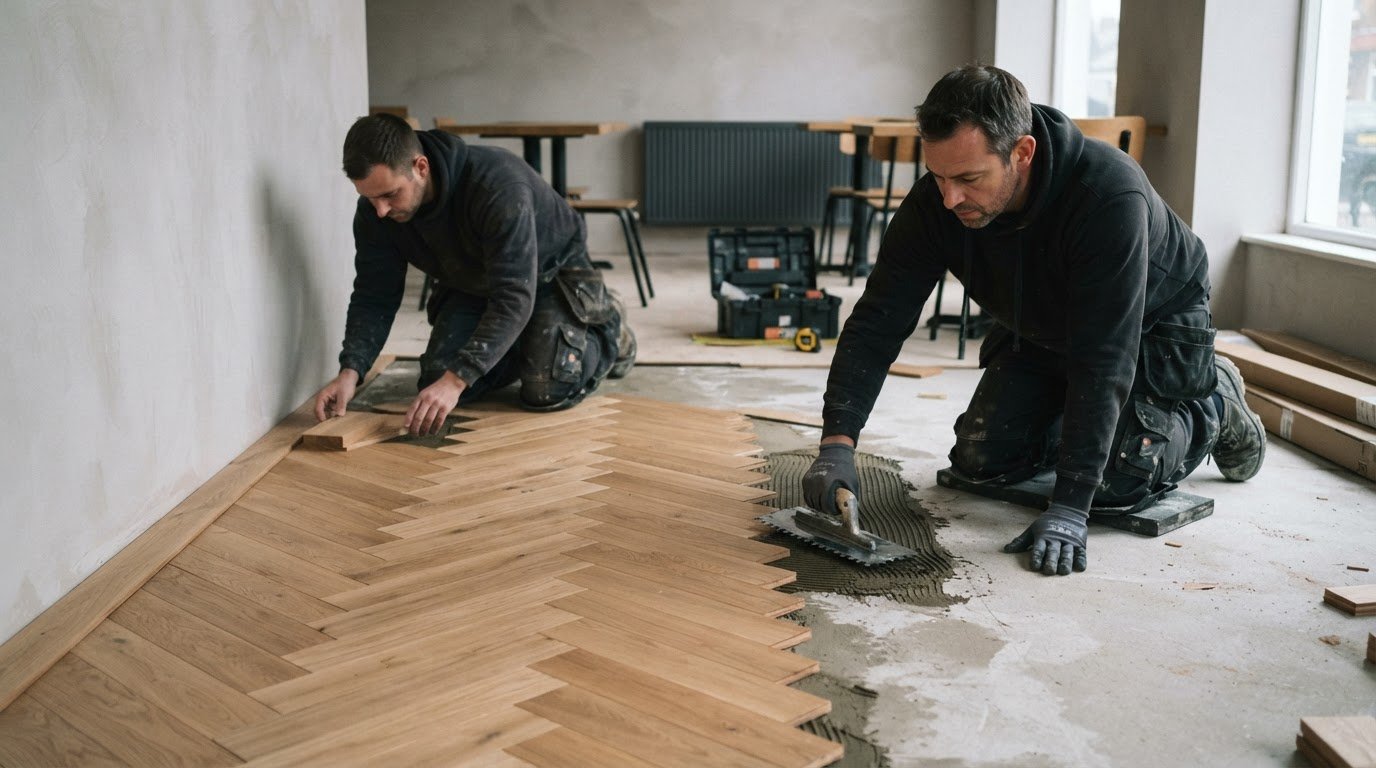
Look at board width, grain, colour and finish together. A straight-plank layout gives a different effect from herringbone or parquet, where the pattern becomes a central feature. The pattern also affects material planning: allow around 5%-10% extra for straight-plank fitting and 10%-15% for herringbone or parquet to account for cutting waste.
Many flooring products need 48-72 hours to acclimatise in the room before installation. This allows the boards to adjust to indoor conditions. The fitting plan should account for this period, alongside the chosen timber and finish.
Suitability for underfloor heating
Solid wood is not normally suitable for underfloor heating. Changes in temperature and moisture can cause natural timber to move, so consider the heating system and flooring together before selecting boards.
Engineered wood has crossed layers designed to counteract timber movement and improve tolerance to indoor humidity changes. It can be installed over underfloor heating, whereas solid wood is not normally suitable for this. Let the flooring specification and heating system’s requirements guide your choice.
Consider the room’s conditions before settling on a product. Solid timber may warp when exposed to water, making it less suitable for damp spaces. Engineered wood can be a more suitable real-wood option because its stable core supports the hardwood top layer.
Match the finish and layout to how the room is used. Herringbone creates a strong visual feature, while straight boards offer a simpler arrangement. The pattern affects the floor’s appearance and the amount of material needed.
Professional flooring supply and fitting
Professional fitting brings together the product, installation method and room preparation. A clear written specification sets out the planned work and what the finished floor should include.
Choosing a Bristol floor installer
Use reviews to assess relevant experience, not just star ratings. Look for comments on preparation, workmanship, communication and how issues were handled. Reviews about solid timber or parquet are more relevant than those focused only on laminate or engineered boards.
Compare written quotations by scope. The product supply, fitting method, sub-floor work and finishing should be clear. The installer should explain why the proposed method suits the room and timber, rather than treating one approach as right for every floor.
Installation process and timescale
Fitting typically starts by confirming the product, layout and installation method. The installer then prepares the base and lays the boards. Floating and fully bonded methods are both used for wood flooring; the suitable option depends on the floor system and sub-floor.
A single 20 m² room can take 1-2 days to fit. A whole-home installation can take 3-7 days, depending on complexity. Floors fixed with glue or nails may need time before walking on them, allowing adhesives to set.
Reviews can help you identify installers with relevant experience, but they do not establish guarantee or insurance terms. Read the written quotation and guarantee documents for the work covered, exclusions and claims process. Product warranties and installation guarantees are separate, as they cover different parts of the project.
Before work starts, the agreed specification should identify the timber, layout, fitting method and any preparation included. This makes it easier to understand how the installation will proceed and what decisions remain. For information about professional wood floor fitting, review the service details alongside your project requirements.
Herringbone or parquet fitting commonly costs around 30%-50% more than comparable straight-plank installation.
Sub-floor checks and preparation
Before fitting solid boards, the installer assesses the base beneath them. Moisture, level and stability all affect how securely the floor can be laid and how it performs.
The inspection starts by identifying the sub-floor, such as concrete or timber, and checking for damage, loose areas or uneven transitions. Moisture readings help assess whether the base is suitable for timber. A concrete floor showing signs of damp needs particular attention before installation, as moisture can affect solid wood.
Level matters too. High spots or dips can leave boards unevenly supported and affect the finished surface. The installer assesses whether the base needs levelling or smoothing, then selects suitable preparation materials. These may include latex smoothing compounds to create a more even surface where appropriate.
For wood flooring over concrete, a damp-proof underlay is recommended. It helps address moisture from the base, but the underlay and fitting method must suit the flooring system. Do not cover a concrete surface with solid wood before assessing its condition.
Preparation also involves removing old floor coverings and residues. Remnants of laminate or adhesive, for example, can interfere with a clean, even installation. The installer removes or treats anything that could compromise the new floor, then rechecks the surface before laying begins.
These checks support a secure fit and consistent appearance, and help identify how preparation may affect the project scope. A sound timber base may need different treatment from uneven concrete, so the work should suit the material and its condition.
Finally, the installer confirms that the prepared surface is suitable for the selected boards and finish. This connects the sub-floor’s condition to the final result instead of treating preparation as a separate detail. Addressing moisture and unevenness before installation helps prevent avoidable problems beneath the finished floor.
Solid wood flooring in Bristol
For a Bristol home, the right flooring depends on the room, existing base and intended finish. Solid timber brings natural variation, while engineered wood offers a real-wood surface with a stable core. Choose a specification that suits the property, not just its appearance.
Solid wood is made from one piece of timber and can be sanded multiple times. Correctly fitted, maintained and refinished, it can last approximately 40-100 years or longer. That long service life makes the initial choice of species, board character and surface finish especially important. Consider how the floor will look alongside skirting, doors and fixed furniture.
Engineered wood can be a practical alternative when room conditions make solid timber less suitable. Its hardwood top layer sits over a stable core, with crossed layers designed to counteract timber movement. For rooms exposed to moisture, it is generally a better choice because solid wood may warp when wet. Underfloor heating is another factor: engineered flooring can be installed over it, unlike solid wood in normal circumstances.
For Bristol projects, plan for access, room shape and the chosen pattern. A compact room with straight boards presents a different layout challenge from a large open-plan area with herringbone. These details affect board direction, transitions and finishing around doorways.
Permission requirements depend on the building and scope of work. Replacing a floor covering differs from altering the building’s structure or carrying out wider renovations. When flooring is part of a larger project, guidance from experienced remodelling specialists like Lotz Renovations, Inc. highlights the importance of sequencing structural adjustments and interior finishes properly. Listed status, lease conditions and the planned work can affect which approvals apply, so identify these constraints before finalising the flooring specification.
With the product and project requirements clear, the next step is a measured installation plan. Arrange a flooring discussion to progress your Bristol project.
Restore-A-Floor: Wood Floor Sanding & Refinishing
Restore-A-Floor can help when an existing timber floor looks worn or a new parquet layout suits your room. Its Wood Floor Sanding & Refinishing service renews suitable wood floors, while Parquet Floor Supply & Installation is available for projects where a patterned timber floor is the preferred finish.
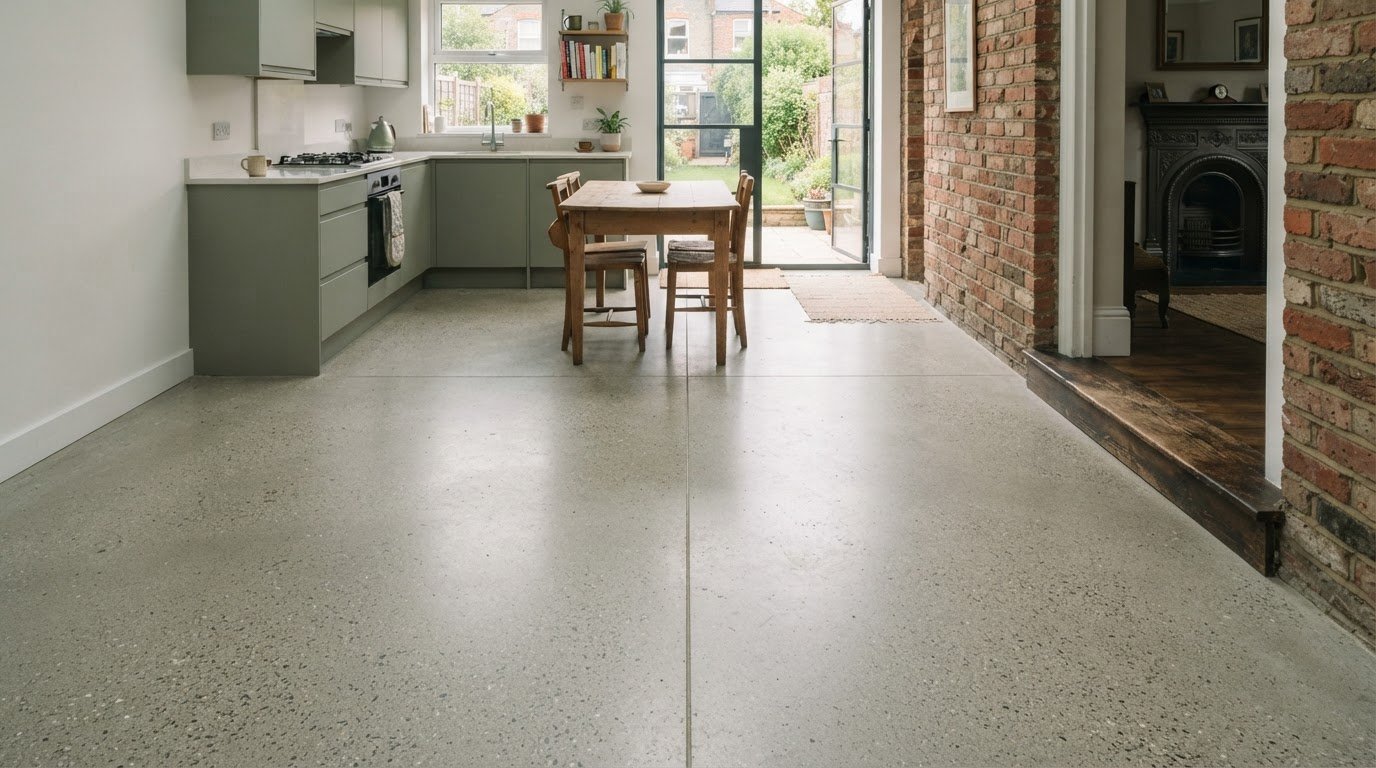
For another surface, Restore-A-Floor also offers Concrete Floor Polishing and Tiled Floor Restoration & Cleaning. The right service depends on the existing floor and the result you want. If you’re planning a solid wood project or deciding whether an older floor needs attention, describe the room and preferred finish when you contact the team.
Contact Restore-A-Floor to discuss your flooring project.
Plan your next flooring step
For solid wood floor installation in Bristol, turn your preferred look into a project plan that suits the property. Consider how the floor should work with the room’s use, existing finishes and overall design. Discussing these priorities helps guide decisions about material and installation.
Restore-A-Floor offers Wood Floor Sanding & Refinishing for existing timber, Parquet Floor Supply & Installation for patterned layouts, and Concrete Floor Polishing for concrete surfaces. These services address different flooring needs in homes and commercial spaces.
Whether you’re planning a new floor or renewing an existing one, set out the result you want and the rooms involved. This gives the conversation a useful starting point and helps identify the work that suits your project.
Contact Restore-A-Floor about your floor and take the next step towards a finish that feels right for your space.
Frequently Asked Questions
What moisture requirements apply when preparing a sub-floor for solid wood flooring?
Assess sub-floor moisture before installing solid boards, because excess moisture can contribute to timber movement. The suitable reading depends on the base and flooring specification, so there is no single figure for every room. Relative humidity testing can help identify concerns, particularly over a concrete base or where there are signs of damp. Restore-A-Floor offers relative humidity testing and surveys.
Best solid wood flooring installers Bristol reviews
Look for reviews that describe preparation, workmanship, communication and how issues were handled. Reviews about solid timber or parquet are more relevant than those focused only on laminate or engineered flooring.
Solid wood floor installation guarantees and insurance Bristol
The company says its installation work is fully guaranteed and backed by manufacturers’ warranties. Read the written documents for coverage, exclusions and the claims process. Product warranties and installation guarantees are separate.
Comments