

Stone Floor Deep Cleaning in Swansea: The Professional Restoration Guide
- info089907
- 23 hours ago
- 12 min read
What if the hours you spend scrubbing grout lines with domestic detergents are actually accelerating the decline of your natural stone's lustre? It's a common frustration amongst homeowners across South Wales who find that despite their best efforts, their marble or travertine floors have lost that original, high-end glow. You've likely noticed that mop water often just moves dirt into the porous surface of the stone, leaving you with darkened grout and a finish that feels perpetually dull. When it comes to stone floor deep cleaning Swansea residents deserve a solution that goes beyond the surface, treating the floor as a technical asset rather than just a walkway.
We understand that your flooring is a significant investment, and the fear of using the wrong chemicals is entirely justified. This guide shares the professional restoration secrets that reverse years of microscopic damage and chemical build-up. You'll discover how our bespoke, dust-free methods surpass DIY attempts to deliver a floor that looks brand new without the cost of replacement. We'll also provide expert advice on correct maintenance and long-term protection, ensuring your stone remains a stunning centrepiece of your home for decades to come.
Table of Contents
Understanding the Challenges of Stone Floor Maintenance in Swansea
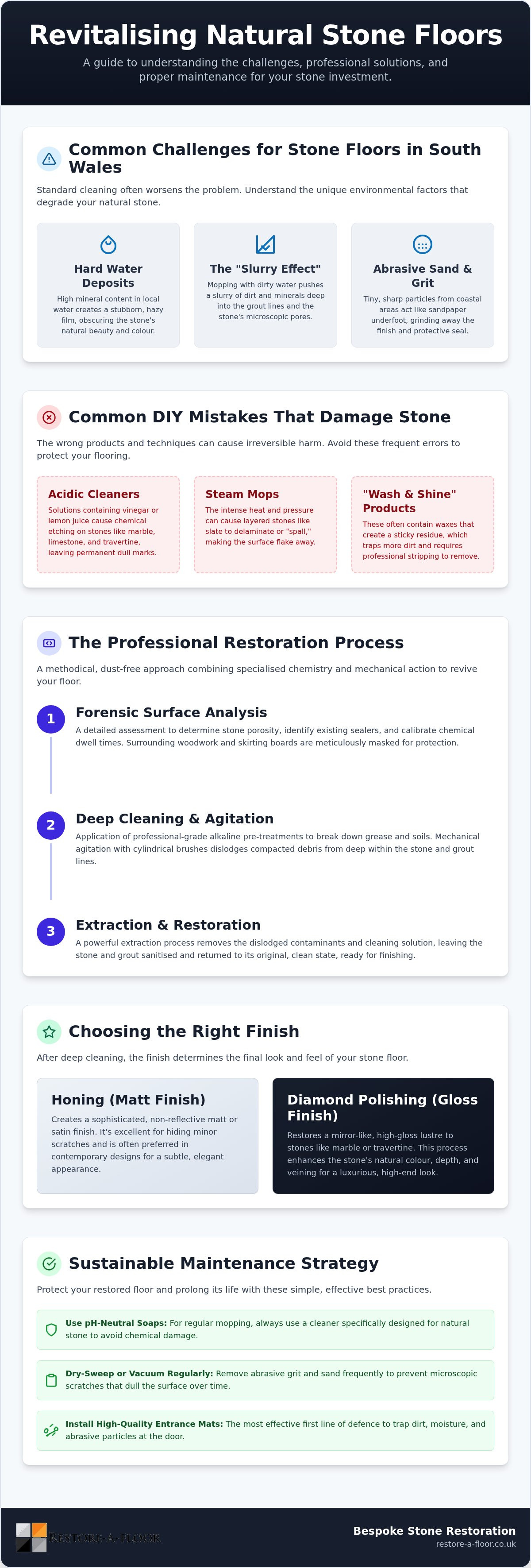
South Wales coastal areas present a unique set of environmental challenges for natural stone. The local water supply often carries high mineral content, leading to persistent hard water deposits that bond with the stone's surface. These calcium-based minerals create a stubborn, hazy film that obscures the natural beauty of the material. Whilst many homeowners attempt to remedy this with standard mopping, they often inadvertently trigger the "slurry effect." This occurs when mop water becomes a suspension of dirt and minerals that, instead of being removed, is pushed deep into the grout lines and the stone's microscopic pores. This process is why stone floor deep cleaning Swansea requires more than just domestic effort; it necessitates professional-grade extraction to lift contaminants from within the stone's structure.
Understanding the difference between surface soiling and chemical etching is also vital for any restoration project. Soiling is merely an accumulation of debris that sits on or within the pores. Etching, however, is a chemical reaction that occurs when acidic substances come into contact with stones like marble, limestone, or travertine. This reaction physically eats into the stone, leaving a dull mark that mimics a stain but is actually a loss of material. Whilst general floor cleaning principles apply to many surfaces, natural stone demands a more nuanced, technical approach to avoid permanent damage.
The Impact of Traffic and Grit in Coastal Swansea
Proximity to the coast means that sand and grit are frequent uninvited guests in Swansea homes. These tiny, sharp particles act as a powerful abrasive under the pressure of foot traffic, slowly grinding away at polished surfaces. This mechanical wear doesn't just dull the shine; it strips away the factory-applied seals that protect the stone. Without these protective barriers, the stone becomes highly susceptible to liquid penetration. High-quality entrance mats are an essential first line of defence, but they won't stop the gradual degradation of the stone's finish over years of use.
Common DIY Mistakes that Damage Natural Stone
The most frequent errors we see involve the use of inappropriate cleaning agents. Many "supermarket" cleaners are either too acidic or too alkaline for natural stone. Acidic cleaners, including vinegar or lemon-based solutions, will immediately etch calcium-based stones, causing irreparable surface damage. Steam mops are another common pitfall; the intense heat and pressure can cause slate to delaminate or "spall," where the natural layers of the stone begin to flake off. Furthermore, many "wash and shine" products contain waxes that create a sticky residue, trapping more dirt and eventually requiring a professional stone floor deep cleaning Swansea to strip the floor back to its original state.
The Technical Process: How Professionals Achieve a Deep Clean
Professional stone floor deep cleaning Swansea services rely on a methodical sequence of chemical and mechanical actions. It isn't merely about surface appearance; it's about deep-level sanitation and technical preparation. Our process begins with the application of professional-grade alkaline pre-treatments. These specialised solutions are engineered to break down stubborn lipid-based soils and grease that domestic detergents simply cannot touch. We then employ mechanical agitation using specialised cylindrical brush machines. Unlike standard rotary pads that only skim the surface, these brushes reach deep into the texture of the stone and the recesses of the grout lines to dislodge years of compacted debris.
Step 1: Forensic Surface Analysis and Testing
Before any equipment is switched on, a thorough assessment is required to ensure the safety of your investment. We determine the stone's porosity to calibrate chemical dwell times precisely. This ensures that the cleaning agents penetrate deep enough to lift oils without damaging the substrate. We also test for existing synthetic sealers or "topical" coatings that require specialised stripping agents. Protecting your home is paramount, so we meticulously mask all surrounding woodwork and skirting boards to prevent moisture or chemical contact during the restoration.
Step 2: Deep Extraction and Grout Restoration
Following agitation, we utilise high-pressure heated extraction to remove the emulsified soil. This system pulls the contaminants out instantly, using vacuum-recovery to maintain a dry, safe environment and ensure the substrate isn't flooded. It's a critical step for maintaining historic stone restoration standards, particularly in Victorian Swansea properties where delicate encaustic or geometric tiles require a gentle yet effective touch. We complement this with manual detailing of grout lines to ensure a uniform colour across the entire floor, removing the dark staining that mopping often leaves behind.
The process concludes with a crucial pH-balancing rinse. Many budget services skip this step, leaving the stone in an alkaline state that actually attracts dirt more quickly after the job is finished. Neutralising the surface ensures the stone is chemically stable and perfectly prepared for the subsequent sealing phase. If you're concerned about the current condition of your flooring, our team provides bespoke tiled floor restoration and cleaning tailored to the specific requirements of your stone type.
Honing, Polishing, and Sealing: Choosing the Right Finish for Your Stone
Once the contaminants have been extracted, the stone surface often reveals its true condition, which may include scratches, traffic patterns, or chemical etching. Restoration moves beyond a standard stone floor deep cleaning Swansea by physically refining the stone's face through honing or polishing. Honing involves using low-grit diamond abrasives to create a sophisticated matt or satin finish. This is an excellent choice for high-traffic areas as it effectively masks future scratches and wear. Conversely, diamond polishing utilises a series of progressive grit pads to close the stone's pores and restore a mirror-like lustre that reflects light beautifully.
In many older properties, we encounter "lippage," where the edges of adjacent tiles are uneven. Removing this through precision grinding creates a perfectly flat, modern surface that is easier to maintain and safer to walk on. However, the most critical phase of any restoration is the application of a high-quality sealer. Without this protection, the stone remains vulnerable to immediate re-soiling and staining. Technical resources like Historic Environment Scotland's guide to stone floors emphasise that the choice of finish and sealant must align with the stone's mineral composition and the building's environmental conditions.
Impregnating Sealers vs. Topical Coatings
Choosing the correct sealant is a technical decision that dictates the floor's performance for years. Sub-surface impregnating sealers are often our preferred choice for residential stone floor deep cleaning Swansea projects. These solutions penetrate the stone's structure to repel oil and water whilst allowing the material to "breathe," preventing moisture from becoming trapped within the substrate. Topical coatings, or dressings, create a sacrificial layer on the surface. Whilst these are useful for high-traffic commercial spaces in Swansea to provide extra grip and a high-gloss film, they require more frequent maintenance as they can peel or scuff over time. Professional-grade solvent-based sealers generally offer significantly better longevity and chemical resistance than the water-based kits found in DIY stores.
Selecting a Finish to Suit Your Home Architecture
The final aesthetic should complement your property's character. For a modern apartment in Swansea Marina, a high-shine diamond polish on marble or limestone creates a sleek, luxurious atmosphere. In contrast, preserving the rustic charm of flagstones in a Gower cottage usually requires a honed finish that respects the stone's age and texture. We can also customise the "colour-enhance" level of the sealer. This technical adjustment brings out the deep natural veining and rich tones of the stone without necessarily adding an artificial shine, ensuring the result feels authentic to your home's unique architecture.
Maintaining Your Restored Stone Floor: A Homeowner’s Strategy
A professional restoration provides the foundation, but the longevity of that mirror-like lustre depends on a disciplined aftercare programme. Once our technicians have completed a stone floor deep cleaning Swansea homeowners should transition from aggressive scrubbing to a preventative maintenance mindset. The goal is to preserve the integrity of the newly applied sealer whilst preventing the accumulation of abrasive particles that can dull the surface over time. Consistency is far more effective than occasional deep cleaning when it comes to natural stone.
Grit remains the primary adversary for any polished surface in South Wales. Small particles of sand and soil, often carried in from coastal environments, act like sandpaper under foot traffic. Implementing a daily "dry-sweep" routine using a static-charged dust mop will remove these abrasives before they can scratch the stone. This simple habit significantly extends the intervals between professional honing sessions and keeps the floor looking fresh.
The Essential Stone Care Toolkit
Selecting the right equipment is just as important as the cleaning solution itself. Microfibre mops are vastly superior to traditional cotton "string" mops because they lift and trap dirt rather than spreading a thin layer of soiled water across the floor. To avoid the common "dirty water" trap, we recommend a two-bucket mopping system. One bucket contains your pH-neutral stone soap solution, whilst the second is used to rinse the mop head. This ensures you're always applying clean water to the stone, preventing the hazy streaks that domestic cleaners often leave behind. Depending on foot traffic, most residential floors require a professional re-sealing every three to five years to maintain optimum protection.
Spot Cleaning and Emergency Care
Accidents are inevitable. When a spill occurs on a porous surface like marble or limestone, the "blot, don’t rub" rule is absolute. Rubbing a spill, especially acidic liquids like wine, coffee, or citrus juice, can push the substance deeper into the pores and spread the damage. Blotting with a clean, white paper towel absorbs the liquid without risking further mechanical abrasion. You should never use bleach or generic bathroom cleaners on natural stone grout; these harsh chemicals will strip the sealer and eventually cause the grout to crumble. For minor surface scratches that appear between professional visits, a "honing touch-up" by a specialist can often resolve the issue without the need for a full-room restoration.
Even with the best intentions, household methods eventually reach their limit. To ensure your surfaces remain in peak condition, you can book a professional maintenance visit to refresh your seal and address any high-traffic wear. Regular expert intervention is the most cost-effective way to protect your investment after a stone floor deep cleaning Swansea restoration.
Bespoke Stone Restoration Services by Restore-A-Floor
Restore-A-Floor is built on a foundation of technical proficiency and over 20 years of industry experience. We operate as a family-owned specialist, which ensures a level of pride in craftsmanship that is increasingly rare in the modern service sector. Every square metre of stone we treat is viewed as a restoration project rather than a simple cleaning task. This distinction is vital; we don't just remove surface dirt, we restore the stone's natural character through a bespoke process tailored to the specific mineralogical requirements of your flooring. It is this commitment to precision that has established us as a trusted advisor for homeowners seeking stone floor deep cleaning Swansea.
Our promise of a dust-free environment is a cornerstone of our service. We understand that homeowners are often cautious about the disruption and mess associated with professional floor work. To mitigate this, we employ advanced extraction technology that captures particulates at the source during the mechanical phases of the restoration. This ensures that your home remains pristine whilst we perform stone floor deep cleaning Swansea. It's an approach designed to protect your air quality and your interior decor, bridging the gap between a practical service and a high-end consultancy.
Serving Swansea, Cardiff, and the South Wales Region
Local heritage matters when dealing with natural materials. We possess deep knowledge of the property styles unique to the region, from the historic cottages of the Gower to the contemporary architecture of the Swansea Marina. Our mobile teams are equally equipped for residential projects and large-scale commercial stone deep cleaning. This regional expertise extends across South Wales, providing essential guidance for Tiled Floor Restoration Cardiff projects that require a specialist touch for period properties.
Request Your Free Professional Consultation
Transparency is central to how we manage projects. We provide fixed-quote pricing only after a comprehensive site visit and forensic analysis of the stone. This ensures there are no hidden costs or technical surprises mid-project. Our team handles all aspects of preparation, respecting your furniture and decor with meticulous masking and protection protocols. If you're ready to revive your floors and protect your investment, you can Contact Restore-A-Floor for a free quote to begin your restoration journey.
Reclaim the Elegance of Your Natural Stone
Natural stone is a significant investment that defines the character of your home, yet it remains vulnerable to the unique environmental pressures of the South Wales coast. The transition from dull, etched surfaces to a mirror-like lustre requires a sophisticated blend of chemical precision and mechanical expertise. A professional stone floor deep cleaning Swansea restoration doesn't just remove surface soiling; it resets the stone's condition and provides a robust barrier against future staining. By choosing a specialist approach, you avoid the common pitfalls of DIY methods that often cause more harm than good.
Restore-A-Floor brings over 20 years of specialist experience to every project, combining our family-owned heritage with advanced, dust-free restoration technology. We take immense pride in delivering bespoke results that respect both modern aesthetics and historic architecture. Your floors don't have to remain a source of frustration. Book your free stone floor assessment and quote today and let our experts guide you through the technical journey of reviving your home's most beautiful asset. We look forward to helping you rediscover the original beauty of your stone.
Frequently Asked Questions
How often should I have my stone floor professionally deep cleaned in Swansea?
Professional deep cleaning is typically recommended every 3 to 5 years for residential properties in South Wales. The exact frequency depends on foot traffic and the specific stone type. High-use areas like kitchens or entrance halls may require more frequent attention to maintain the protective seal. If you notice that water no longer beads on the surface or the grout lines are darkening, it's time for a professional assessment.
Can you remove deep scratches and "etch marks" from my marble floor?
We can successfully remove most surface scratches and etch marks through precision diamond honing. Etch marks are chemical burns caused by acidic substances reacting with the calcium in stones like marble. By using a series of diamond-encrusted pads, we physically grind away the damaged layer to reveal fresh stone beneath. This technical process allows us to restore the original lustre and smoothness, providing a finish that looks entirely brand new.
Is the stone cleaning process messy or dusty for my home?
Our commitment to a dust-free environment means the process is remarkably clean. We utilise wet-honing and polishing methods that naturally suppress dust, combined with advanced vacuum extraction technology to capture all slurry and particulates at the source. This ensures your home remains pristine throughout the stone floor deep cleaning Swansea project. We also take extra precautions by masking skirting boards and protecting adjacent surfaces to maintain the highest standards of cleanliness.
How long does the deep cleaning and sealing process typically take?
Most residential restoration projects are completed within one to two working days. A standard-sized kitchen or hallway usually requires one day for the deep clean and honing process, with sealing performed once the stone has reached the correct moisture levels. Larger areas or floors requiring extensive lippage removal might take slightly longer. We provide a definitive schedule following our forensic surface analysis and site visit.
Will professional cleaning make my stone floor slippery?
Professional restoration often makes a floor safer by removing the slippery waxy residues and lipid-based soils that domestic cleaners leave behind. Whilst a diamond-polished finish appears mirror-like, it isn't inherently more slippery than a dull, soiled floor. We select sealants that preserve the stone's natural traction. For commercial clients, we can also customise the finish to meet specific slip-resistance requirements, ensuring the floor remains safe for public use.
Can you restore the original colour of my dirty grout lines?
Yes, our extraction process is specifically designed to lift deep-seated contaminants from porous grout lines. The dark discolouration you see is usually a build-up of old mop water and grease that has been pushed into the grout over several years. By using mechanical agitation and heated high-pressure extraction, we can emulsify this dirt and remove it completely. This reveals the original grout colour and prepares it for sealing to prevent future staining.
Do I need to move all my furniture before the cleaning team arrives?
We ask that you remove small decorative items and breakables before we arrive. Our technicians can assist with moving larger pieces of furniture, such as tables and chairs, to ensure a comprehensive clean. During our initial consultation for stone floor deep cleaning Swansea, we'll discuss the layout of your room and identify any heavy items that need to be protected in situ. We use waterproof barriers to ensure your furniture remains completely safe.
What is the difference between stone cleaning and stone restoration?
Stone cleaning involves removing surface debris and old sealers, whilst restoration is a more technical process that repairs physical damage. Restoration includes diamond honing to remove scratches, polishing to restore shine, and grinding to level uneven tiles. Whilst regular cleaning is vital for maintenance, restoration is required when the stone has become etched, scratched, or dull. It's the only way to return a heavily worn floor to its original aesthetic glory.


Comments