

Bespoke Wood Floor Finishes in Bristol: A Guide to a Tailored Look
What if the right finish isn’t the one that looks best in a showroom, but the one that works beautifully in your room? Bespoke wood floor finishes Bristol homeowners choose can be tailored to the timber, natural light and everyday demands of the space, helping you avoid a result that feels too dark, too glossy or out of place.
It’s understandable to want a floor that looks distinctive while standing up to daily life, and to feel unsure how colour, sheen and protection will come together on existing boards. Consider the floor as a whole: its species, condition and character, alongside how the room is used and the level of maintenance that suits you.
This guide explains the main finish choices and how they influence appearance, care and everyday practicality. You’ll also learn what to expect from a tailored sanding and refinishing project in Bristol. With over 20 years of flooring experience, Restore-A-Floor considers each floor from preparation through to final finishing, with work carried out in a dust-free environment.
Table of Contents
Bespoke Wood Floor Finishes in Bristol: What Can Be Tailored?
Bespoke wood floor finishing is the careful selection of colour, sheen and protective treatment to suit a particular timber floor, room and way of life. It isn’t a single product or a standard look applied to every surface. The aim is to bring together the floor’s natural character and the finish you want, while taking account of its condition and how the room is used.
Timber species influence the starting point. Grain, natural colour and the way the wood responds to a treatment all affect the finished appearance, so the same stain may look different on two floors. Existing wear matters too: the floor’s condition helps determine the preparation needed before finishing. Bespoke wood floor finishes Bristol projects are planned around the actual boards, rather than a sample image alone.
Which parts of a wood floor finish can be customised?
Customisation can include a change in colour, a warmer or cooler tone, the level of sheen and the overall impression, from understated and natural to more defined. Samples make those choices tangible. Compare them against your timber and furnishings, and view them in the room rather than relying on a screen or small colour chart. This is especially useful when you’re unsure how a tone will sit alongside existing details.
Colour and protection are related, but they’re separate decisions. A stain or other colour treatment changes the wood’s appearance; the protective treatment is the layer selected to finish the surface. The Wood flooring finishes overview provides wider background on finish types and their maintenance. Tailoring doesn’t require a dramatic transformation either. Enhancing the existing timber with a chosen sheen may suit the room better than changing its colour. Finishing customises the surface, not the floor’s structure: borders, inlays or a parquet pattern are separate design or installation choices.
Why Bristol room conditions matter to the final look
Light changes what you see. Natural daylight shifts during the day, whilst lamps introduce their own colour and direction, influencing how warm the timber appears and how noticeable its sheen feels. A finish that looks subtle in one setting may appear more reflective in another. Compare samples in the room at different times and under the lighting you use to get a more realistic sense of the result.
Consider the room’s purpose as well as its appearance. A floor in a busy living space has different demands from one in a quieter room, and the finish should be considered alongside traffic and your preferred care routine. The existing surface also informs the project: worn areas, marks or uneven colour can affect preparation and the final appearance. Restore-A-Floor brings over 20 years of flooring experience to preparation and final finishing, considering the room and floor together so the chosen look is grounded in the timber you have.
Wood Floor Finish Options: Understand Colour, Sheen and Protection
Choosing a finish means making two related decisions: how you want the timber to look and how you want its surface treated. A stain can adjust the colour, while oil-based treatments and lacquer are examples of finishes that influence the surface appearance and protection. The result depends on the specific product, timber and preparation, so no finish is universally best or equally durable on every floor.
Use this comparison as a starting point for discussing Bespoke wood floor finishes Bristol homeowners may be considering. These are general tendencies, not fixed outcomes: sheen and upkeep vary with the product selected and the floor itself.
How do oil and lacquer finishes differ in appearance and care?
Oil-based treatments are often chosen for a natural impression; lacquer may be preferred for a more defined surface appearance. These are starting points, not guarantees, as products differ in formulation and sheen. Care requirements also depend on the selected finish, so follow its manufacturer’s instructions rather than assuming all oils or lacquers need the same routine. Consider both the look you prefer and how you’re prepared to maintain it.
When should colour staining be considered?
Consider staining if you want to shift the timber’s tone, perhaps towards a warmer, lighter or deeper colour, without concealing its grain. The wood’s existing colour and condition influence how a stain develops, so a shade shown on another floor may not translate exactly. Compare samples against the actual boards, then view them in daylight and artificial light before settling on a colour.
A tailored finish brings these choices together with the floor’s requirements, rather than treating colour, sheen and protection as interchangeable. To discuss a project for your wood floor, explore wood floor refinishing with Restore-A-Floor.
Will a Bespoke Wood Floor Finish Be Practical for Everyday Bristol Living?
A distinctive finish doesn’t have to mean a delicate floor reserved for quiet rooms. Balance the look you want with the demands of the space, from everyday foot traffic to the way you clean and care for the timber. A considered finish can suit a busy home, but its performance depends on the floor and the choices made for it.
A protective finish can help a wood floor withstand everyday use, but it can’t make the surface immune to wear. Scratches, scuffs and changes in appearance can still develop over time. The aim is to make a realistic choice, not to expect the finish to prevent every mark.
Suitability depends on several factors working together:
Timber and condition: the species, existing wear and preparation affect how the finished floor looks and performs.
Finish selection: treatments have different characteristics, so assess the particular product rather than relying on broad assumptions.
Room use: a busy entrance or living area may experience more regular traffic than a seldom-used room.
Care routine: the maintenance you’re willing to follow should form part of the decision from the outset.
How should household use influence the finish?
Think through the room’s normal activity before settling on a finish. Consider how often people walk through, whether pets use the space, how furniture is moved and which cleaning habits are part of your routine. Frequently shifting chairs, for example, creates different demands from a room where furniture rarely moves. Sharing these details helps shape a practical discussion about appearance, protection and care, without assuming that one finish behaves identically on every floor.
These details matter as much as the visual brief. A finish that suits your household is one you’re comfortable maintaining, not simply one that looks appealing in a sample. For Bespoke wood floor finishes Bristol projects, the existing timber and intended use should inform the recommendation together. Rather than ruling out a look in advance, understand what caring for that finish involves and decide whether it suits the room.
What maintenance should homeowners expect?
Follow the care instructions for the selected finish and its manufacturer. Routine cleaning is part of ongoing upkeep, whereas professional sanding and refinishing are more substantial work to consider if the floor’s appearance deteriorates or its surface needs renewed attention. These tasks are not interchangeable: regular cleaning supports day-to-day care, but it won’t restore worn areas. Professional wood floor sanding and refinishing can prepare and refinish the floor when it needs more than routine cleaning.
With over 20 years of flooring experience, Restore-A-Floor treats preparation and final finishing as parts of the same project. That connects the desired appearance to the floor’s condition and the realities of its use, rather than treating the finish as a decorative choice alone.
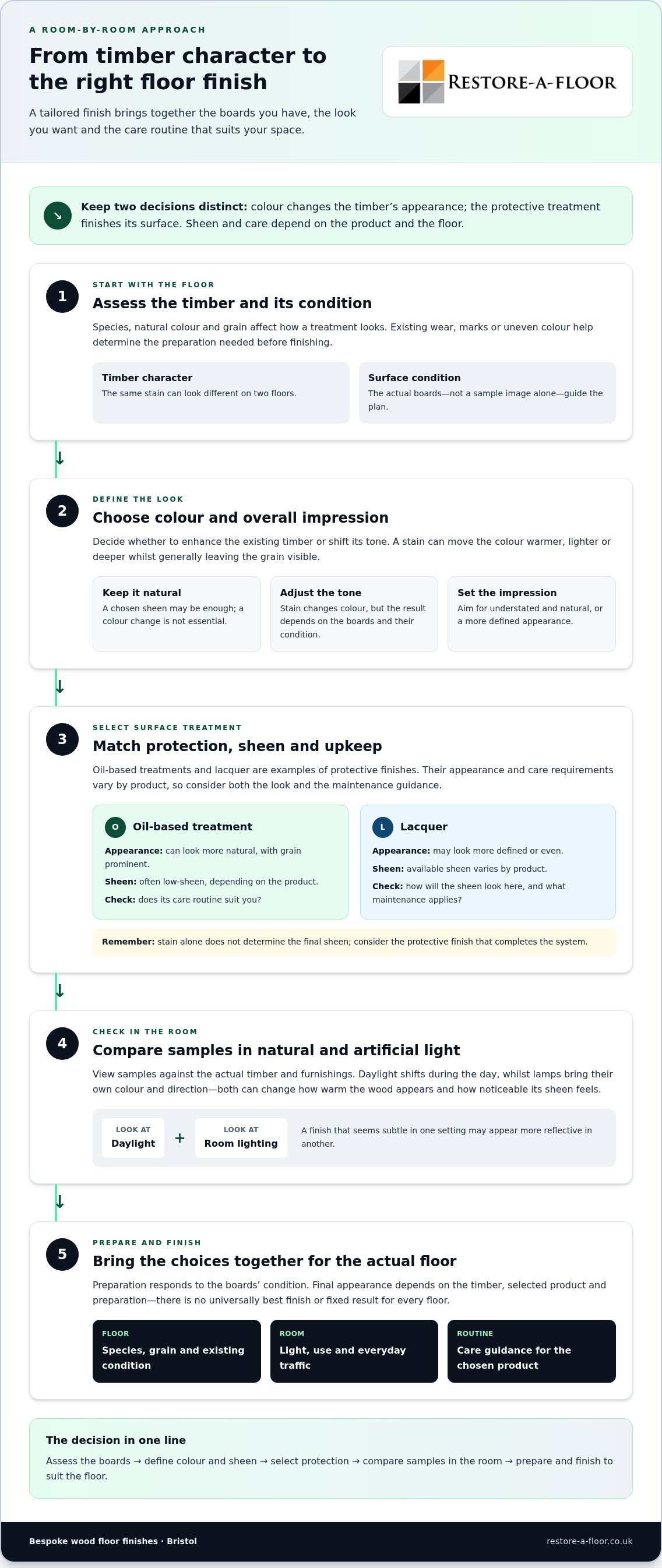
How to Choose a Bespoke Wood Floor Finish for Your Room
A clear brief makes it easier to narrow the options without losing sight of what matters most. Start with the floor itself, then weigh your preferred appearance against the room’s use and the preparation it may need. This gives you a practical route from initial ideas to an informed finishing decision.
What should you consider before choosing a finish?
Before comparing finishes, note the timber type if known, visible wear, any previous treatment you’re aware of and how the room is used. Consider the daylight, artificial lighting and furnishings the floor needs to complement. These observations help focus your preferences: do you want to celebrate the timber’s natural character, change its colour or achieve a particular sheen? Assessing first makes sample comparisons more relevant.
Use these five steps to organise your decision:
Assess the floor. Record its timber, condition and visible wear. Previous coatings or treatments can affect preparation, so understand the floor before selecting a final finish.
Define the look. Decide whether natural grain, a changed colour or a chosen sheen is your priority. Reference images can help describe the effect you like, but treat them as inspiration rather than a guarantee of the same result.
Consider room use. Think about foot traffic, furniture, pets and cleaning habits. These details help frame a realistic discussion about the finish and its ongoing care.
Compare samples. Review options against the actual timber and the room’s furnishings. Look at them in daylight and under the artificial lighting you use most often.
Agree the finish. Bring together the desired appearance, floor condition, preparation requirements and care considerations before settling on the final treatment.
Preparation is part of the choice, not an afterthought. Worn areas, old coatings or uneven colour may influence what work is needed before a new finish can be applied, and the timber’s condition can affect the final appearance. Restore-A-Floor considers preparation alongside finishing, drawing on more than 20 years of flooring experience across residential and commercial projects.
How can samples help you make the decision?
A screen image can be affected by display settings, whilst a small swatch may not show how a colour or sheen reads across your floor. View samples in the room and compare them with the timber, furnishings and usual lighting. Give yourself time to notice whether the option still feels right in different conditions. Bespoke wood floor finishes Bristol projects benefit from decisions grounded in the room, not just a picture.
Parquet installation is another tailored timber flooring option, with its own pattern and layout considerations. If you’re ready to discuss a finish for your existing wood floor, explore tailored wood floor refinishing with Restore-A-Floor.
Bespoke Wood Floor Finishes in Bristol: From Assessment to Final Result
A tailored finishing project starts with the floor you have and the result you want. Rather than selecting a treatment in isolation, Restore-A-Floor considers the timber’s condition, the room’s requirements and your preferences together. This shapes an approach from preparation through to final finishing, whether the project is in a Bristol home or commercial property.
How does a tailored finishing project take shape?
The first step is understanding the floor and your brief. Timber type, visible wear and any previous treatment can influence the preparation needed, whilst the room’s lighting, use and desired appearance guide the finishing choices. Your priorities might be to retain the wood’s natural character, adjust its colour or achieve a particular sheen. Bringing these factors together helps establish an approach suited to the individual project.
Preparation and finishing are connected stages. The floor needs to be assessed and prepared appropriately before the chosen treatment is applied; the condition of the surface can influence both the work involved and the appearance achieved. Restore-A-Floor brings over 20 years of flooring industry experience to this process, keeping the requested look central whilst accounting for the floor itself. Flooring work is carried out in a dust-free environment.
What happens when you request a Bristol quotation?
Use the online quotation form to outline where the project is located, describe the existing floor and share the result you have in mind. Details such as the room’s use, visible wear and your preferred colour or sheen help explain the brief. You don’t need to have every finishing decision settled before making an enquiry; a clear sense of what matters most is a useful starting point.
A quotation begins a discussion about the project, rather than setting a one-size-fits-all price for every floor. The work required depends on the particular timber, its condition and the agreed scope, so the tailored approach keeps those details in view. Restore-A-Floor works on residential and commercial flooring in Bristol, considering preparation and final finishing as part of the same project rather than treating the finish as an isolated choice. Restore-A-Floor also serves customers in Swansea, Cardiff, Pembrokeshire, Haverfordwest and Cardiganshire.
If you’re ready to discuss a tailored wood floor project, Request a free flooring quotation online.
Start Shaping a Finish That Feels Right at Home
Your next step is to turn your preferences into a clear project brief. Note what you’d like to preserve, what you hope to change and how the room is used. These priorities give the finishing conversation a practical starting point and help keep the focus on a result that feels considered, not chosen in isolation. With Bespoke wood floor finishes Bristol, the right direction suits the character of your floor and feels at home in your space.
You don’t need to settle every detail before exploring the project. A few notes about the floor’s condition, the room and the appearance you’re drawn to can help clarify what matters most. From there, Restore-A-Floor can consider the work as a tailored flooring project, with the proposed preparation and finish shaped around your requirements rather than a generic specification.
Take the next step with a free online flooring quotation. Share your starting point and preferred look, and begin planning a finish that brings your vision and everyday needs together.
Frequently Asked Questions
Can I choose a bespoke finish for an existing wood floor?
Yes, an existing wood floor can be sanded and refinished with a finish tailored to your preferred appearance. The boards’ condition and any previous coating help determine the preparation needed before a new treatment is applied. For example, a floor with worn patches may need a different preparation approach from one with an even surface. An assessment helps establish a suitable plan for the timber you already have.
Which wood floor finish is best for a busy household?
There isn’t one best finish for every busy household; the choice should reflect the floor, how the room is used and the care you’re comfortable providing. Consider where people walk most, whether chairs are moved frequently and how often the floor is cleaned. Share these details when discussing options, so appearance and practical expectations are considered together. No finish should be treated as immune to everyday marks.
What is the difference between oil and lacquer floor finishes?
Oil-based finishes are generally chosen for a natural-looking surface, whilst lacquer creates a surface coating that can give the timber a more defined appearance. The precise look and care requirements vary by product, so the labels alone don’t tell the whole story. Compare the finish on your floor and follow the manufacturer’s maintenance guidance. Your preferred appearance and willingness to carry out ongoing care can help guide the choice.
Can a wood floor be stained a different colour?
Yes, staining can change the colour of a wood floor, from a subtle shift in tone to a more noticeable change, while allowing the grain to remain visible. The result depends on the existing timber and its condition, so a colour that looks one way on a sample may appear different on your boards. Use samples to judge the colour alongside the room’s furnishings before choosing a final shade.
Will a bespoke wood floor finish change the natural grain?
A bespoke finish doesn’t necessarily hide the grain. A transparent or semi-transparent stain can alter the timber’s tone while leaving its pattern visible, although the change in colour may make some grain features more noticeable. The selected treatment and sheen also affect how the surface reads. If preserving the wood’s natural character is important, make that a priority in the brief and assess suitable samples against the existing boards.
How do I maintain a newly finished wood floor?
Maintain the floor according to the care instructions for its specific finish, as cleaning products and routines can differ. Remove loose grit regularly to help avoid it being walked across the surface, and use only cleaning methods recommended for the treatment. Keep the product details for future reference, particularly if the floor needs attention later. Routine cleaning supports day-to-day care, whilst professional sanding and refinishing may be appropriate if the appearance deteriorates.
Can Restore-A-Floor provide bespoke wood floor finishing in Bristol?
Yes, Restore-A-Floor provides wood floor sanding and refinishing in Bristol, with finishing tailored to the floor and project requirements. The service supports residential and commercial flooring work, from preparation through to the final treatment. Restore-A-Floor also serves Swansea, Cardiff, Pembrokeshire, Haverfordwest and Cardiganshire. To begin, outline your floor and preferred result through the online form and request a free quotation for your project.
Comments