

Commercial Flooring Specialists in Birmingham: A Guide to the Right Finish
Could the right commercial floor for your Birmingham premises be the one you already have? Choosing commercial flooring specialists Birmingham businesses can work with means weighing restoration against replacement, while considering how the space is used and how much disruption the work could cause. It’s a decision that affects appearance, upkeep and day-to-day operations.
Before settling on a finish, consider what the existing surface can support and what your workplace needs from it. This guide compares commercial flooring approaches and explains how to plan a durable, well-finished project, from assessing the floor and selecting a suitable treatment to organising work around your premises.
Restore-A-Floor brings over 20 years of industry experience to commercial wood sanding and refinishing, concrete polishing, parquet supply and installation, tiled-floor restoration and sports-floor line marking. The team works in a dust-free environment for floor refinishing and can shape an approach around your surface and intended use. Read on to see what to consider before requesting a tailored quotation.
Table of Contents
Commercial Flooring in Swansea: Start With the Needs of Your Premises
How Commercial Floor Material Shapes Restoration and Installation
Restoration or New Flooring? Compare the Commercial Project Options
Plan Commercial Flooring Work in Birmingham Around Your Operations
Choose Restore-A-Floor for Commercial Flooring Services in Birmingham
Commercial Flooring in Swansea: Start With the Needs of Your Premises
Should you restore the floor already in place or plan a new installation? For Swansea businesses, the answer depends on more than appearance. The existing surface, how each area is used and the demands placed on it all help determine a suitable project route. A clear brief gives commercial flooring specialists in Swansea a better understanding of the finish and practical performance your premises need.
Start by considering how people and equipment move through the space. A busy retail entrance, an office meeting room, a school corridor and a leisure facility have different patterns of use, cleaning routines and presentation needs. Trolleys and other equipment can place different demands on a surface from ordinary pedestrian traffic. The finish should suit these day-to-day conditions, not just look appealing when the project is complete.
Appearance matters, particularly where customers, visitors or staff form an impression of your premises. Balance a polished, welcoming look with practical care: consider how often the floor will be cleaned, what marks or wear are likely, and how consistent the finish should be across adjoining areas. A useful project brief records these priorities, the rooms involved and the result you want. This article focuses on hard-floor restoration and installation by Restore-A-Floor, including wood, concrete, parquet and tiled surfaces. For a broader overview, see types of flooring.
What should a commercial floor do in a busy Swansea space?
Consider each zone separately. A customer-facing area may call for a carefully presented finish, while a back-of-house space may need to accommodate regular use and routine cleaning. In education or leisure settings, movement and the activities taking place also shape the brief. Record expected footfall, equipment, cleaning methods and visual requirements for each area. These details help define a finish that is practical as well as considered.
When is restoration worth considering instead of replacement?
Start with the floor’s material and condition. Existing wood may be suitable for sanding and refinishing, concrete can be polished, and some tiled floors can be restored and cleaned. These options can renew an existing hard surface without automatically requiring a new installation. Wear alone does not establish what is possible: the floor needs to be assessed in context, and its condition and intended use will help determine whether restoration is appropriate or a different project scope is needed.
How Commercial Floor Material Shapes Restoration and Installation
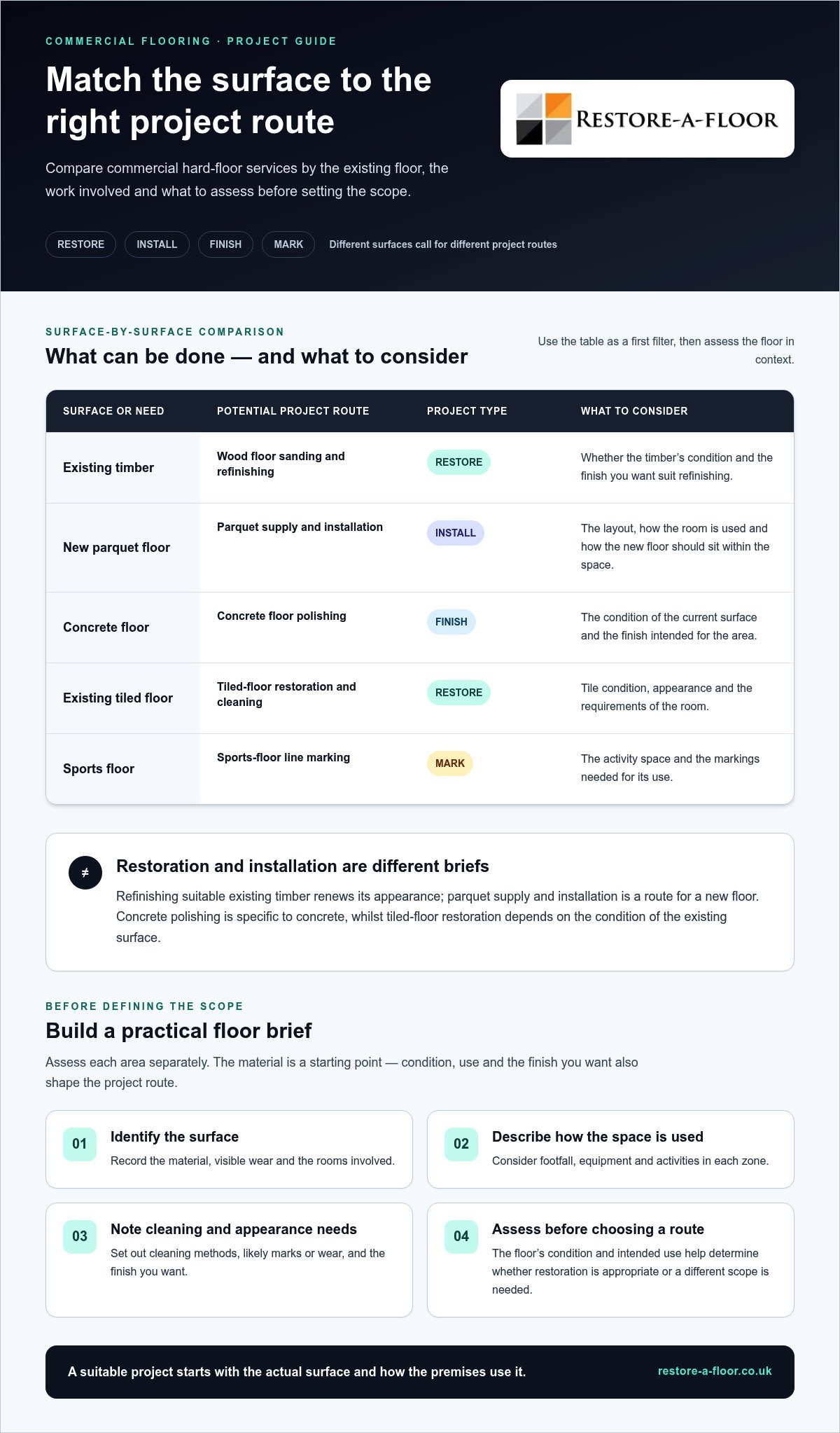
The material underfoot is a useful starting point, but it does not determine the project on its own. The floor’s condition, intended use and required finish all influence whether restoration or installation is the better route. This comparison focuses on hard-floor services relevant to commercial premises.
Wood, parquet and concrete: which project route fits?
For suitable existing timber, sanding and refinishing can renew the floor’s appearance without treating it as a new installation. Parquet supply and installation is a separate route for a new floor, rather than a way to describe sanding existing parquet. Concrete polishing is specific to that surface, and the right scope depends on its condition and the intended result. For more detail, explore the concrete floor grinding and polishing guide.
These distinctions help businesses looking for commercial flooring specialists in Birmingham choose a scope that reflects the actual surface, rather than assuming one method suits every hard floor. An existing timber floor being refreshed presents a different brief from a space receiving new parquet. In either case, the floor’s condition and how the room will be used should inform the plan.
How do tiled and sports floors fit commercial requirements?
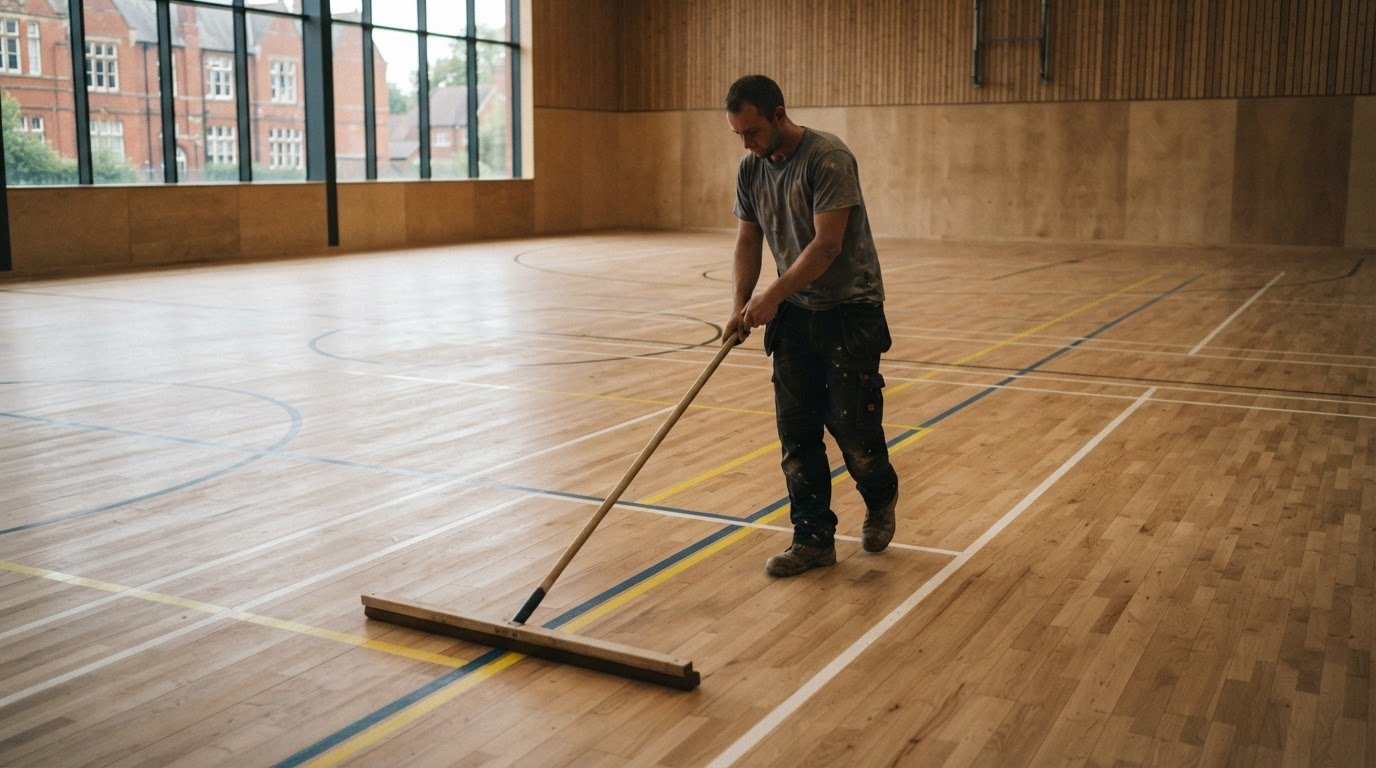
Restoration and cleaning may suit an existing tiled surface, depending on its condition and the finish sought. Sports-floor line marking serves a different purpose: it defines activity areas through markings planned for the space. For a sports hall project, see the sports hall floor line marking guide. For carpet-specific information beyond this hard-floor discussion, the Carpet and Rug Institute provides resources on carpet and rug industry standards.
Use the table as a first filter, not a substitute for assessing the floor. Note the surface material, visible wear, how the space is used and the finish you want. These details help establish a practical project brief. Restore-A-Floor’s commercial flooring services include restoration and installation options shaped around the surface and project requirements.
Restoration or New Flooring? Compare the Commercial Project Options
Choosing between restoring an existing floor and installing a new one is not simply a choice between old and new. The decision depends on the floor’s condition, its material, the finish you want and the work needed to achieve it. Restoration can suit a floor in appropriate condition, while a new installation offers a route to a different material or design. Neither is automatically the better option.
Use these factors to frame the project, not as a substitute for an assessment. A clear view of the floor helps establish what work is appropriate. Commercial flooring specialists in Birmingham can then shape the project around its condition, material and intended use, rather than assuming one route fits every space.
When might commercial floor restoration make sense?
Visible wear, a tired-looking finish or a surface that no longer looks the way you want are good reasons to consider an assessment. The method depends on the material: suitable timber may be sanded and refinished, concrete may be polished, and existing tiles may be restored and cleaned. These processes differ, and the result depends on the floor’s condition. Restoration should not be treated as a promise that every mark or area of damage can be removed.
An assessment can also help distinguish an appearance issue from a wider condition concern. Note where the wear appears, whether it is limited to particular areas and how the floor is used. That context helps define the work required and whether restoration fits the finish you want. The project may focus on renewing the surface, or an assessment may indicate that a new installation better suits the brief.
When should a project consider new parquet flooring?
Parquet supply and installation is a distinct option for a new floor, not another name for sanding existing timber. It can suit a project where the desired result calls for a new patterned surface, with the layout and finish considered as part of the overall design. Let the room’s use and the character of the premises guide those decisions. For more on the installation process, see the Birmingham parquet floor installation guide.
Restoration and new installation are alternative project routes, not a ranking of better and worse. A careful assessment followed by a clear scope helps align the chosen work with the surface and the result your business wants.
Plan Commercial Flooring Work in Birmingham Around Your Operations
A well-planned flooring project starts before work begins. For businesses planning commercial flooring work in Birmingham, a clear picture of the premises and its daily routines helps shape a practical scope. Access, operating hours, priority areas and the selected service all affect how work can be organised. Avoid assuming that every project follows the same sequence or causes the same level of disruption.
What information helps scope a commercial flooring project?
Prepare a concise brief describing the space and the result you want. Include the floor material, approximate area and visible condition, then explain how each area is used and note any access or operating constraints. Be specific about the intended work, such as refinishing existing wood, polishing concrete or installing new parquet. This gives the project team a useful starting point for discussing the scope and planning next steps.
A facilities team can use this checklist before requesting a quotation:
Premises type and the areas included in the project
Floor material, approximate area and visible wear or damage
How each area is used, including regular equipment or activity
Preferred outcome, such as refinishing, polishing, tiled-floor restoration or new parquet
Access arrangements, operating hours and any areas needing priority attention
Relevant site contacts and how staff or customers should be informed about planned work
How can businesses organise access and project sequencing?
Once the requirements are clear, the project can follow a defined sequence. Each stage informs the next, while leaving room for a plan that reflects the premises and chosen service.
Define requirements. Set out the desired finish, areas involved and practical priorities.
Assess the floor. Review the material and condition to establish a suitable approach.
Agree the scope. Clarify which areas and processes are included in the project.
Plan the work. Discuss access, operating hours, priority zones and how the sequence will fit around site activity.
Review the finish. Look over the completed areas against the agreed brief.
On a live site, sequencing helps staff understand which areas are affected and when access arrangements may change. A business might identify a customer-facing entrance as a priority, while a multi-room premises may need work areas planned in stages. These are planning considerations, not a fixed schedule: the work plan and likely disruption depend on the floor, selected service and premises. Agreeing who will communicate updates also helps keep staff and visitors informed.
With the scope and site details to hand, Birmingham businesses can request a free flooring quotation and share the information needed to discuss a project tailored to their premises.
Choose Restore-A-Floor for Commercial Flooring Services in Birmingham
A commercial floor needs to suit its material, setting and intended finish. Restore-A-Floor works with Birmingham businesses on hard-floor restoration and installation, bringing over 20 years of industry experience to projects where the right approach depends on the surface. The team shapes the scope around the floor and the premises, rather than applying one specification to every site.
Commercial hard-floor services from assessment to finish
Services include wood floor sanding and refinishing, concrete floor polishing, parquet supply and installation, and tiled-floor restoration and cleaning. Restore-A-Floor also provides sports-floor line marking for spaces that need defined activity areas. Each service addresses a different material or project requirement: refinishing renews suitable existing timber, while parquet installation creates a new floor. The proposed work can be tailored to the surface, site use and desired result.
For floor refinishing, Restore-A-Floor provides a dust-free working environment. This is useful to consider when planning a commercial project, where the work area and surrounding operations need attention. The team’s experience across wood, concrete, parquet and tiled floors helps connect the project brief to a relevant service, whether the aim is to restore an existing surface or plan an installation. The scope should reflect the premises and selected finish.
The phrase commercial flooring specialists Birmingham should mean more than a broad list of flooring options. A useful specialist approach starts with the floor in front of you, the work required and the outcome your business has in mind. Restore-A-Floor’s services cover the hard-floor work outlined above, including sports-floor line marking where the premises call for it.
What happens when you request a commercial flooring quotation?
Restore-A-Floor offers free online quotations, with proposed work tailored to the project. To describe your requirements, share the floor type, how the site is used and the result you want. Include the areas involved and whether you are considering restoration or a new parquet floor. A clear brief gives the team useful context for understanding the project and its intended finish.
Before submitting your request, gather the details most relevant to the work:
The floor material and areas under consideration
How the premises or specific rooms are used
The visible condition of the existing surface, where applicable
Your preferred outcome, such as refinishing, polishing, tiled-floor restoration or installation
Any site considerations that may shape the project scope
With over 20 years of experience and a focused range of commercial hard-floor services, Restore-A-Floor can help Birmingham businesses plan a project around their surfaces and requirements. To discuss your premises and next steps, request a free commercial flooring quotation.
Take the Next Step Towards a Better-Finished Floor
Turn the needs of your premises into a clear project brief. Note the areas involved, how they are used and what you want the finished floor to achieve. This gives the discussion a practical starting point, whether you are considering a refresh or planning a new installation. Working with commercial flooring specialists in Birmingham means shaping the approach around the actual floor and the demands of the site, rather than choosing a finish in isolation.
Restore-A-Floor’s qualified team can help you consider a suitable way forward, with project planning informed by over 20 years of industry experience. Share the floor type, site use and intended result when you request a free online quotation. A considered brief helps set the project on a clear path towards a finish that suits your business. Request a free commercial flooring quotation and take the first step towards planning your Birmingham project.
Frequently Asked Questions
How do I choose commercial flooring specialists in Birmingham?
Choose a team that matches its proposed work to your floor material, the surface’s condition and how your premises are used. Restore-A-Floor provides commercial restoration and installation, so the discussion can focus on a suitable project route rather than a generic specification. Share the areas involved and the finish you want, then consider whether the proposed scope addresses those priorities clearly. This helps you assess whether the approach fits your site.
Can an existing commercial floor be restored instead of replaced?
Yes, restoration may suit an existing floor, but it depends on the material and condition. A worn finish on timber presents a different restoration question from damage to tiles or a concrete surface. Describe what you can see and where it occurs, such as marks concentrated near an entrance or wear across a larger area. An assessment can help determine whether restoration is appropriate; it should not be assumed that every flaw can be removed.
What commercial floor types can Restore-A-Floor restore or install?
Restore-A-Floor works with commercial wood, concrete, parquet and tiled floors, and provides sports-floor line marking. Services include sanding and refinishing suitable wood, concrete polishing, parquet supply and installation, and tiled-floor restoration and cleaning. These are different project routes, not interchangeable treatments. For example, a new parquet floor is an installation, while sanding and refinishing addresses suitable timber already in place. The intended use and surface help define the work.
How can commercial flooring work be planned around business operations?
Map the work areas against normal site activity before agreeing a sequence. Note busy entrances, customer-facing rooms, staff routes and any spaces that need to remain accessible. Then decide who will share updates with staff or visitors and how changes to access will be communicated. A phased approach may suit some premises, but the practical plan depends on the selected service, floor and site requirements.
Is concrete floor polishing suitable for commercial premises?
Concrete floor polishing can be considered for commercial premises with a concrete surface, but suitability depends on the existing floor and intended finish. The room’s use is relevant too: explain what activity takes place there and what appearance you want. This gives the project team context to discuss the appropriate scope. Polishing is a concrete-specific service, so it is not a general solution for other floor materials.
How do I request a commercial flooring quotation in Birmingham?
Request a free online quotation and include the floor type, approximate area, site use and result you have in mind. Mention whether you are considering restoration or a new installation, and note any areas that need particular attention. Restore-A-Floor serves Birmingham as well as Swansea, Cardiff, Bristol, Pembrokeshire, Haverfordwest and Cardiganshire. A clear description helps the team understand the project you want to discuss.
Does Restore-A-Floor provide sports floor line marking?
Yes, Restore-A-Floor provides sports-floor line marking for activity spaces that need defined playing areas. Describe the type of space, how it is used and the markings you want included. If the floor is part of a wider project, explain that too, so the line-marking work can be considered alongside the relevant flooring needs. The proposed scope is tailored to the premises and intended use of the space.
Comments