

Composite Decking Builders Bristol: A Specialist Comparison Guide
What if your garden deck remained as pristine and safe in a damp January as it does in the height of July, without you ever lifting a sanding block or a tin of stain? For many homeowners, the exhaustive cycle of timber deck restoration Bristol requires becomes a frustrating annual chore, particularly when faced with the inevitable rot and dangerously slippery surfaces that follow a typical West Country winter. We recognise that you seek an outdoor space that serves as a seamless extension of your home, offering both sophisticated aesthetics and uncompromising safety without the burden of constant upkeep.
This guide provides a technical deep dive into the structural differences between traditional timber and modern composite systems to help you choose a solution that truly lasts. You will learn how precision-engineered materials can eliminate the risks of decaying sub-frames and provide a permanent, slip-resistant surface that adds up to 4% to your property's value. We will compare installation complexities, long-term durability, and the specific maintenance profiles of each material to ensure your Bristol garden remains a functional asset for decades to come.
Table of Contents
Why Bristol Homeowners are Switching to Composite Decking
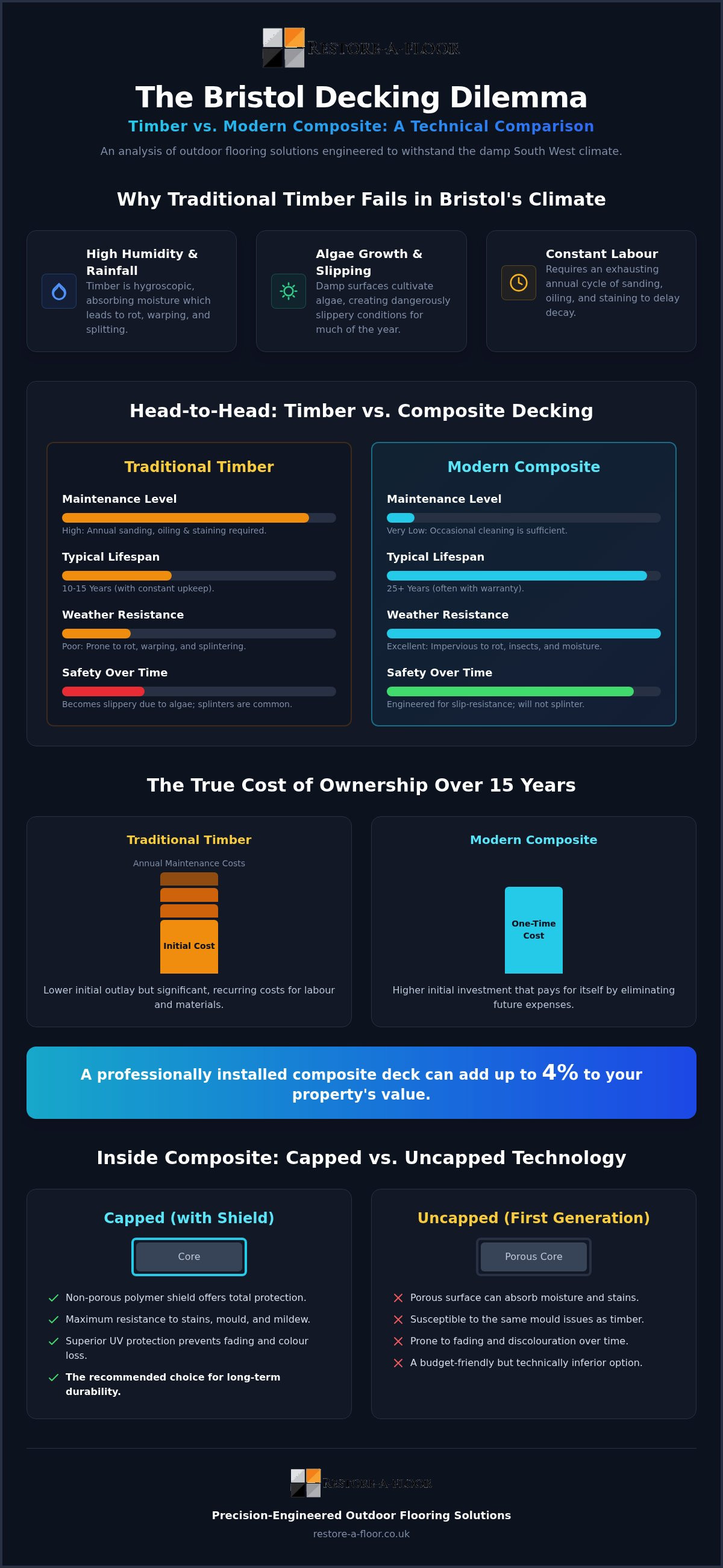
Bristol gardens are undergoing a significant transformation. Property owners are increasingly viewing their gardens not just as patches of lawn, but as functional outdoor rooms that require high-performance surfaces. This shift has elevated the demand for Wood-plastic composite materials, which combine recycled wood fibres with durable polymer resins to create a hybrid product that outperforms traditional timber. Many residents are moving away from the recurring cycle of timber deck restoration Bristol requires, opting instead for a material that survives the elements without constant intervention.
The city's specific micro-climate, characterised by high humidity levels and frequent Atlantic rainfall, creates a hostile environment for organic materials. Choosing composite isn't just about style; it's a strategic move toward outdoor flooring that resists the environmental decay common in the South West. By treating the deck as a precision-engineered floor rather than a simple wooden platform, residents are securing their property's value and their own leisure time.
The Problem with Traditional Timber in the South West
The damp South West climate is particularly unforgiving to traditional timber. Softwood decking, whilst initially cost-effective, often becomes a liability within just a few seasons. Algae growth thrives in these conditions, creating dangerous, slippery surfaces that render the garden unusable for much of the year. The lifecycle of softwood in the UK typically spans only 10 to 15 years, and reaching that milestone requires an exhausting schedule of annual maintenance. Homeowners often underestimate the ongoing commitment required for timber deck restoration Bristol. The labour-intensive process of sanding, oiling, and staining is not just a weekend chore; it represents a significant recurring investment. When you factor in the cost of professional restorative treatments and the high risk of rotting sub-frames, the appeal of a low-maintenance alternative becomes clear.
The Modern Aesthetic: Beyond the "Plastic" Look
Early iterations of synthetic decking were often criticised for their artificial, plastic appearance. However, modern premium boards have undergone a design revolution. They now feature sophisticated, non-repeating grain patterns and variegated colour palettes that echo the depth of natural hardwoods. These boards remain colour-fast amongst the strongest UV exposure and the harshest rains, ensuring the aesthetic you choose today remains intact for decades. Architectural versatility is another key driver. Hidden fastening systems eliminate the need for surface screws, creating a clean, seamless finish that complements the minimalist lines of modern Bristol architecture. This transition to composite isn't merely about avoiding rot; it's about achieving a high-end, bespoke aesthetic that timber struggles to maintain over time.
Technical Breakdown: Timber vs Composite Materials
Choosing between organic timber and engineered composite involves understanding how these materials behave at a molecular level. Timber is inherently hygroscopic; it absorbs and releases moisture, leading to the natural warping, cupping, and splitting that often triggers the need for timber deck restoration Bristol residents find so persistent. In contrast, composite materials manage environmental stress through thermal expansion. Whilst polymers expand and contract slightly along their length during temperature shifts, they do not twist or splinter like wood. This stability is achieved through a meticulous manufacturing process that often incorporates up to 95% recycled wood fibres and plastic films, making it a technically superior and environmentally responsible choice for modern builds.
Composition and Durability
The primary distinction in modern composite technology lies between capped and uncapped boards. Capped composite features an extra layer of durable polymer, known as a "shield," which is co-extruded onto the core. This cap is non-porous, providing an impenetrable barrier against UV rays, moisture, and stubborn organic stains. Uncapped boards, whilst more budget-friendly, remain susceptible to the same mould and fading issues that plague traditional wood. Premium composite boards offer several technical advantages:
Zero moisture absorption in capped variants.
High resistance to fungal decay and wood-boring insects.
Consistent dimensions that prevent tripping hazards from warped boards.
If your preference remains with natural timber, the density of the species is the critical factor. Hardwoods such as Ipe or Cumaru are so dense they possess a Class A fire rating and naturally resist rot and insect infestation without chemical treatments. However, this density requires specialist installation techniques, including pre-drilling and specific hidden fixings, which differ significantly from standard softwood projects.
The Importance of the Sub-Frame
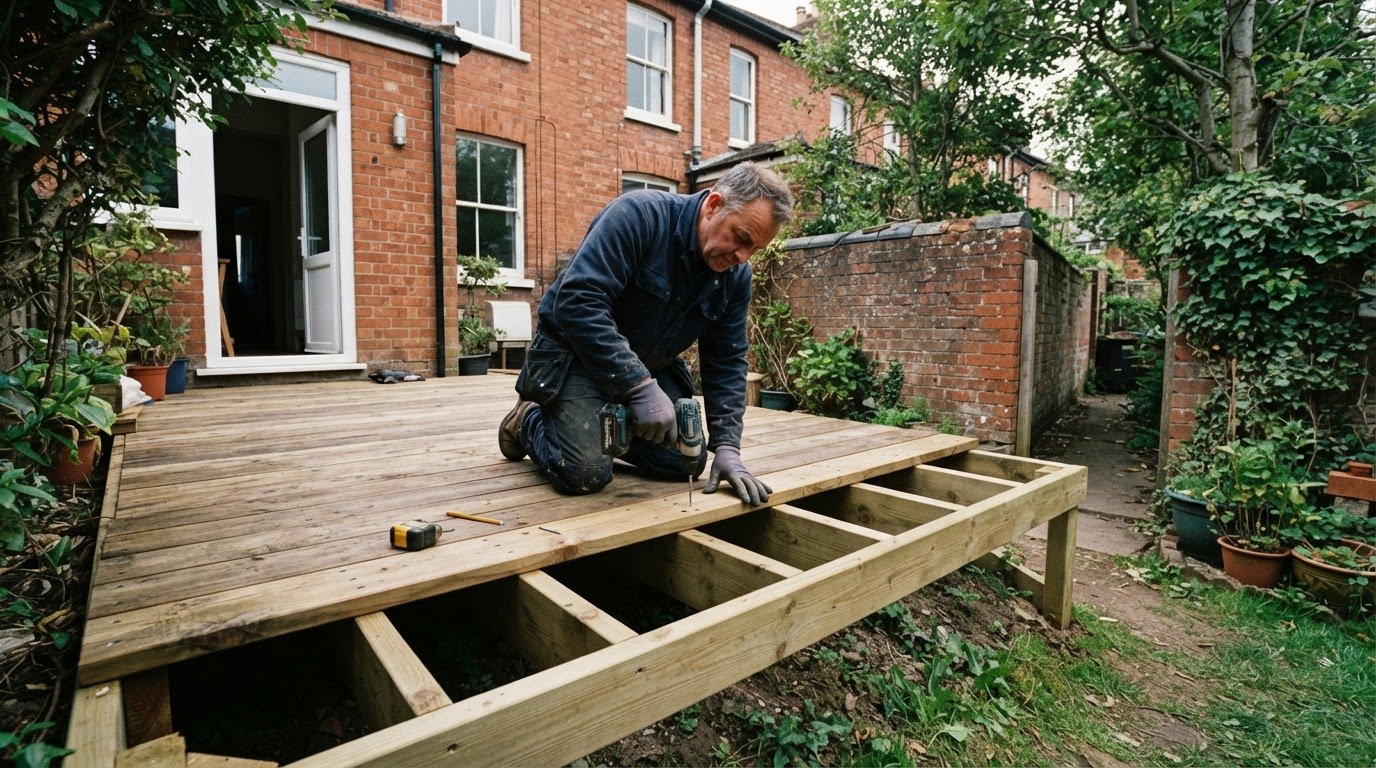
A deck's longevity is dictated by what lies beneath the surface. Many homeowners invest in premium boards but install them over a standard treated-softwood frame. In the heavy clay soils of Bristol, where drainage is often poor, these timber joists can succumb to ground-rot long before the decking boards show wear. Many homeowners initially consider timber deck restoration Bristol services as a quick fix, but soon realise that structural issues require a more permanent material shift.
For a true lifetime installation, we recommend composite or aluminium sub-frames. These systems are impervious to moisture and provide a perfectly level, rigid foundation that will never decay. Ensuring your project has adequate ventilation and a graded sub-base is essential for preventing water-logging. If you are unsure about the integrity of your current garden structure, you can consult our specialist design team for a technical evaluation of your sub-floor requirements.
Maintenance and ROI: Calculating the Real Cost
Investing in a high-quality garden platform requires a shift from short-term budgeting to a 25-year financial perspective. Whilst the initial capital required for timber is often lower, the "True Cost of Ownership" tells a much more complex story. For homeowners in the South West, the recurring necessity of timber deck restoration Bristol professionals provide—encompassing deep pressure washing, meticulous sanding to remove greyed fibres, and multiple coats of specialist oils—represents a significant annual expenditure. Over two decades, these cumulative maintenance outlays, combined with the eventual replacement of decaying boards, often exceed the total cost of a premium composite installation.
Composite systems bypass this labour-intensive cycle entirely through their "wash and go" maintenance routine. The polymer-shielded surface prevents organic matter from bonding with the core, meaning a simple seasonal rinse with soapy water is usually all that's required to maintain the deck's integrity. Beyond time savings, the financial return is tangible. Integrating custom decking solutions Bristol homeowners trust can add approximately 4% to the value of a UK home. Prospective buyers increasingly value the "zero maintenance" promise of a surface that won't rot, warp, or require expensive restorative treatments every spring.
Safety and Slip Resistance
In the damp Bristol climate, safety is a paramount concern for any outdoor flooring project. Traditional timber surfaces often fail the Pendulum Test Value (PTV) once algae takes hold, becoming treacherous and slippery when wet. This is a primary driver for the timber deck restoration Bristol residents frequently request to regain a safe walking surface. Textured composite boards are engineered with specific friction profiles that remain stable even in heavy rain. This makes them a significantly safer choice for family homes with young children or elderly residents who require a reliable, splinter-free environment that stays slip-resistant throughout the British winter.
Longevity and Warranties
The technical superiority of modern polymer blends is reflected in the extensive warranties provided by premium manufacturers, often exceeding 25 years for both material performance and fade resistance. Contrast this with the limited, often conditional guarantees found on treated softwood, which rarely cover the structural integrity beyond a decade. It's important to understand that manufacturer warranties are typically contingent on following strict installation protocols. Our professional approach ensures full compliance with these engineering standards, securing your investment and providing the peace of mind that your garden room will remain a functional asset for decades to come.
Selecting the Right Composite Decking Builders in Bristol
Identifying the right contractor requires looking beyond general gardening skills. Whilst many landscapers offer decking as an add-on service, a specialist decking builder approaches the project as a structural engineering task. This distinction is particularly vital in the South West, where poor sub-floor ventilation and inadequate drainage lead to premature failure. We frequently encounter homeowners seeking timber deck restoration Bristol services because their original wooden structures were installed without sufficient airflow or ground clearance. A specialist ensures that the sub-frame is engineered to be as durable as the premium surface it supports.
When interviewing potential builders, inquire specifically about their technical experience with high-end composite brands. These materials require specific fastening systems and precise calculations for thermal expansion that differ significantly from traditional timber. You should also evaluate their site management standards. In dense residential areas of Bristol, a dust-free approach and meticulous site tidiness are essential to minimise disruption to your household and neighbours. Verifying a builder's proficiency in managing complex sub-structures is the best way to avoid future structural issues.
Bespoke Design and Planning Permission
Adhering to UK permitted development rules is a critical part of the planning phase. In Bristol, planning permission is typically required if your deck platform exceeds 30cm above the ground or if the structure, combined with other outbuildings, covers more than 50% of your total garden area. We provide bespoke CAD designs to navigate these technicalities, ensuring every staircase and balustrade meets local building regulations. For decks over 600mm high, specific balustrade heights and structural load-bearing capacities must be certified to ensure the safety of all users.
The Installation Process
A professional installation follows a methodical timeline, beginning with a comprehensive site survey to assess soil drainage and structural requirements. Precision is non-negotiable; seamless board gaps and perfectly mitred corners are the hallmarks of expert craftsmanship. Because composite boards expand along their length during temperature shifts, correctly calculated expansion gaps are vital to prevent buckling or warping over time. This level of detail ensures the manufacturer's warranty remains valid. If you are ready to upgrade your garden with a high-performance surface, you can book a technical site survey with our Bristol decking team to begin your project.
The Restore-A-Floor Standard: Bespoke Bristol Decking
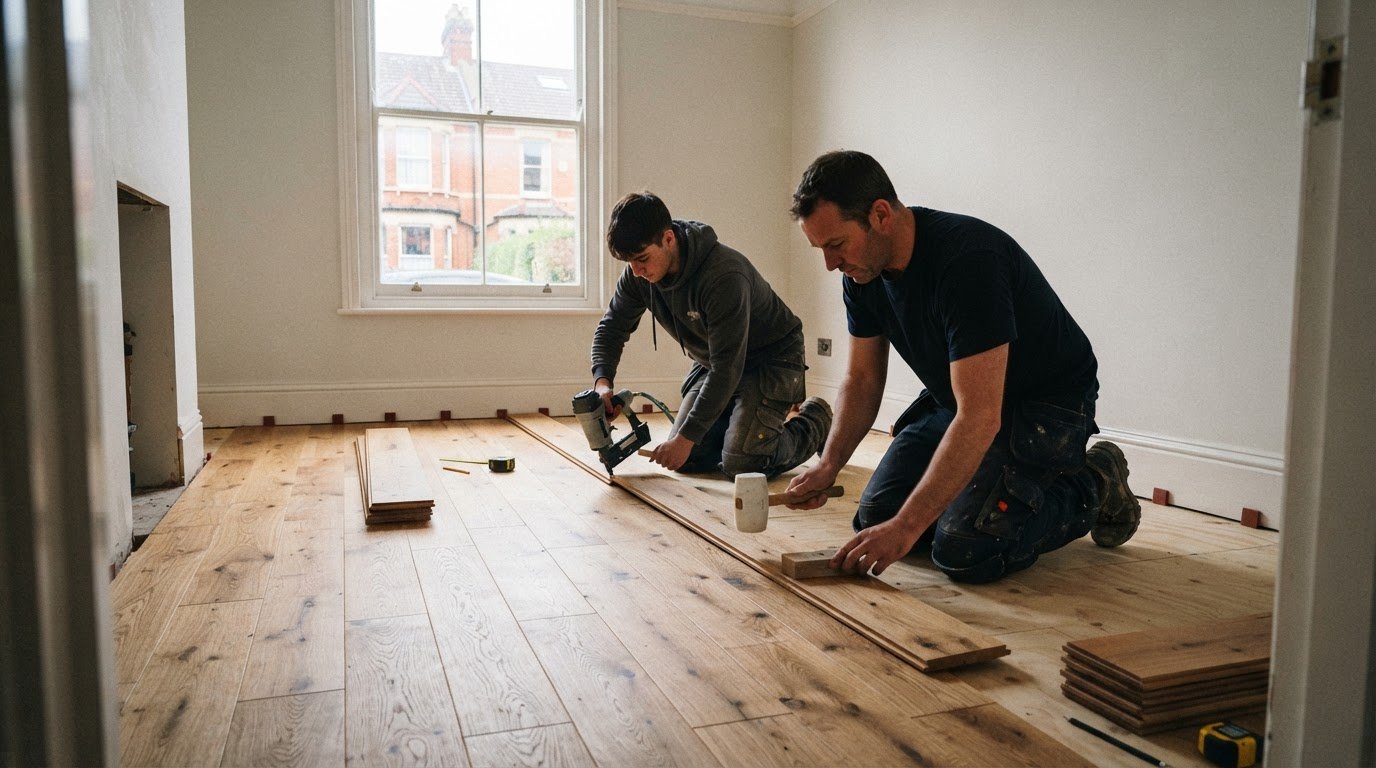
At Restore-A-Floor, we don't view a deck as a simple garden structure; we treat it as high-performance outdoor flooring. Our 20-year legacy in wood floor restoration Bristol provides a technical foundation that general landscapers often lack. We bring the same level of precision, cleanliness, and dust-free standards to your garden that we apply to high-end internal hardwood floors. This specialist perspective ensures that every project is approached with the meticulous eye of a master craftsman, focusing on the finer details that guarantee a superior aesthetic and structural result.
Our approach prioritises the invisible engineering that dictates a project's lifespan. Meticulous sub-floor preparation and advanced drainage solutions are non-negotiable standards for every build we undertake. This ensures that whether we are performing a complex timber deck restoration Bristol project or installing a modern composite system, the foundation is built to withstand the damp West Country climate. We take immense pride in our commitment to clean, professional working environments, maintaining tidy sites that respect your property and your neighbours throughout the build process.
From Restoration to New Builds
Sometimes, an existing structure doesn't require a full replacement. We can technically assess your current platform to determine if a professional deep clean and restorative refinishing can save the timber. If the sub-frame is sound, our timber deck restoration Bristol services can revitalise weathered boards to a near-new condition. Our transition from indoor parquet precision to outdoor decking systems is seamless. We apply the same intricate joinery techniques found in our parquet floor installation Birmingham projects to Bristol gardens, allowing for bespoke patterns and sophisticated finishes that elevate a standard garden deck into a true architectural feature.
Request Your Free Quotation
Choosing between natural timber and engineered composite depends on your specific garden micro-climate, your aesthetic preferences, and your maintenance requirements. Our consultation process is designed to be informative and transparent, beginning with a detailed site survey to evaluate soil conditions, light exposure, and existing structural integrity. We help you navigate the technical differences between materials to ensure you select the perfect low-maintenance solution for your lifestyle. We invite you to view our portfolio of local Bristol transformations to see the Restore-A-Floor standard in action. Contact our specialist team today to request your free, no-obligation quotation and begin the journey toward a safer, more beautiful outdoor room.
Secure Your Garden’s Future with Professional Decking Engineering
Choosing between natural wood and engineered composite is a strategic decision that affects your property’s value and your lifestyle for decades. Whilst the traditional aesthetic of timber remains appealing, the technical superiority of modern polymer blends offers a permanent solution to the decay and safety risks common in the South West. By prioritising a specialist flooring approach, you ensure that your outdoor room is supported by a sub-frame designed to outlast the elements. Whether you are currently burdened by the annual cycle of timber deck restoration Bristol demands or planning a completely new installation, the focus must remain on precision and long-term durability.
Our fully qualified and insured local team brings over 20 years of flooring expertise to every project, specialising in the installation of premium composite brands that carry extensive warranties. We provide the technical guidance needed to navigate planning regulations and site-specific drainage challenges with ease. You can book your free bespoke decking consultation in Bristol today to receive a detailed site survey and a custom design proposal. We look forward to helping you create a sophisticated, low-maintenance outdoor space that you can enjoy throughout every season.
Frequently Asked Questions
How much does composite decking installation cost in Bristol?
Installation costs vary significantly based on your choice of material and the complexity of the sub-frame. Whilst timber often has a lower initial supply price, high-performance composite represents a different investment profile due to its 25-year lifespan. Unlike the recurring expenses associated with timber deck restoration Bristol requires, composite is a one-time capital investment. Factors such as site access, ground levelling, and bespoke features will ultimately influence the final project quotation for your garden.
Does composite decking get too hot to walk on in summer?
Composite materials do retain more heat than natural timber because of their dense polymer content. On the hottest summer days, dark-coloured boards can become uncomfortable for bare feet. If your Bristol garden is south-facing and receives direct sunlight throughout the day, we suggest selecting lighter shades or premium boards engineered with heat-reflective technology. This ensures the surface remains functional and comfortable even during the peak of a British summer heatwave.
Is composite decking more slippery than wood when wet?
High-quality composite is specifically engineered to be less slippery than wood. Unlike traditional timber, which becomes treacherous when algae and mould take root in the damp Bristol climate, composite resists organic growth. Most premium boards are manufactured with deep wood-grain textures that provide excellent traction. They often achieve higher Pendulum Test Values (PTV) in wet conditions compared to softwood, making them a much safer choice for families with children.
How long does a professional decking installation take?
A professional installation for a medium-sized garden deck typically takes between three and five working days. The timeline depends heavily on the extent of the sub-floor preparation required, especially if we are clearing away an old structure or installing a complex drainage system. More intricate designs involving multiple levels, integrated lighting, or custom-fitted balustrades will naturally extend the project duration. We provide a clear schedule during the initial consultation to minimise disruption.
Do I need planning permission for a new deck in my Bristol garden?
Planning permission is generally not required if the deck platform is no more than 30cm above the ground and doesn't cover more than 50% of your garden. However, if you live in a conservation area or a listed building in Bristol, these permitted development rights might be restricted. You must also ensure that any deck higher than 600mm adheres to building regulations regarding structural safety and the height of protective balustrades for your safety.
Can composite decking be installed over an existing timber frame?
We rarely recommend installing new composite boards over an old timber frame. Whilst it might seem cost-effective, a composite deck is only as durable as its foundation. Standard timber joists often succumb to rot within 10 to 15 years, whereas composite boards are designed to last over 25 years. If the frame fails, the entire surface must be lifted. We prioritise structural integrity by assessing every frame for moisture damage before proceeding with any build.
How do I clean my composite deck to keep it looking new?
Maintenance is remarkably straightforward compared to the intensive timber deck restoration Bristol homeowners usually face. You don't need to sand, stain, or oil the surface. A simple seasonal wash with warm, soapy water and a soft-bristled brush is sufficient to remove surface debris and prevent dirt build-up. For more stubborn marks, a gentle pressure wash on a low setting is effective, provided you follow the manufacturer's specific distance and pressure guidelines to protect the finish.
What is the difference between capped and uncapped composite boards?
The primary difference is the presence of a protective polymer shield. Capped boards are co-extruded with an extra layer that encases the core, providing superior resistance to moisture, UV fading, and stubborn stains. Uncapped boards are more porous and can be susceptible to mould or colour loss over time. For the damp South West climate, we exclusively recommend capped composite to ensure your outdoor flooring maintains its aesthetic and structural performance for its entire lifespan.

Comments