

Deck Cleaning and Oiling Services: Protect and Refresh Your Timber Deck
A weathered timber deck doesn’t automatically need extensive restoration or replacement. The right care depends on the condition of the boards, and using an unsuitable cleaning method or applying oil too soon can leave an uneven finish. Professional deck cleaning and oiling services start by assessing the surface, then match the preparation and finish to the timber.
If your decking looks dirty, faded or tired after months of exposure to British weather, it can be difficult to tell whether it needs a thorough clean, oiling or more involved work. Checking the material, existing finish and condition of the boards helps identify a sensible next step, rather than treating every deck in the same way.
This guide explains how professional cleaning and oiling can refresh timber decking, what the process involves and how the material and existing finish affect the care plan. You’ll also learn when oiling is suitable and what information helps when arranging tailored deck care. Restore-A-Floor combines decking design and build expertise with over 20 years of industry experience, bringing a considered approach to outdoor timber projects.
Table of Contents
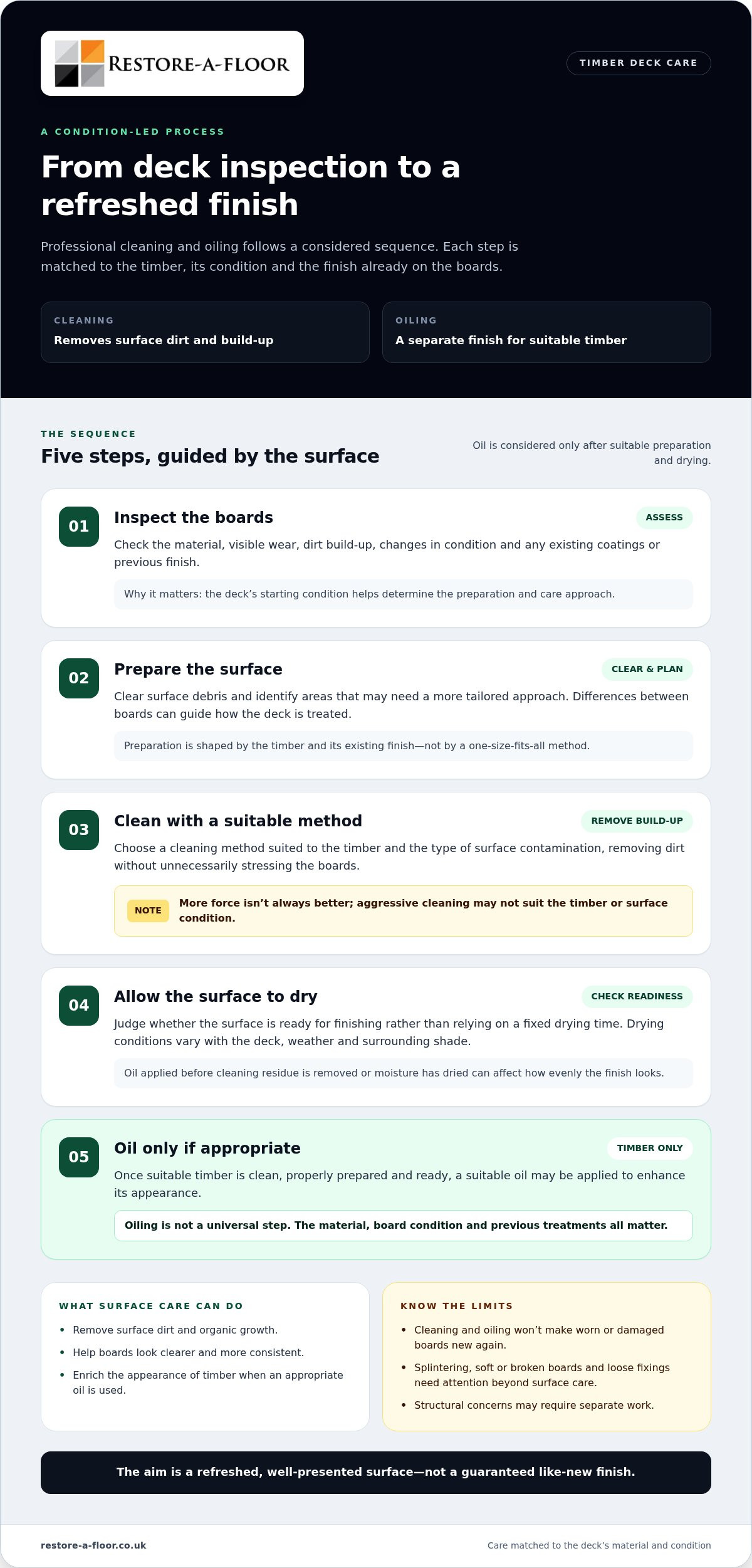
Why professional deck cleaning and oiling helps maintain timber decking
How professional deck cleaning and oiling prepares timber for a refreshed finish
Does every deck need oiling? Choose care for the material and condition
When to arrange deck cleaning and oiling in Wales and the South West
Arrange tailored deck cleaning and oiling with Restore-A-Floor
Why professional deck cleaning and oiling helps maintain timber decking
Timber decking is exposed to rain, changing temperatures, foot traffic and debris, so its surface can gradually look dull, marked or uneven. Dirt can settle into the grain, while damp, shaded areas may encourage organic growth. Professional deck cleaning and oiling services address these concerns in two distinct stages: cleaning removes surface contamination, while oiling provides a suitable finish for timber that is ready to receive it.
Professional deck cleaning and oiling means assessing the timber, cleaning it with a suitable method, then applying oil only when the surface and its condition call for it. This condition-led approach matters because the result depends on the timber, its existing finish and the care it has received over time. Cleaning and oiling can refresh the surface, but they won’t make worn or damaged boards new again.
What does a professional deck cleaning and oiling service involve?
The work generally begins with an assessment of the decking, including its material, visible condition and any previous finish. The surface is prepared and cleaned using a method suited to the timber and the type of build-up, rather than relying on force alone. Once the deck has dried appropriately, a suitable oil may be applied if the timber is ready for it.
Each stage has a different purpose. Cleaning prepares the surface by removing dirt and other build-up; oiling is a wood finishing process that can enhance the appearance of timber. The approach is tailored to the deck: a surface with an existing coating or signs of wear may need different preparation from untreated boards.
What can cleaning and oiling improve?
Careful cleaning can make the boards look clearer and more consistent, while an appropriate oil can enrich the timber’s appearance. The result depends on the deck’s starting condition, so the aim is a refreshed, well-presented surface, not a guaranteed like-new finish. Regular, considered maintenance can also help keep timber presentable between larger restoration projects.
Some problems need attention beyond surface care. Splintering, soft or broken boards, loose fixings and other signs of damage won’t be resolved by cleaning or oiling. Structural concerns may require separate work. Identifying the difference helps set realistic expectations and ensures maintenance is matched to the deck’s needs.
How professional deck cleaning and oiling prepares timber for a refreshed finish
A refreshed finish depends on more than removing visible dirt. The timber needs to be assessed and prepared to suit its condition, with oil applied only when the surface is ready. A clear sequence helps avoid treating every deck as if it were identical, particularly where boards have weathered unevenly or have an older coating.
Professional deck cleaning and oiling services generally follow these stages:
Inspect: Check the boards for visible wear, existing coatings, dirt and changes in condition.
Prepare: Clear surface debris and identify areas that may need a more tailored approach.
Clean: Choose a method suited to the timber and the type of surface contamination.
Allow the surface to dry: Judge its readiness for finishing rather than relying on a fixed drying time.
Oil if appropriate: Apply a suitable timber finish once the surface is clean and properly prepared.
Oiling should follow suitable preparation because a clean, dry surface helps the finish look more even. The method and next steps depend on the deck’s material and condition.
How is a timber deck assessed and prepared?
Before cleaning begins, the boards are checked for wear, dirt build-up and previous coatings that could affect preparation or the final appearance. Differences between boards can also guide the cleaning approach, instead of treating the whole surface uniformly. This assessment helps shape the work; it doesn’t mean board repairs or structural work are included in cleaning and oiling.
Why does the cleaning method matter before oiling?
More force isn’t always better. Aggressive cleaning may be unsuitable for some timber or surface conditions, so the method should remove contamination without unnecessarily stressing the boards. The aim is a properly prepared surface, not simply the most powerful wash. Applying oil before cleaning residue has been removed or moisture has dried can affect how evenly the finish looks.
Drying conditions vary with the deck, weather and surrounding shade, so no single timing suits every project. The surface should be allowed to dry appropriately before oiling is considered. This measured approach is part of the tailored decking work available through Restore-A-Floor’s decking services.
Does every deck need oiling? Choose care for the material and condition
No. Cleaning may help remove surface dirt from many types of decking, but oiling isn’t a universal finishing step. It’s intended for suitable timber, and whether it’s appropriate depends on the boards’ condition and any treatment or coating already present. Applying oil without considering those factors can produce a finish that doesn’t suit the surface.
Fading or a weathered appearance can be a reason to assess timber decking, but it doesn’t automatically mean oil is the right answer. Previous coatings may affect preparation, while worn, damaged or uneven boards may need a different response from sound timber. A condition-led assessment helps shape the care plan without assuming every deck needs the same treatment or a fixed annual schedule.
When is oiling appropriate for timber decking?
Oiling may be suitable when the deck is timber, the surface is ready to receive a finish and any previous treatment has been taken into account. A dull or faded appearance can prompt closer inspection, but appearance alone doesn’t determine the best next step. These considerations guide professional deck cleaning and oiling services, matching the treatment to the surface rather than applying oil by default.
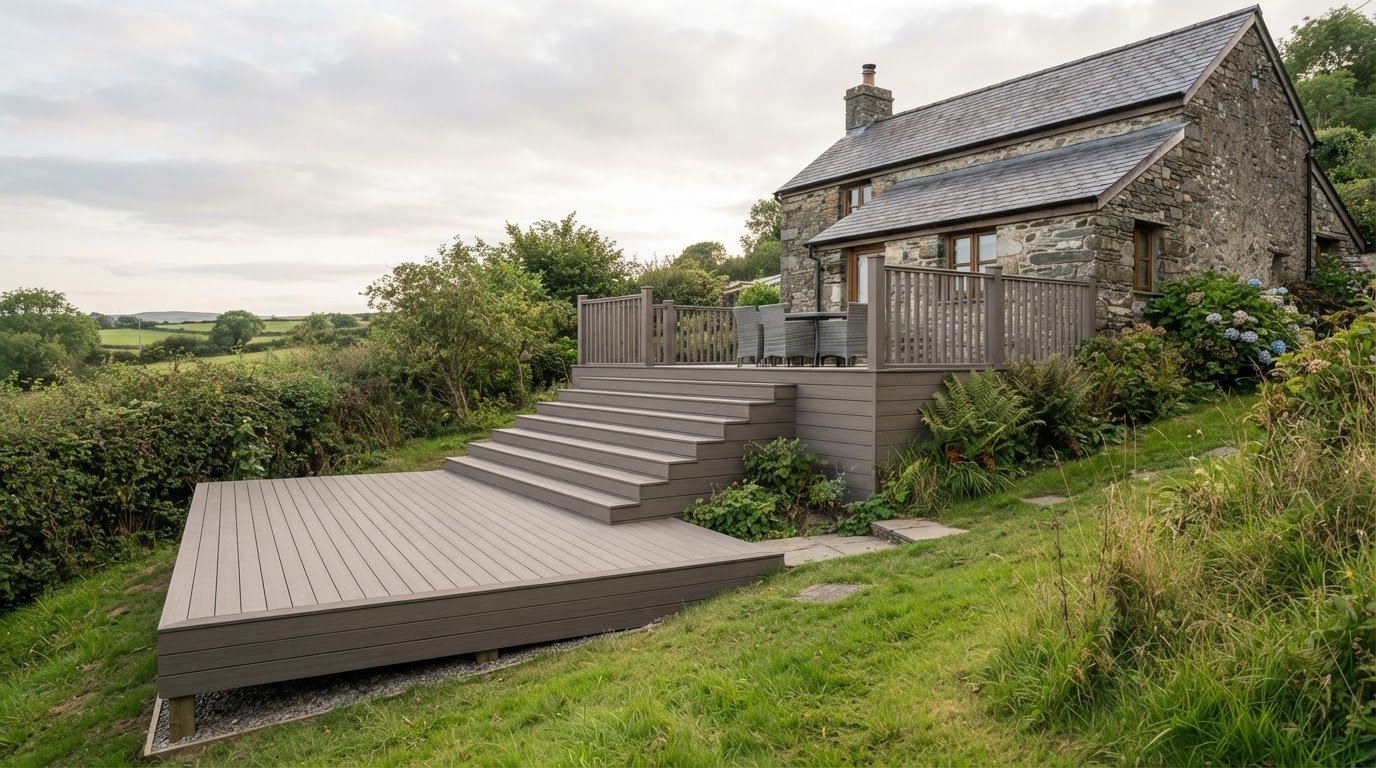
How does composite decking differ from timber?
Composite decking isn’t timber, so it shouldn’t be treated as though it needs timber oil. Its cleaning requirements are different, and care should suit the board material and its condition. Keeping these approaches separate helps avoid using a timber finish where it isn’t appropriate.
If you’re planning a new outdoor space or weighing up material options, explore custom decking solutions in Bristol for design and build context. Good maintenance starts by identifying what the deck is made from, then choosing care that fits its material and condition.
When to arrange deck cleaning and oiling in Wales and the South West
There isn’t one maintenance date that suits every deck. Damp, shade, fallen leaves and other debris can leave some areas looking weathered sooner, while more exposed boards may fade or dry differently. Even sections of the same deck can show different signs of wear, so the surface itself is a more useful guide than a fixed seasonal rule.
Plan deck maintenance around what the boards show and how local exposure affects them, not the calendar alone. Consider cleaning when dirt, discolouration or an uneven appearance becomes noticeable, then allow for suitable weather and a surface that’s ready for any treatment. Oil should only be considered for timber when its condition and previous finish make it appropriate.
What signs suggest your deck may need attention?
Look for visible dirt, patches of discolouration, a weathered appearance or areas that no longer look consistent with the rest of the deck. These signs can indicate that the surface needs assessment, but they don’t automatically mean oiling is required. Loose, broken or visibly damaged boards are different from cosmetic wear and need separate consideration. When requesting a tailored quotation, describe what you’ve noticed so the project is clear from the outset.
How should local conditions shape maintenance planning?
A sheltered corner beneath trees may stay damp and collect debris, while boards exposed to sun and wind can weather differently. These conditions affect the deck’s appearance and readiness for cleaning or finishing. Rather than assuming a particular season is always best, plan around suitable weather and the surface condition. Timber should be ready before oil is applied.
Restore-A-Floor provides deck cleaning and oiling services across Swansea, Cardiff, Bristol, Pembrokeshire, Haverfordwest and Cardiganshire. For a separate indoor timber project, find out more about professional wood floor sanding in Swansea.
Share your deck’s location and visible condition to help shape a tailored quotation. Request a free online quotation for your decking project.
Arrange tailored deck cleaning and oiling with Restore-A-Floor
The right care depends on the deck in front of you: its material, current condition, previous finish and the changes you’d like to see. A condition-led approach helps determine whether cleaning alone may be suitable or whether timber is ready for an appropriate oil treatment. It also sets clear expectations, particularly if visible damage needs separate attention.
Restore-A-Floor provides deck cleaning and oiling alongside its wider decking design and build expertise. With over 20 years of industry experience, the team takes a considered approach to outdoor decking projects, tailoring the proposed work to the property rather than assuming every deck needs the same treatment.
What information helps shape a tailored quotation?
A few practical details can help describe the project clearly. Include:
Your location and the approximate area of the deck.
The material, such as timber or composite, if you know it.
What you’ve noticed, for example dirt, fading, weathering or an uneven appearance.
Any previous coating or treatment you’re aware of.
Photographs can help show the surface and its condition, but they’re optional. Sharing the details you have gives the project discussion a useful starting point, and the proposed work is tailored to the individual deck.
What happens after you request a quotation?
After you submit your details, the next step is a discussion about the deck and the work you’re looking for. The material, visible condition and information you provide help shape a quotation for your project. This gives you a clearer understanding of the proposed approach without assuming in advance that every surface needs oiling or the same preparation.
If you’re ready to discuss care for your timber decking, request a free quotation online.
Give your timber deck care that fits
A refreshed deck starts with the right decision for its material and condition. Cleaning removes surface build-up, while oiling is a separate finish for suitable timber, not a treatment every deck needs. Careful preparation and allowing the surface to dry appropriately help support a more consistent result. Visible damage may need separate attention.
Restore-A-Floor brings over 20 years of industry experience and decking design and build expertise to project-specific deck care. A tailored approach means the proposed work reflects the boards, their existing finish and the appearance you’re aiming for. With deck cleaning and oiling services, the focus is on refreshing timber thoughtfully rather than applying the same treatment to every deck.
Ready to plan the next step? Submit your project details online to request a free quotation and take a confident step towards a cleaner, more presentable deck. Request a free quotation for your decking project.
Frequently Asked Questions
What do deck cleaning and oiling services include?
Deck cleaning and oiling services may include assessing the timber, preparing and cleaning the surface, allowing it to dry suitably, then applying oil if appropriate. The process depends on the deck’s material, condition and previous treatment, so not every project follows an identical sequence. Timber oiling is different from composite-deck cleaning: composite boards aren’t timber and shouldn’t automatically receive a timber oil treatment.
How often should a timber deck be cleaned and oiled?
There’s no universal schedule for cleaning and oiling a timber deck. Exposure, shade, foot traffic, the timber’s condition and previous treatment all influence how quickly it looks weathered and what care may suit it. Judge the surface rather than relying on a fixed annual rule. An assessment can help establish whether cleaning, oiling or other work is appropriate for the boards.
Can you oil composite decking?
Timber oiling isn’t a general treatment for composite decking. Composite boards and timber are different materials, so they shouldn’t be treated as interchangeable or assumed to need the same finish. Cleaning should suit the composite surface and its condition. When requesting a tailored quotation, describe the decking material if you know it, so the project can be considered according to the type of deck.
Is pressure washing safe for timber decking?
Pressure washing may be suitable in some circumstances, but it isn’t right for every timber deck. Its suitability depends on the boards’ condition and the equipment and technique used; excessive force may damage some surfaces. Assessment helps determine an appropriate cleaning method for the material and its condition. The aim is to remove surface contamination without assuming that maximum pressure will produce the best result.
When is the best time to clean and oil decking in the UK?
The best time depends on suitable conditions, not a fixed date on the calendar. Preparation and oiling require a surface that’s ready for treatment, while rain, dampness, shade and exposure can affect planning and drying. A particular season doesn’t guarantee the right conditions for every deck. Consider the timber’s condition and the weather around the planned work instead of relying on an assumed seasonal window.
Can weathered timber decking be restored with cleaning and oiling?
Cleaning and oiling can improve the appearance of some weathered timber decks, but the result depends on the boards’ condition, previous coatings and any damage. Surface fading or dirt is different from structural problems. Loose or damaged boards need separate consideration, as cleaning and oiling won’t resolve those issues. A refreshed appearance may be achievable, but it isn’t realistic to promise that every deck will look like new.
Do Restore-A-Floor’s deck cleaning and oiling services cover Swansea, Cardiff and Bristol?
Restore-A-Floor serves customers in Swansea, Cardiff and Bristol, as well as Pembrokeshire, Haverfordwest and Cardiganshire. You can describe your deck and location through a free online quotation request. Sharing the material, approximate area and visible condition helps shape a project-specific quotation. Photographs can also help illustrate the surface, though you can submit the details you have.

Comments