

Natural Stone Tile Restoration in Swansea: A Homeowner’s Buying Guide
What if dull natural stone tiles don’t need a full restoration, but the wrong cleaning method could make them look worse? For Swansea homeowners, it can be difficult to tell whether a floor is simply dirty or has staining, wear or surface damage. Natural stone tile restoration Swansea should start with the stone’s condition and the finish you want, not a generic promise to clean every floor in the same way.
It’s sensible to be cautious: different types of stone respond differently to cleaning and restoration, and an unsuitable approach may mark or dull the surface. A clear assessment can help establish what is affecting your tiles, what professional work may improve and what it cannot reasonably address.
This guide explains how to assess your floor, compare possible restoration approaches and check that a quotation clearly sets out the proposed work. You’ll also find practical questions to ask when choosing a Swansea flooring specialist. Restore-A-Floor provides tiled floor restoration and cleaning in the area, backed by over 20 years of industry experience. The right plan will still depend on your stone and its condition.
Table of Contents
Natural stone tile restoration in Swansea: when is restoration the right choice?
How natural stone restoration methods differ by tile material
How to compare natural stone restoration specialists in Swansea
Preparing a Swansea property for natural stone tile restoration
Restore-A-Floor’s natural stone tile restoration service in Swansea
Natural stone tile restoration in Swansea: when is restoration the right choice?
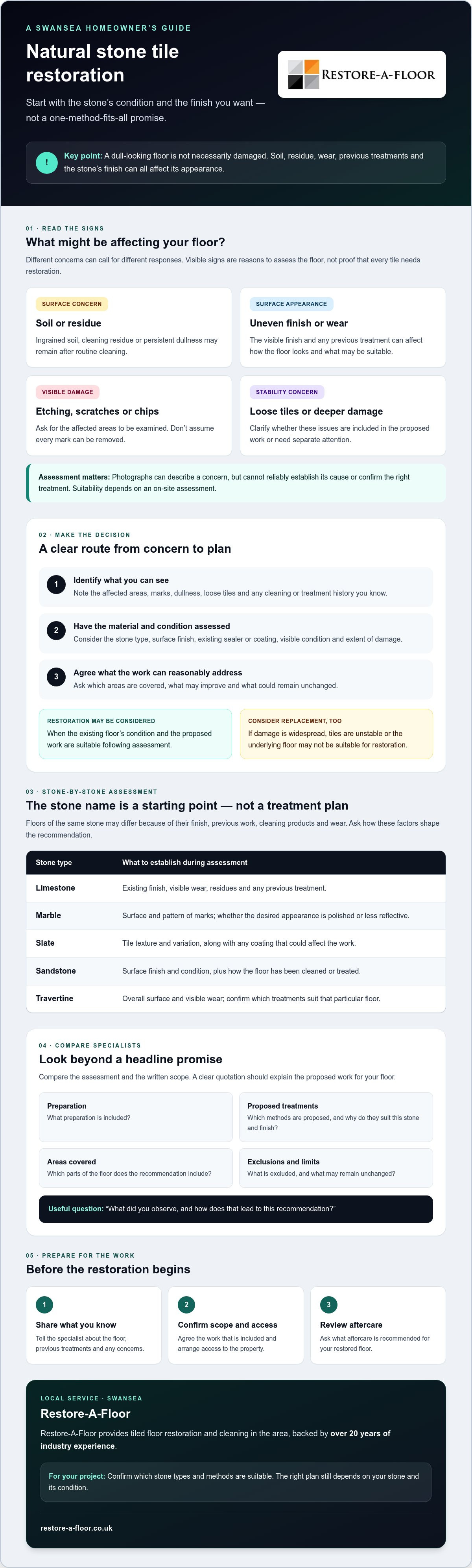
Restoration means assessing and treating an existing stone floor to improve its condition and appearance. The appropriate work depends on what is affecting the surface: soil or cleaning residue may need a different response from etching, scratches, chips or unstable tiles. Natural stones used for flooring vary in their properties, as the overview of types of natural stone illustrates. A method suitable for one material may not suit another.
A floor that looks dull isn’t necessarily damaged. Residue, ingrained soil, an uneven finish or previous treatments can all affect its appearance, while surface wear may need closer examination. The stone, finish, existing sealer or coating, and overall condition all help determine the next step. Restoration suitability depends on a site assessment, not appearance alone. Photographs can help describe a concern, but they can’t reliably establish its cause or confirm which treatment is appropriate.
Which signs suggest natural stone tiles need professional attention?
Consider an assessment if routine cleaning doesn’t shift persistent dullness, ingrained soil, residue or an uneven appearance. Visible etching, scratches, chips or loose tiles also warrant closer inspection. These signs don’t automatically mean the whole floor needs restoration. A specialist should examine the affected areas and consider the stone and its history before recommending a course of action. Don’t assume every mark can be removed.
Restore or replace: what should a Swansea property owner consider?
Start by considering how extensive the damage is, how many tiles are affected and whether retaining the existing material matters to you. Localised surface concerns may call for a different response from widespread damage or movement beneath the tiles. Replacement may be worth considering if tiles or the underlying floor aren’t suitable for restoration. If stability, previous coatings or the extent of damage is uncertain, seek an on-site opinion before deciding.
For Natural stone tile restoration Swansea, ask the flooring specialist to explain what they observed, which areas their recommendation covers and what may remain unchanged. This helps you compare restoration with replacement based on your actual floor, rather than a visual impression or a broad promise. If loose tiles or deeper damage are present, clarify whether these are included in the proposed work or need separate attention.
How natural stone restoration methods differ by tile material
A stone name is a useful starting point, not a treatment plan. Limestone, marble, slate, sandstone and travertine can differ in texture and finish. Previous coatings, cleaning products and wear may also affect how an individual floor should be approached. A specialist needs to assess the material and its condition before recommending cleaning, honing, polishing or sealing. The Natural Stone Institute resources offer further technical reference, but they don’t replace an assessment of the floor in your property.
Why limestone, marble and slate may need different treatment
Even among these familiar stone types, the surface you see may reflect both the original finish and previous work. Two floors made from the same material might therefore need different approaches. Treat the material name as a prompt for questions, not proof that a specific process is required. Ask the specialist to explain how the stone, finish, sealer and visible damage inform their recommendation.
What cleaning, honing, polishing and sealing can each address
These terms describe different possible stages of work, not a package every floor needs. Cleaning targets soil or residues. Honing and polishing are forms of surface refinement, with the appropriate finish to be agreed following assessment. Sealing is a protective treatment that may be considered where suitable, rather than an automatic final step. The proposed scope should explain which of these options, if any, is relevant to your floor.
The right treatment follows the assessed stone and its condition, not a one-method-fits-all promise. For Natural stone tile restoration Swansea, confirm that the specialist works with your particular stone and ask what each proposed treatment is intended to address. Restore-A-Floor provides tiled floor restoration and cleaning in Swansea. You can review its tiled floor restoration and cleaning service and confirm whether the methods for your specific floor are within scope.
How to compare natural stone restoration specialists in Swansea
For Natural stone tile restoration Swansea, compare the assessment and written proposal, not just a headline claim about making floors look new. Ask whether the specialist has considered the stone type, surface finish, visible damage and previous treatments. If you know which products or coatings have been used, share those details. A contractor should be able to explain how their observations relate to the work they’re proposing.
A useful quote identifies the assessed floor, planned work and agreed finish. Check that the written scope sets out preparation, treatments and exclusions. It should clarify whether repairs are included or scoped separately, how adjoining areas will be protected and how access to the work area will be managed. If any detail is unclear, ask for it to be confirmed in writing before accepting the quote.
Questions to ask before accepting a restoration quote
Use these questions to clarify what you’re agreeing to:
What did the site assessment find, and which observations support the proposed treatment?
What preparation and restoration work are included, and what’s excluded?
If repairs are needed, are they included in the quote or set out separately?
How will the completed work be inspected, and what aftercare guidance will I receive?
Also agree what happens if the floor’s condition differs from what was visible during the assessment. A clear process for discussing changes helps prevent uncertainty about the scope as work progresses.
How to judge examples, experience and project communication
Ask to see examples involving a comparable stone type and condition, and check whether they show completed projects rather than illustrative images. Similar-looking tiles can still have different finishes or previous treatments. Examples are useful context, but they don’t establish that your floor needs the same method or will achieve the same appearance.
Before choosing, confirm who will carry out the work and who’ll explain any changes to the plan. Consider how clearly the specialist answers practical questions about preparation, access and inspection. Restore-A-Floor is one Swansea option to assess against these criteria: it provides tiled floor restoration and cleaning and has over 20 years of industry experience. Confirm which stone types and methods are suitable for your particular project before proceeding.
Preparing a Swansea property for natural stone tile restoration
A little preparation helps ensure the assessment and quotation reflect the actual floor, and makes expectations clearer before work begins. For Natural stone tile restoration Swansea, share what you know about the property and tiles, then agree the scope, access and aftercare with the contractor. The proposed schedule will depend on the agreed work and conditions at the property, so avoid relying on a fixed duration before the floor has been assessed.
What information helps a specialist assess the floor?
Note the property’s location in Swansea, which room needs attention, the approximate floor area and the main visible concerns. Include the stone type if you know it, but don’t worry if you don’t. Clear photographs can provide context, though they can’t replace an inspection. Mention previous cleaning methods, sealers, coatings or repairs, as well as any known spills that may be relevant.
What to agree before work starts
Before confirming the work, make sure you understand the proposed finish and exactly which areas are included. Discuss furniture, access routes and protection for adjoining surfaces, and clarify who is responsible for moving items. Agree how unexpected findings, such as areas needing further attention, will be discussed before the scope changes. Ask for aftercare guidance that relates to the treatment actually carried out.
A practical sequence is:
Share floor details. Describe the room, approximate area, stone if known and visible concerns.
Arrange an assessment. Provide photographs as background, then let the specialist inspect the floor and consider its history.
Agree the scope. Confirm the work area, proposed treatment, intended finish, exclusions and how any changes will be handled.
Prepare access. Settle furniture responsibilities, access arrangements and protection for nearby surfaces before the agreed start.
Review aftercare. Ask what care is appropriate for the confirmed treatment and when the floor can be used as normal.
Keep the agreed details in writing, including any arrangements that affect access or preparation. If the work depends on removing furniture or keeping people away from part of the property, establish those practical requirements in advance. This helps everyone understand what needs to be ready without assuming the contractor will take on tasks that haven’t been agreed.
To discuss a Swansea tiled floor and request a free quotation online, contact Restore-A-Floor about your floor. Share the information you’ve gathered so the team can consider the project and confirm which stone types and methods are suitable.
Restore-A-Floor’s natural stone tile restoration service in Swansea
Restore-A-Floor provides tiled floor restoration and cleaning for Swansea customers, including work on stone floors. The company has over 20 years of industry experience and a qualified team. Its work also serves customers in Cardiff, Bristol, Pembrokeshire, Haverfordwest and Cardiganshire. That broader experience is useful context, but the appropriate work for your floor still depends on its particular stone, finish and condition. Confirm that the team handles your stone type and the methods proposed for your project before proceeding.
If you’re considering Natural stone tile restoration Swansea, a clear enquiry can help establish whether the service may suit your floor. Describe what you’ve noticed and the result you’re hoping for, then ask how the proposed scope relates to the condition found. A quotation should set out the work being offered so you can review it before deciding.
What to expect from an initial enquiry and assessment
When you contact the team, share the property’s location in Swansea, where the stone floor is situated and what concerns you, such as persistent dullness, visible marks or an uneven appearance. Include the stone type if known, along with details of past treatments or repairs. You can also explain whether you want to address a particular issue or improve the floor’s overall appearance.
The appropriate scope depends on the assessed material and condition, so don’t assume a photograph or the name of the stone alone is enough to specify a treatment. Ask what the assessment has established and ensure the quotation explains the proposed work, any exclusions and what to expect before you agree to proceed.
Choose the next step for your stone floor
Use the provider-selection checklist in this guide to compare the written scope, preparation, proposed treatments and exclusions. If you’re researching tile restoration more broadly, the tiled floor restoration guide for Cardiff may offer additional context, though your Swansea floor’s own assessment should guide any decisions. For stone-specific questions, confirm directly which materials and methods are suitable for your project.
Restore-A-Floor allows customers to request a free quotation online. Share the details of your floor and review the proposed scope at your own pace. Request a free quotation from Restore-A-Floor.
Make a confident choice for your stone floor
The right restoration plan starts with the floor itself. Its stone type, finish, previous treatments and condition help determine whether cleaning or other work is appropriate, while a clear written scope lets you understand what’s proposed before deciding. Compare specialists on the quality of their assessment and the detail of their quotation, rather than a promise of a particular result.
For Natural stone tile restoration Swansea, Restore-A-Floor provides tiled floor restoration and cleaning for customers in the area. Its qualified team brings over 20 years of industry experience, and you can request a free quotation online. Confirm that your particular stone and the methods being considered are suitable for your project, then review the proposed work at your own pace.
Ready to discuss your floor? Request a free quotation from Restore-A-Floor and take the next step with a clearer understanding of your options. A careful assessment can help you make an informed decision and plan confidently.
Frequently Asked Questions
Can natural stone tiles be restored instead of replaced?
Yes, natural stone tiles may be restorable, but suitability depends on their condition and the floor beneath them. A specialist can assess whether concerns such as dullness, ingrained soil or surface marks may be addressed, or whether loose tiles, extensive damage or underlying issues make replacement worth considering. Restoration can’t be assumed to remove every mark or correct every fault. Ask for an assessment before deciding which option is appropriate for your Swansea property.
How do I know whether my floor is limestone, marble or another natural stone?
Start with any paperwork from the original installation, renovation or previous owner, as it may identify the stone. Appearance alone can be misleading, particularly if the floor has coatings or has changed through wear and cleaning. Avoid relying on an online photograph or an at-home test to confirm the material. Share what you know with a flooring specialist and ask them to identify or assess the stone during an on-site inspection before they propose treatment.
Is professional natural stone tile restoration worth it?
It may be worthwhile if you want to retain the existing floor and a specialist’s assessment indicates that suitable work could address its condition. The value depends on the issues present, the extent of affected tiles and your priorities for the finish. Compare a written restoration scope with replacement options, checking inclusions, exclusions and likely limitations. Natural stone tile restoration Swansea isn’t a guaranteed way to remove every mark, so base your decision on the floor’s assessed condition.
What happens during a natural stone floor restoration assessment?
A specialist should examine the floor’s material, finish and visible condition, and ask about previous cleaning, sealers, repairs or known spills. They may discuss which areas concern you and what appearance you’re hoping for. The assessment should inform a project-specific proposal, rather than assume one method suits every floor. Before accepting, check that the quotation explains the proposed work, preparation, exclusions and any repairs that may need separate attention.
How long does natural stone tile restoration take?
There isn’t one reliable timeframe for every floor. The schedule depends on factors such as the area involved, the condition found, the agreed scope, access and any preparation or additional work required. Ask the contractor for an estimate once they’ve assessed the property, and clarify whether the proposed schedule includes any necessary drying or settling time. Avoid making plans around a fixed duration before the work and site conditions have been reviewed.
How should I choose a natural stone restoration company in Swansea?
Choose a specialist who assesses your stone type, finish, damage and previous treatments, then provides a clear written scope with preparation, exclusions and aftercare explained. Ask about comparable completed projects and confirm who will carry out the work. Restore-A-Floor offers tiled floor restoration and cleaning, has a qualified team and over 20 years of industry experience. Its stated service area includes Swansea, Cardiff, Bristol, Pembrokeshire, Haverfordwest and Cardiganshire; confirm that your stone and proposed methods are suitable.
Comments