

Pine Floor Sanding and Sealing in Swansea: Restore the Character of Your Boards
Worn, marked pine boards can often regain their character without removing more timber than necessary. Pine floor sanding and sealing Swansea projects start with a careful assessment: pine is a relatively soft wood, so dents and scratches can show more readily than on hardwood. The boards’ condition, previous finish and the look you want all help determine the right approach.
It’s understandable to be cautious. Uneven boards, old marks and uncertainty about disruption can make restoration feel like a risk. Careful preparation and controlled sanding help shape the result, while the choice of seal and finish influences the floor’s colour and sheen.
This guide explains how pine boards are assessed, what happens during sanding and sealing, and how to prepare for the work and care for the floor afterwards. Restore-A-Floor uses sanding technology with M-class dust filters to minimise dust during work in homes and commercial properties. With over 20 years of flooring experience, the team tailors the restoration to the boards and your desired finish.
Table of Contents
Pine Floor Sanding and Sealing in Swansea: Is Your Floor a Good Candidate?
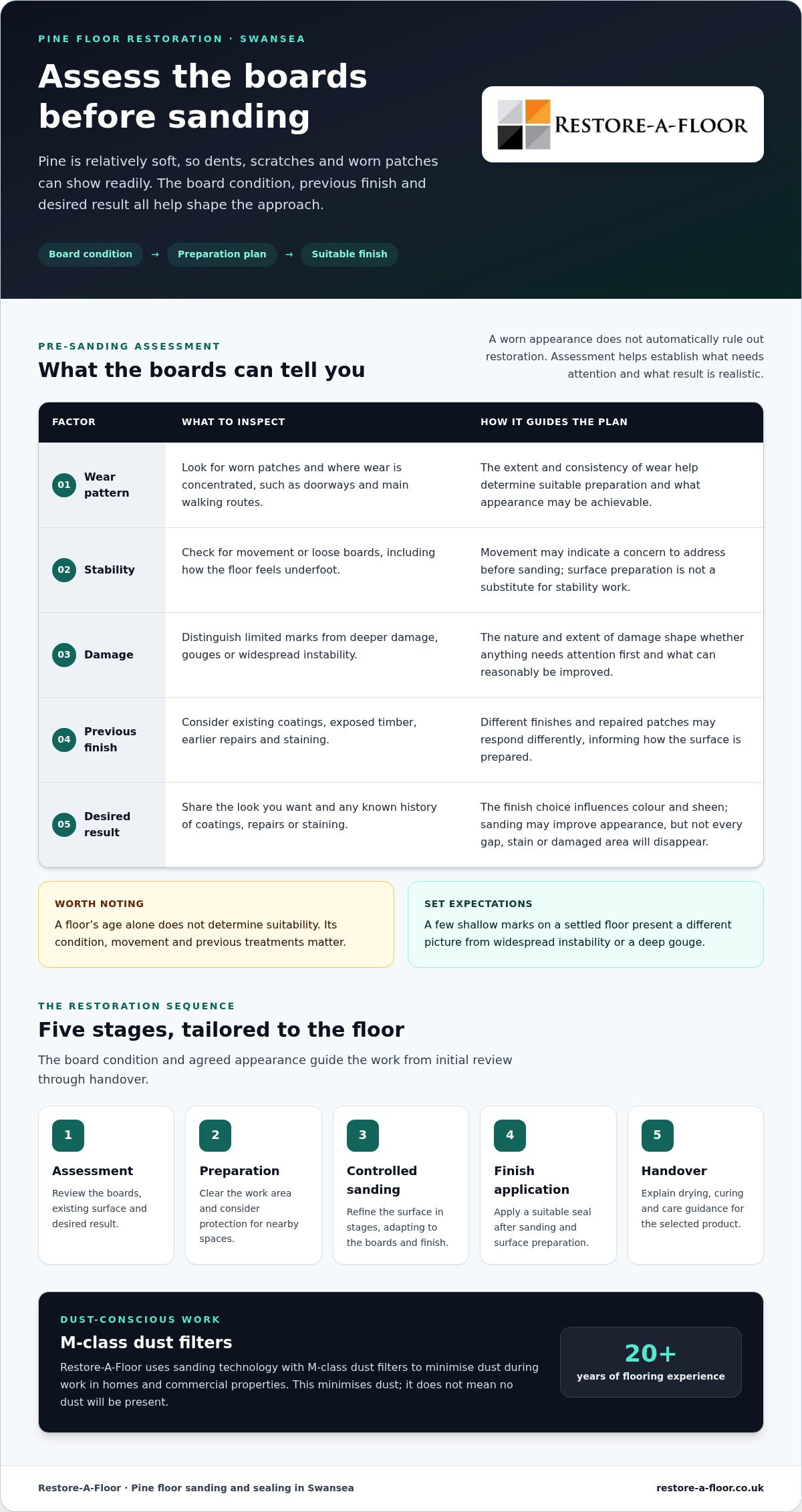
Pine floor sanding and sealing restores existing boards rather than installing a new floor. Sanding removes or reduces the existing surface finish and prepares the timber for a new seal. Because pine is relatively soft, dents, scratches and worn patches can be more noticeable than on harder flooring, so the boards’ condition matters before sanding begins.
A worn appearance doesn’t automatically make a floor unsuitable, but sanding isn’t the answer to every problem. An assessment helps establish whether the boards can be prepared appropriately, whether anything needs attention first and what result is realistic. “A pine floor assessment considers wear, stability, previous finishes and repair needs before a sanding approach is recommended.”
The floor sanding process prepares an existing timber surface, but the specific approach depends on the material and its condition. For pine, the aim is to plan for the actual boards, not to treat every floor as if it has the same history or needs.
What should be assessed before sanding pine floorboards?
The boards are examined for movement, looseness, deep damage and uneven wear. A few shallow marks in a settled floor present a different picture from widespread instability or a deep gouge. The assessment also considers how consistently the floor has worn. Main walking routes and doorways may show more wear than corners or areas beneath furniture.
Previous coatings, repairs and staining can affect the preparation plan. An old finish may behave differently from exposed timber, and patches from earlier work may respond differently from the surrounding boards. The floor’s condition, not its age alone, guides the recommendation. Older boards may be suitable for restoration, while a newer floor with significant movement still needs careful consideration.
When might pine boards need attention before refinishing?
Localised damage affects a limited area, while loose or unstable boards can point to a broader concern because the floor may move underfoot. If movement is present, an assessment can identify whether the boards need attention before sanding starts. This helps avoid treating surface preparation as a substitute for addressing an underlying stability issue.
Set realistic expectations, too. Sanding may improve the appearance of worn boards, but it cannot be assumed that every gap, stain or damaged area will disappear. The nature and extent of the issue shape what can reasonably be achieved and whether the proposed finish will suit the floor as it stands.
Notice where wear is concentrated, such as doorways or main walking routes.
Identify boards that move, feel loose or show deeper damage.
Share any known history of coatings, repairs or staining during the assessment.
How Professional Pine Floor Sanding and Sealing Works
Once the project plan is agreed, the work follows a considered sequence rather than a one-size-fits-all method. The existing surface and board condition guide preparation and sanding, while the desired appearance informs the finish. For pine floor sanding and sealing in Swansea, this tailored approach keeps the focus on the timber and the result you want.
“The process moves from assessment and preparation through controlled sanding and finish application to a final handover, with each stage shaped by the floor.”
Assessment: Review the boards, existing surface and desired result to plan suitable preparation and sanding.
Preparation: Clear the work area and protect surrounding spaces before equipment is brought in.
Controlled sanding: Refine the surface in stages, adapting the approach to the boards and existing finish.
Finish application: Apply a suitable seal after sanding and surface preparation, following the product’s instructions.
Handover: Explain how to treat the floor while the finish dries and cures, following its specific guidance.
How are pine boards prepared and sanded?
Before sanding starts, furniture and obstacles are removed from the work area, and nearby spaces are considered as part of the set-up. Sanding refines the surface progressively to prepare it for the new finish. Edges, corners and less accessible areas also need attention, so the perimeter is considered alongside the main floor.
Restore-A-Floor uses sanding technology with M-class dust filters to minimise dust during the work. This is a dust-minimising approach, not a promise that no dust will be present. If you know the floor has older coatings or previous treatments, share that information during project planning so it can inform the preparation approach.
What happens when the pine floor is sealed?
After sanding, the prepared surface is ready for a suitable finish. The application method, drying intervals and curing guidance depend on the product selected, so follow its instructions when deciding how to use the room afterwards. Don’t treat the floor as ready for normal use until the finish guidance says it is. A clear handover explains the next steps.
Planning also covers practical details such as access and the route between the work area and adjoining spaces. Restore-A-Floor’s bespoke wood floor sanding and refinishing service is shaped around the property and project. To begin planning a tailored restoration, request an online flooring quotation.
Choosing a Seal for Pine Flooring: Appearance, Use and Care
The seal contributes to the floor’s final appearance as well as protecting the surface. Pine’s grain and natural colour variations can look different depending on the finish’s tone and sheen, so choose with the room and the look you want in mind. “The right finish depends on your preferred appearance, how the room is used and the care you’re prepared to give the floor.”
There isn’t one finish that suits every pine floor. A busy hallway, a quieter bedroom and a room where you want to retain a pale, natural look all call for different considerations. Use the comparison below as a starting point, then follow the selected product’s instructions and maintenance guidance.
How do different finishes change the look of pine?
Matt finishes create a subdued, low-sheen appearance; satin reflects more light, while higher-sheen finishes make the surface more reflective. A clear finish and a colour treatment can also present the same boards differently, changing how warm or pale the pine appears. Where the project allows, viewing a sample or suitable test area can help you judge the colour and sheen in the room’s own light.
Natural variation matters. Knots, grain patterns and differences between boards remain part of the floor’s character, but a finish can change how prominent those features seem. Compare the proposed appearance with existing woodwork and furnishings, particularly if the room opens directly onto other spaces.
What should guide the finish choice for a Swansea property?
Think about how the room is used. A main route through the home experiences different day-to-day activity from a less-used room. Consider foot traffic alongside your preferred look, then weigh up the cleaning and maintenance guidance for each suitable finish. Pine floor sanding and sealing in Swansea is best planned around those practical details as well as the appearance you want.
Discussing these priorities during the project assessment connects the finish choice to the boards and the property. Restore-A-Floor provides bespoke wood floor sanding and refinishing, so the proposed finish is considered as part of the restoration rather than chosen in isolation. The aim is a considered match between the timber, the room and your expectations for ongoing care.
Preparing for Pine Floor Sanding in Your Swansea Home
A little planning helps the work fit around your household and avoids leaving practical decisions until the sanding team arrives. For pine floor sanding and sealing in Swansea, discuss the rooms involved, access routes and your preferred finish as part of the project plan. Share any known repairs, previous coatings or staining, and constraints such as narrow entrances or restricted access so they can be considered in advance.
What should you do before the sanding team arrives?
Clear the rooms being restored, including furniture, rugs and personal belongings. If some items are difficult to move, raise this during planning so access and responsibilities can be agreed. A clear work area supports an organised set-up and makes it easier to prepare the room’s edges and thresholds.
Remove furniture, rugs and belongings from the rooms included in the project.
Plan access to the property and discuss parking and any building requirements in advance.
Keep children and pets away from the active work area.
Tell the team about previous floor coatings, known repairs and areas of concern.
Identify household routines or access needs that could affect the work plan.
Think beyond the room itself. The route used to bring equipment in, adjoining rooms and door thresholds can all affect how the work is organised. If the floor continues through a doorway into another space, for example, discuss where the restoration will start and finish. This makes the project scope clear and helps you plan around rooms that will remain in use.
How can you plan around sanding and sealing work?
Agree which rooms need to remain accessible and whether household routines can be adjusted while work is under way. If a hallway connects the work area to the rest of the home, consider how people will move around it. Share access limitations early so the project plan can account for them rather than relying on last-minute changes.
After sealing, ventilation and re-entry guidance depends on the finish used. Follow the product-specific instructions provided for the project, including when the room can be entered and when normal use can resume. Don’t assume every finish has the same drying or curing requirements.
Restore-A-Floor provides tailored quotations for pine floor restoration in Swansea. Sharing details about access, household use and the existing boards helps shape a project plan around your property and the result you want.
Restore-A-Floor’s Pine Floor Sanding and Sealing Service in Swansea
Restoring pine is a considered alternative to covering or replacing boards that still have character. Restore-A-Floor provides wood floor sanding and refinishing for Swansea homes and commercial properties, shaping each project around the existing floor and the result the customer wants. An assessment-led approach brings the boards, room and intended appearance into the plan before work begins.
Restore-A-Floor brings more than 20 years of residential and commercial flooring experience to each project. Its qualified team brings preparation, sanding and refinishing together as a tailored restoration, rather than treating the final seal as a decision made in isolation. The aim is to make informed choices for the specific floor, whether it is in a family home or a commercial space.
What does a bespoke pine-floor restoration project involve?
The project starts with the condition of the boards and your priorities for the room. Existing wear, repairs and previous coatings help inform the preparation, while the room’s use and your preferred colour and sheen guide the finishing plan. The proposed work is developed around the floor in front of the team, not an assumed standard result.
Preparation, controlled sanding and refinishing are connected parts of the service. Careful planning considers how the surface should be prepared before a suitable finish is applied, and how the appearance you want relates to the pine’s natural grain and variation. The precise approach is tailored to the property and boards, without assuming a fixed timeline or identical outcome for every project.
Work is planned with the home or commercial environment in mind. Restore-A-Floor uses sanding technology and M-class dust filters to minimise dust during sanding. This supports a more controlled working environment, but it doesn’t mean the process produces no dust. The project plan can account for the rooms involved and practical arrangements, helping you understand what the restoration entails.
How can Swansea customers take the next step?
To begin planning, submit your project details through Restore-A-Floor’s online quotation request. Information about the property, rooms and condition of the existing pine boards helps the team evaluate your requirements and provide advice with the quotation. Describe the appearance you have in mind, such as a more natural-looking finish or a change in sheen, so your priorities are part of the discussion from the outset.
Ready to restore your existing pine floor? Request an online quotation for your Swansea project and take the next step towards a carefully planned, bespoke restoration.
Take the Next Step Towards Restoring Your Pine Floor
Restoring existing boards gives you a chance to shape the room around the timber you already have. Before moving ahead, consider what you want the floor to contribute to your home: a lighter feel, more defined grain or a finish that suits the room’s everyday use. Clear priorities make it easier to discuss the direction of your project.
For pine floor sanding and sealing in Swansea, the next step is to turn those ideas into a tailored restoration plan. Think about which rooms are involved and what matters most, then share that context when requesting a quotation. Use the online quotation request to start planning a project around your property and existing floor.
Ready to explore what’s possible for your boards?Request your free Swansea floor restoration quotation and take a confident first step towards giving your pine floor renewed purpose and character.
Frequently Asked Questions
Can pine floorboards be repaired instead of replaced?
Yes, pine floorboards can sometimes be repaired rather than replaced, depending on the damage and the stability of the surrounding floor. A single locally damaged board presents a different challenge from movement affecting several boards. An assessment can establish whether repairs may form part of the restoration plan or whether replacement needs consideration. For pine floor sanding and sealing in Swansea, avoid deciding based on one visible mark alone.
How long should I wait before putting furniture back after sealing a pine floor?
The waiting period depends on the finish used, how it was applied and the conditions in the room. A surface may feel dry before the finish has fully cured, so these stages shouldn’t be treated as interchangeable. Follow the product-specific instructions for walking on the floor and returning furniture. Check the guidance for protective pads too, as moving chairs or tables across a newly finished surface may mark it.
What happens if there are gaps between pine floorboards?
Gaps don’t all have the same cause or require the same response. Their width, consistency and position, along with any movement in the boards, help determine whether they’re part of the floor’s character or need further consideration. A gap that changes across a room may call for a different plan from a small, consistent space. Discuss expectations before work begins, as sanding won’t necessarily remove gaps.
Can sanding remove old paint from pine floorboards?
Sanding may remove surface paint, but it can’t be assumed that every trace will disappear. The outcome depends on the amount of paint, how deeply it has entered the timber and the condition of the boards. Paint in joints, along edges or within damaged areas may need particular consideration. An assessment helps establish a suitable preparation approach and set realistic expectations for the finished appearance.
Is pine flooring suitable for a kitchen?
Pine may be suitable for a kitchen, but the decision depends on the board condition, chosen finish and how the household uses the room. Kitchens can involve regular foot traffic, spills and frequent cleaning, so consider these demands when planning the restoration. A kitchen used throughout the day, for example, may need a different care routine from a rarely used room. Follow the finish-specific maintenance guidance.
How should I clean a sealed pine floor after restoration?
Use the cleaning instructions for the finish applied, as suitable methods vary. As a practical routine, remove grit with an appropriate method, wipe spills promptly and avoid leaving standing water on the boards. Don’t use harsh cleaning products unless the finish guidance permits them. Felt or other suitable protective pads beneath furniture can help limit avoidable scratches, particularly under chairs and items that are moved regularly.
Comments