

Residential Polished Concrete Swansea: The Complete Homeowner’s Installation Guide
- info089907
- 2 days ago
- 12 min read
Can a material as utilitarian as raw concrete truly provide the sophisticated, high-end aesthetic required for a contemporary coastal home? You've likely seen the stunning, light-reflective floors in architectural magazines and wondered if such a finish is practical for your own property. It's a common dilemma for those considering residential polished concrete Swansea, especially when faced with concerns about the invasive nature of the grinding process or the structural integrity of older South Wales buildings.
We understand that whilst you desire a durable, low-maintenance surface, the fear of lingering dust and confusion over aggregate finishes can be overwhelming. This guide demystifies the entire installation journey, from the initial technical grind to the final protective seal. You'll learn how modern dust-free equipment protects your living space and why choosing the right specialist is the most critical step in ensuring your floor remains a centrepiece for decades. We'll explore the cost-to-value ratio and the specific British Standards that guarantee a safe, stunning result for your home.
Table of Contents
Understanding Residential Polished Concrete in Swansea
Residential polished concrete Swansea is far more than a simple coat of sealant over a grey slab; it's a sophisticated, multi-stage mechanical process. By using heavy-duty grinding machines equipped with diamond-impregnated segments, specialists progressively refine the surface to a specific level of smoothness and shine. This transformative technique, broadly known as Polished Concrete, turns a standard structural element into a high-performance floor that rivals the elegance of natural stone or marble. In Swansea, we've seen a significant shift towards this material in modern kitchen extensions and open-plan renovations, particularly amongst homeowners seeking a seamless transition between indoor and outdoor living spaces.
The common misconception that concrete feels cold or "industrial" is quickly dispelled once you experience its high light reflectivity. Because the surface is honed to such a fine degree, it bounces natural light deep into a room, creating a bright, airy atmosphere that feels inherently homely. Additionally, concrete's high thermal mass is perfectly suited to the South Wales climate. It absorbs heat during the day and releases it slowly, providing a natural temperature regulation that keeps homes comfortable throughout the changing seasons.
Why Local Polished Concrete Installation is Gaining Popularity
Homeowners are increasingly moving away from traditional wood or carpet in favour of surfaces that demand less daily attention. Once the polishing process is complete, the floor requires minimal maintenance, needing only a simple damp mop with a pH-neutral cleaner to retain its lustre. For Swansea families with pets, the hypoallergenic properties are a major draw. Unlike carpets that trap dander and dust mites, concrete remains easy to sanitise, providing a cleaner environment for those with allergies. In the bespoke homes of the Gower, the aesthetic versatility allows for a custom look that complements both minimalist architecture and more eclectic, traditional interiors.
Structural Considerations for Swansea Properties
The approach to installation varies significantly depending on the age of your property. Whilst modern Swansea builds typically feature reinforced slabs ready for refinement, Victorian terraces may require more intensive sub-floor assessment to ensure structural stability. Given our coastal environment, moisture management is paramount. We implement robust damp-proofing measures to resist ground moisture, adhering to Welsh Building Regulations. When integrated with underfloor heating systems, polished concrete acts as a giant radiator. It distributes heat evenly across the entire surface, ensuring your home remains warm and inviting even during the dampest winter months.
The Technical Process of Local Polished Concrete Installation
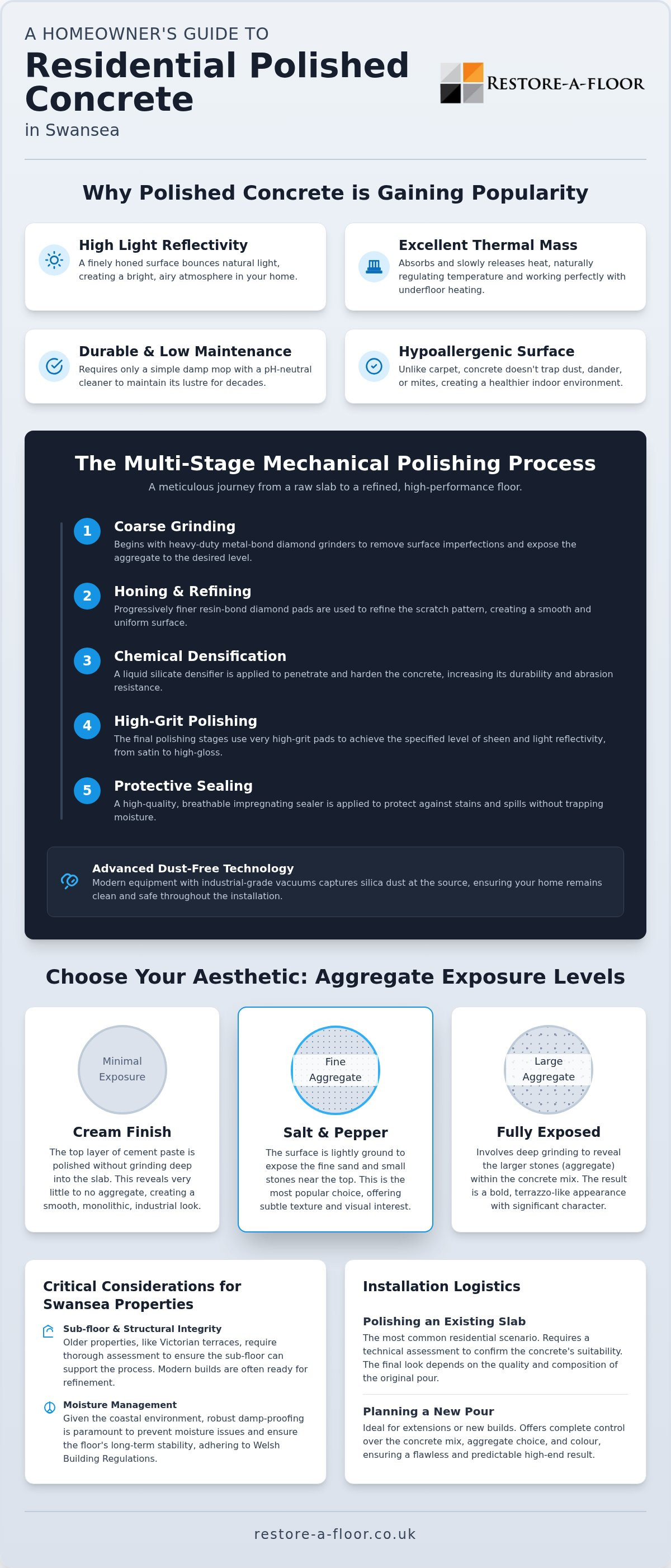
Achieving a flawless result for residential polished concrete Swansea is an exacting science that requires a methodical, multi-stage approach. Unlike topical coatings that merely sit on the surface, true mechanical polishing involves a 5-7 stage progression using heavy-duty planetary grinders. We begin with coarse metal-bond diamond segments to remove surface laitence and imperfections, gradually transitioning to finer resin-bond pads. Each pass is designed to refine the scratch pattern of the previous stage, ensuring the surface is perfectly prepared for the classifications for aggregate exposure that define the floor's final character. This rigorous refinement is what creates the deep, structural lustre that distinguishes professional installations from DIY attempts.
During the mid-stages of the process, we apply a liquid chemical densifier. This silicate-based solution penetrates the concrete's pores to trigger a chemical reaction with the calcium hydroxide, creating a harder, more crystalline structure. This densification is vital for residential environments as it significantly increases the floor's resistance to impact and abrasion while eliminating the "dusting" common in raw concrete. The journey concludes with high-grit polishing and the application of a breathable, impregnating sealer that provides an essential barrier against spills without trapping moisture within the slab. If you are unsure whether your current floor is suitable for this process, you can consult our specialist team for a technical assessment.
Our Dust-Free Grinding and Honing Standards
One of the primary concerns for homeowners is the potential for invasive silica dust. We address this through the use of industrial-grade, HEPA-filtered vacuum systems connected directly to our grinding equipment. This "closed-loop" technology captures 99.9% of particulates at the point of creation, protecting your indoor air quality and surrounding finishes. Before we commence work, we meticulously protect your skirting boards and any fixed furniture with heavy-duty masking, ensuring the environment remains pristine throughout the duration of the project. A clean workspace is not just about comfort; it's a technical requirement for a finish free from contaminants.
Timeline and What to Expect During Installation
Precision takes time. For a standard kitchen or open-plan living area of approximately 50 square metres, the mechanical polishing process typically requires three to five days of on-site work. Whilst new concrete pours require a minimum 28-day curing period before we can begin grinding, existing slabs can often be assessed and started much sooner. We recommend that homeowners organise the removal of all furniture and ensure the area is clear of other trades before our arrival. Once the final buffing is complete, the floor is usually ready for light foot traffic within 24 hours, though we advise waiting 72 hours before moving heavy furniture back into place.
Choosing Your Finish: From Cream to Exposed Aggregate
Selection of the final finish is perhaps the most significant aesthetic decision for any residential polished concrete Swansea project. The outcome isn't merely a matter of personal taste; it's heavily dictated by the composition and quality of the concrete mix already present in your home. Professional installers categorise these finishes based on the depth of the initial grind, which determines how much of the internal stone, or aggregate, is revealed. For a comprehensive breakdown of the mechanics involved, you can refer to our ultimate guide to polished concrete.
Beyond the exposure level, you must also consider the gloss level. Options range from a muted matte or satin, which offers a soft, contemporary feel, to a high-shine mirror finish that maximises light reflectivity in darker rooms. This technical variety is well-documented in The Concrete Society's guide to polished concrete finishes, which highlights how different densities and sealants interact to create lasting durability. Understanding these variables allows you to tailor the floor to your property's specific lighting and architectural style.
The Cream Finish: Minimalist and Modern
This finish is the current favourite for new-build extensions across Swansea. It involves polishing only the very top layer of the concrete paste, known as the "cream," without exposing any underlying aggregate. To achieve this monochromatic, velvet-like appearance, the original slab must be perfectly power-floated during the pour. It's a high-precision look that demands a flawless substrate. Because there is no aggregate to hide imperfections, maintaining this seamless aesthetic requires regular, gentle cleaning with pH-neutral solutions to prevent surface etching and maintain the uniform colour.
Exposed Aggregate: Character and Texture
If your property features an older slab or if you prefer a more traditional terrazzo-style effect, exposed aggregate is the superior choice. By grinding deeper into the concrete, we reveal the natural stones and sands within the mix. This finish is exceptionally practical for high-traffic family areas in Swansea, as the varied texture naturally masks small scratches and daily wear. You can customise this look by choosing between "Salt and Pepper" exposure, which reveals only fine sands and tiny flecks of stone, or a "Fully Exposed" finish for a bold, industrial statement. Each depth provides a unique fingerprint for your floor, ensuring no two homes look exactly the same. This versatility is why residential polished concrete Swansea remains a top choice for those seeking a balance between high-end design and everyday durability.
Planning Your Installation: Logistics and Considerations
Successful installation of residential polished concrete Swansea hinges on meticulous forward planning. Whether you're refurbishing a Swansea townhouse or embarking on a contemporary new build, the logistical requirements differ vastly between existing slabs and fresh pours. For new installations, we coordinate closely with your architects and builders to ensure the concrete mix and placement meet the precise standards required for mechanical polishing. In contrast, existing floors require a thorough structural assessment to identify potential contaminants or structural weaknesses that could compromise the final aesthetic. We act as a technical partner throughout this phase, guiding you on slab thickness and reinforcement requirements.
Kitchens represent the most popular application for this material, but they also present the most complex logistical challenges. When considering polished concrete kitchen floors in the UK, timing is everything. We typically schedule the grinding process after the property is watertight but before the kitchen cabinetry is installed. This sequence allows us to polish the entire floor area, providing a seamless finish that extends beneath appliances and units, preventing future moisture issues. Our team manages the interface with other trades, ensuring that plumbers and kitchen fitters understand the protection requirements for the newly refined surface. If you're ready to discuss the specific requirements of your project, request a technical site survey from our experts.
Existing Floor Restoration vs. New Overlays
Not every slab is a candidate for full mechanical polishing. If your current floor exhibits extensive spalling or deep structural cracking, a traditional grind might not yield the desired result. In these instances, we may recommend a high-performance micro-cement or a thin-section overlay. These systems provide the visual appeal of concrete but can be applied at thicknesses as low as 3mm. Before any work begins, we meticulously repair minor divots and stable cracks using colour-matched resin fillers, ensuring the substrate is perfectly uniform. This restoration work is a precision craft that saves many original floors from being replaced entirely.
Underfloor Heating and Concrete Synergy
Concrete is arguably the most efficient partner for wet underfloor heating (UFH) systems due to its exceptional thermal conductivity. To ensure a crack-free result in larger Swansea properties, we strategically place expansion joints that allow the slab to move naturally as it heats and cools. These joints are often filled with flexible, colour-matched polyurea to remain as inconspicuous as possible. This synergy not only provides superior comfort but also enhances the overall energy efficiency of your home by reducing the boiler's workload, making it a sustainable choice for the modern homeowner.
The Restore-A-Floor Difference for Swansea Residents
Choosing a contractor for residential polished concrete Swansea is a decision that impacts the long-term value and safety of your home. At Restore-A-Floor, we bring over 20 years of industry experience as a family-owned specialist. We don't just grind floors; we manage a comprehensive end-to-end service that begins with a technical assessment and concludes with a precision-applied protective treatment. This longevity in the South Wales market has allowed us to refine our methods, ensuring that every project benefits from two decades of refinement and professional mastery. Our role is to act as a knowledgeable guide, leading you through the technical journey to achieve a result that aligns with your specific vision.
Our commitment to excellence extends beyond the final aesthetic. We understand that a home renovation is a significant investment, and the security of your property is our priority. By maintaining a steady and purposeful pace, we ensure that every stage of the installation meets our rigorous internal standards. This methodical approach is why we are trusted by homeowners across the region to deliver high-end results that stand the test of time.
A Local Specialist You Can Trust
Our deep roots across the Swansea, Cardiff, and Pembrokeshire communities have established us as a trusted advisor for homeowners who value professional standards and reliability. Peace of mind is central to our delivery; we maintain full professional accreditation and comprehensive insurance, protecting your property throughout the installation process. We also prioritise the health of your household by exclusively using non-toxic, eco-friendly densifiers and sealers. These modern, water-based solutions ensure your new floor is safe for children and pets immediately after the curing process is complete.
Whilst we focus on technical excellence, we understand that financial planning is paramount for any homeowner. For those in the early stages of their renovation, we invite you to view our Cardiff polished concrete cost guide to gain valuable budgeting context for projects across South Wales.
Bespoke Craftsmanship in Every Project
Every concrete slab possesses a unique behaviour dictated by its original pour, aggregate density, and age. Our technicians don't follow a rigid, one-size-fits-all script; instead, we adjust our grinding pressure and diamond grit selection in real-time based on how your specific floor responds to the machinery. This bespoke approach is particularly evident in our treatment of edges, corners, and transitions. We use hand-held precision tools to ensure the finish remains consistent even in the most awkward architectural recesses, providing a polished look that reaches every centimetre of your room. If you're ready to transform your space, we provide a free, no-obligation quotation tailored to your property's specific requirements.
Transform Your Interior with Expert Concrete Refinement
Investing in residential polished concrete Swansea is a commitment to both architectural beauty and long-term practicality. By selecting a finish that aligns with your property's character and ensuring meticulous sub-floor preparation, you create a surface that is as durable as it is visually striking. Our technical approach, backed by over 20 years of bespoke flooring experience, ensures that every project is managed with the precision your home deserves. We don't just provide a service; we offer a partnership rooted in technical mastery and local trust.
As a family-owned and operated specialist, we prioritise your comfort by using advanced dust-free grinding equipment to maintain a pristine environment throughout the installation. Whether you desire a minimalist cream finish or a characterful exposed aggregate, we provide the expert guidance needed to navigate the complexities of concrete restoration. Take the first step toward a high-end, low-maintenance floor by reaching out to our seasoned advisors. Request Your Free Swansea Polished Concrete Quote Today and discover how we can transform your living space into a modern masterpiece.
Frequently Asked Questions
Is polished concrete slippery for a residential kitchen in Swansea?
Polished concrete is not inherently more slippery than traditional floor tiles or natural stone when kept dry. During the mechanical refinement process, the surface achieves a high level of friction that meets or exceeds many safety standards for residential environments. For added peace of mind in high-moisture areas like kitchens, we can apply specific anti-slip conditioners that enhance grip without compromising the high-end aesthetic of your residential polished concrete Swansea installation.
How long does a local polished concrete installation take to complete?
A standard residential project typically requires between three and five days of on-site work, depending on the floor's size and the desired level of aggregate exposure. This timeline includes the multi-stage grinding process, chemical densification, and the application of protective sealants. Whilst existing slabs can often be treated immediately, new concrete pours require a mandatory 28-day curing period before our specialist team can begin the mechanical polishing and honing stages.
Can you polish existing concrete floors in older Swansea houses?
Many older Swansea properties feature original concrete slabs that are excellent candidates for restoration. We assess the floor's integrity to identify contaminants, deep stains, or structural damage that may have occurred over decades. Whilst Victorian or Edwardian builds often require more intensive preparation, the results can be spectacular, revealing unique aggregate patterns that reflect the home's history. If the original slab is unsuitable, we provide high-performance overlays that replicate the look.
Does polished concrete crack, and how do you prevent it?
Concrete is a natural material that can develop hairline fissures, but we mitigate this risk through strategic planning and precision engineering. For larger floor areas, we install colour-matched expansion joints that allow the slab to expand and contract naturally without unsightly cracking. Our technical team also employs high-strength resin fillers to repair existing divots before the grinding process begins, ensuring a robust and stable foundation that maintains its premium appearance for years to come.
How do I clean and maintain my polished concrete floor?
Maintenance is exceptionally straightforward and requires far less effort than traditional wood or carpet. Daily care involves a simple sweep or dry microfibre mop to remove abrasive grit, followed by a damp mop using a pH-neutral cleaner. We advise against using harsh acidic or bleach-based chemicals, as these can etch the surface over time. Periodic buffing with a high-speed machine will refresh the lustre and keep your residential polished concrete Swansea floor looking pristine.
Is polished concrete cold without underfloor heating?
Polished concrete possesses high thermal mass, meaning it absorbs and retains ambient heat from the room. Whilst it may feel cool to the touch in winter without underfloor heating, it is often no colder than ceramic tiles or slate. In South Wales, many homeowners find that the material's ability to store solar gain from large windows provides a comfortable, regulated temperature. When paired with a wet heating system, it becomes one of the most efficient radiators available.
What is the difference between polished concrete and a concrete overlay?
Mechanical polishing involves grinding and honing the existing structural slab to reveal its internal beauty. In contrast, a concrete overlay is a thin, polymer-modified layer applied over an existing substrate, such as timber or damaged concrete. Overlays are ideal for projects where the original slab is either aesthetically poor or structurally compromised. Both options provide a high-end, durable finish, though true mechanical polishing is often favoured for its superior longevity and structural integration.
Can I choose the colour of my residential polished concrete?
You can certainly customise the colour of your floor to suit your interior design palette. For new pours, we can integrate specific pigments directly into the concrete mix for a uniform, through-body colour. For existing slabs, we use penetrating solvent-based dyes during the polishing process to achieve earthy tones, greys, or even deeper shades. These dyes sink deep into the concrete's pores, ensuring the colour remains vibrant and resistant to fading or peeling over time.


Comments