

Sports Hall Floor Resurfacing in Bristol: Costs and Finishes
A worn sports hall floor doesn’t automatically need replacing. The cost of sports hall floor resurfacing in Bristol depends on the floor area and condition, any repairs or preparation needed, and the selected coating and finish. The project quote is based on these details.
It’s reasonable to want a clear budget before scheduling work around lessons, matches or community events. The right approach depends on the existing surface: timber, for example, may be sanded and resealed, while other floor types need a different treatment.
This guide explains the factors that shape the project scope, how coatings and finishes affect the result, and what to consider when a hall serves several purposes. You’ll also learn how resurfacing differs from refurbishment, helping you make a more informed decision for your Bristol facility.
Table of Contents
How much does sports hall flooring cost in Bristol?
For sports hall floor resurfacing in Bristol, the project scope depends on the floor area, timber condition, repairs, access and chosen finish. Restore-A-Floor provides a project-specific quote based on the preparation and work the surface needs.
Solid timber, engineered boards and other commercial surfaces need different preparation. Scratches, uneven areas and old polish can add work before refinishing.
Floor sanding and court relining
On a timber court, sanding removes the worn finish and prepares the wood for resealing. The team assesses scratches, uneven sections and polish build-up to determine the preparation required. Sealing protects the restored floor, while court relining renews its playing layout. Consider which sports the hall hosts so the line plan suits its intended use.
Sports hall floor refurbishment
Refurbishment can combine timber repairs, sanding, resealing and court relining without replacing every board. Work starts with an assessment to identify areas needing attention. Sound timber with a worn finish may need surface restoration, while damaged or uneven sections need further preparation. For sports hall floor resurfacing in Bristol, the floor’s size and condition shape the scope of work.
Machine sanding and refinishing
Machine sanding removes the old coating in controlled passes, exposing timber for a new finish. Engineered boards have a timber wear layer, which limits how deeply they can be sanded. After preparation, sealing protects the surface. The selected finish should suit the hall’s commercial use and activity levels. The floor’s material and condition affect the work required.
Resealing can refresh timber’s appearance, make routine cleaning easier and protect against daily wear. A clear project brief should note visible damage, floor type and desired court layout, helping define whether sanding, sealing or relining is needed.
Funding options depend on who manages the Bristol hall. The organisation can consider its maintenance or capital budget, or assess whether a relevant facility-improvement grant suits the project and its criteria.
Protective coating and finishing
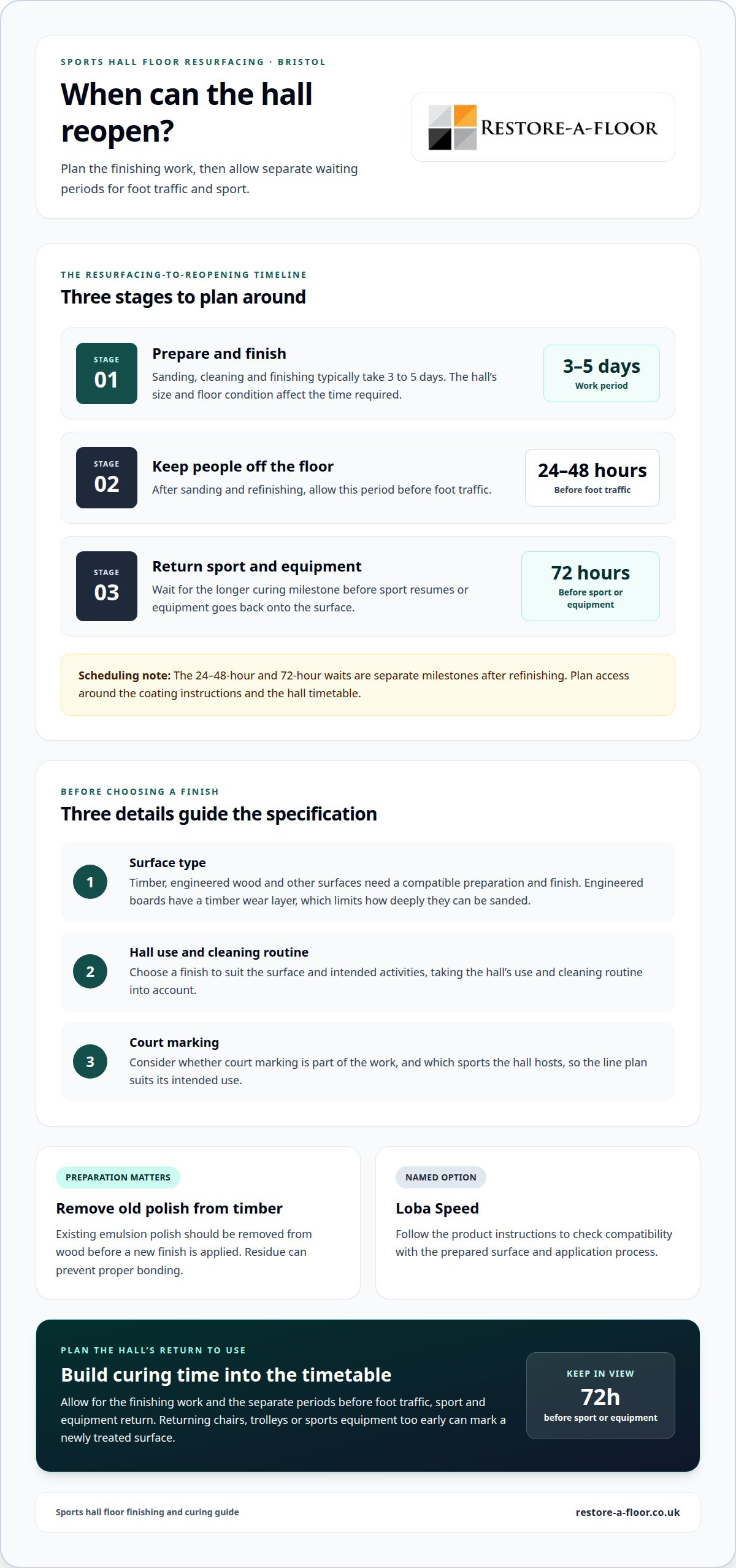
The coating affects how a sports floor looks and performs, so match the finish to its surface and use. Sanding, cleaning and finishing typically take 3 to 5 days, depending on the hall’s size and floor condition.
For timber, the chosen finish must suit the existing surface and intended activities. Allow 24 to 48 hours before foot traffic, and 72 hours before sport or equipment returns.
Choosing an indoor sports floor finish
Start by identifying the surface: timber and engineered wood need finishes suited to their construction, while other surfaces require a compatible approach. Consider the hall’s use, cleaning routine and whether court marking is part of the work. These details guide finish selection and help coordinate the coating with the layout.
Loba Speed is one named floor-finish option. Follow the product instructions for compatibility with the prepared surface and application process. Remove existing emulsion polish from wood before applying a new finish, since residue can prevent proper bonding. Careful preparation helps the new coating adhere as intended.
Floor finish curing time
After sanding and refinishing, keep people off the floor for 24 to 48 hours. Wait 72 hours before sports activities or moving equipment back onto the surface. These are separate milestones: light foot traffic may be possible before a court is ready for play or heavy equipment.
Plan the work around the hall timetable, allowing time for sanding, coating and the required wait before reopening. A machine-applied finish still needs its full curing period. Returning chairs, trolleys or sports equipment too early can mark a newly treated surface, so schedule access according to the coating instructions and intended use.
Flooring for schools, universities and leisure facilities
A school hall may host sport, exams, dining and events, each placing different demands on its floor. Badminton involves regular movement, while chairs and trolleys used for exams or meals can cause wear beyond that of play. Assessing the full timetable, not just the sports programme, helps determine which surface and maintenance approach suit the facility.
Wooden floors offer a natural surface that can be sanded and resealed over time. High-use sports halls, including school gyms and professional athletic facilities, may need sanding every 5 to 7 years. Synthetic surfaces often cost less to own over their lifetime, particularly where frequent non-sport use puts extra wear on the floor. The right comparison considers both everyday activity and future upkeep.
Build inspections into the facility’s maintenance plan. Sports floors should receive maintenance at least once a year in Bristol, depending on usage, and quarterly checks can help teams spot wear or damage early. Look for changes to the finish, worn markings, splinters or uneven areas underfoot. Recording observations helps distinguish routine care from work requiring sanding or refinishing.
Before choosing a surface or maintenance schedule, map the hall’s activities and traffic routes. For example, identify where dining tables, exam desks and storage trolleys regularly cross wooden floors. Then consider whether the floor needs to support varied use or prioritise sport. A surface suited to a dedicated court may not be practical for a shared school hall.
For universities and leisure centres, usage can vary across the week, so plan maintenance around the actual booking pattern. Group activities by type, note the busiest areas, and include line markings and storage movements in the review. This gives facility managers a clearer basis for deciding whether a sanded timber floor remains suitable or another surface better matches the hall’s programme.
Sports hall floor resurfacing and refurbishment
Resurfacing can renew a worn floor without automatically requiring full replacement. Start by identifying the surface, its condition and any repairs needed to determine the right process.
Bristol resurfacing contractors
Sports hall floor resurfacing contractors in Bristol should assess the existing floor before setting out the work. Surface type matters: timber can be sanded, but Granwood must not be treated like timber or sanded with a sanding machine. Granwood, a compressed wood-composite block, is common in halls built between the 1950s and 1980s; it needs careful preparation and a specialist modified epoxy coating system.
A useful assessment distinguishes repairs from refurbishment. It should consider worn areas, the existing finish, court markings and whether installation work is needed. For example, a Bristol church hall parquet floor was sanded back to bare wood to address scratches and emulsion polish build-up. Sports hall sanding, cleaning and finishing typically takes 3 to 5 days, depending on floor condition and hall size.
EN 14904 is a standard relevant to sports flooring and maintenance, according to European Committee for Standardization (CEN).
Resurfacing frequency
There isn’t one resurfacing interval for every sports hall. High-use floors, such as school gyms and professional athletic facilities, may need sanding every 5 to 7 years. Usage, wear and the floor’s material all influence the timing; regular inspections help identify when the finish or surface needs attention.
Sports floors should be maintained at least once a year in Bristol, depending on usage. Maintenance is not the same as sanding: routine care can identify developing wear, while resurfacing addresses deterioration in the surface or finish. This distinction helps schools and leisure centres plan suitable work rather than relying on a fixed calendar alone.
For timber floors needing renewed lines, coordinate surface work with court relining so markings follow the finished layout. Explore sports floor line marking as part of planning a refurbishment.
Restore-A-Floor: Sports Floor Line Marking
Restore-A-Floor provides sports floor line marking for Bristol venues, helping define court layouts after resurfacing or refurbishment. Clear, accurately placed markings make playing areas easier to identify and help the hall support its intended sports programme.
Line marking is a natural final step when a renewed floor needs fresh court layouts. For timber floors, it can be planned alongside Wood Floor Sanding & Refinishing, coordinating the surface work with the markings. The right layout depends on how the hall is used and which sports it needs to accommodate.
If your hall needs refreshed court lines or coordinated floor work, contact Restore-A-Floor to discuss the project.
Plan the next phase with confidence
Turn the floor assessment into a brief that supports the venue’s future programme, rather than treating the work as an isolated repair. For sports hall floor resurfacing in Bristol, outline the surface type, intended activities and preferred court layout. This helps shape a project scope around how the space will be used, whether the priority is preserving the existing floor or planning a different surface.
Restore-A-Floor offers Wood Floor Sanding & Refinishing, Concrete Floor Polishing and Parquet Floor Supply & Installation. Each suits a different flooring need, so start by identifying the surface and the result you want. A clear project brief connects that decision with the hall’s planned use and future flooring requirements.
Whether you’re preparing a refurbishment plan or considering a longer-term flooring project, take the next step with a clear purpose. Contact Restore-A-Floor to discuss your floor, and move towards a facility ready for what comes next.
Frequently Asked Questions
Can court markings be repainted after sanding?
Yes, court markings can be renewed as part of a sports floor project. The surface is prepared first, then the marking layout is planned around the sports played in the hall. For a shared venue, consider whether the lines need to distinguish several court layouts clearly. Coordinating the markings with the floor finish helps create a coherent result.
Can sanding remove deep scratches and dents?
Sanding can remove scratches in the surface finish and timber, but deep dents may extend too far into the wood for sanding alone. The floor’s construction and remaining timber layer affect what can safely be removed. An assessment helps distinguish marks that sanding may reduce from damage that needs a different repair approach.
Can you repair minor damages on sports floors?
Minor surface damage can sometimes be addressed during floor restoration, depending on the material and extent of the defect. A loose or damaged timber section, for example, needs a different response from a scuff in the finish. Identifying the floor type and damage first helps establish whether local attention or broader resurfacing is appropriate.
Do you cover the whole of Bristol?
Restore-A-Floor serves customers in Bristol and other UK locations, as well as Swansea, Cardiff, Pembrokeshire, Haverfordwest and Cardiganshire. For a sports hall in Bristol, the project can be planned around its floor type, condition and intended use. A brief description of the venue and floor helps define the requirements.
Does sanding the floor create a lot of dust?
Restore-A-Floor uses M-class dust filters on all sanding, grinding and polishing operations to maintain a virtually dust-free working environment. This helps control dust during work in settings such as schools and leisure facilities. “Virtually dust-free” does not mean no dust is produced, so the work area still needs appropriate preparation.
How does sports floor maintenance work?
Maintenance starts with cleaning the surface using agents suited to its finish, then checking for wear, damaged markings or changes in the coating. Eco-friendly cleaning agents are recommended to help avoid damaging sports floor finishes. Recording issues by location, such as worn areas near entrances or equipment stores, gives facility managers a practical basis for planning further attention.
Comments