

Garage concrete floor polishing in Bristol with crack repair
A crack in polished concrete doesn’t automatically mean the floor needs replacing. With garage concrete floor polishing in Bristol, hairline cracks may be filled with a concrete patching compound, while larger cracks may be routed into a V-shape and filled with repair epoxy. Repairs can improve the surface, but cracks may remain visible and the finished floor won’t necessarily look completely uniform.
It’s understandable to want a refined garage floor without hiding what’s happening beneath the surface. This guide explains what affects crack repairs, how polished concrete can feel underfoot, and what influences the finish on an existing slab. You’ll also learn how polishing works, why the concrete’s condition and construction matter, and which polishing and restoration options are available in Bristol. That way, you can make an informed decision about the result you want and the work your garage floor needs.
Table of Contents
Can cracks in polished concrete be fixed?
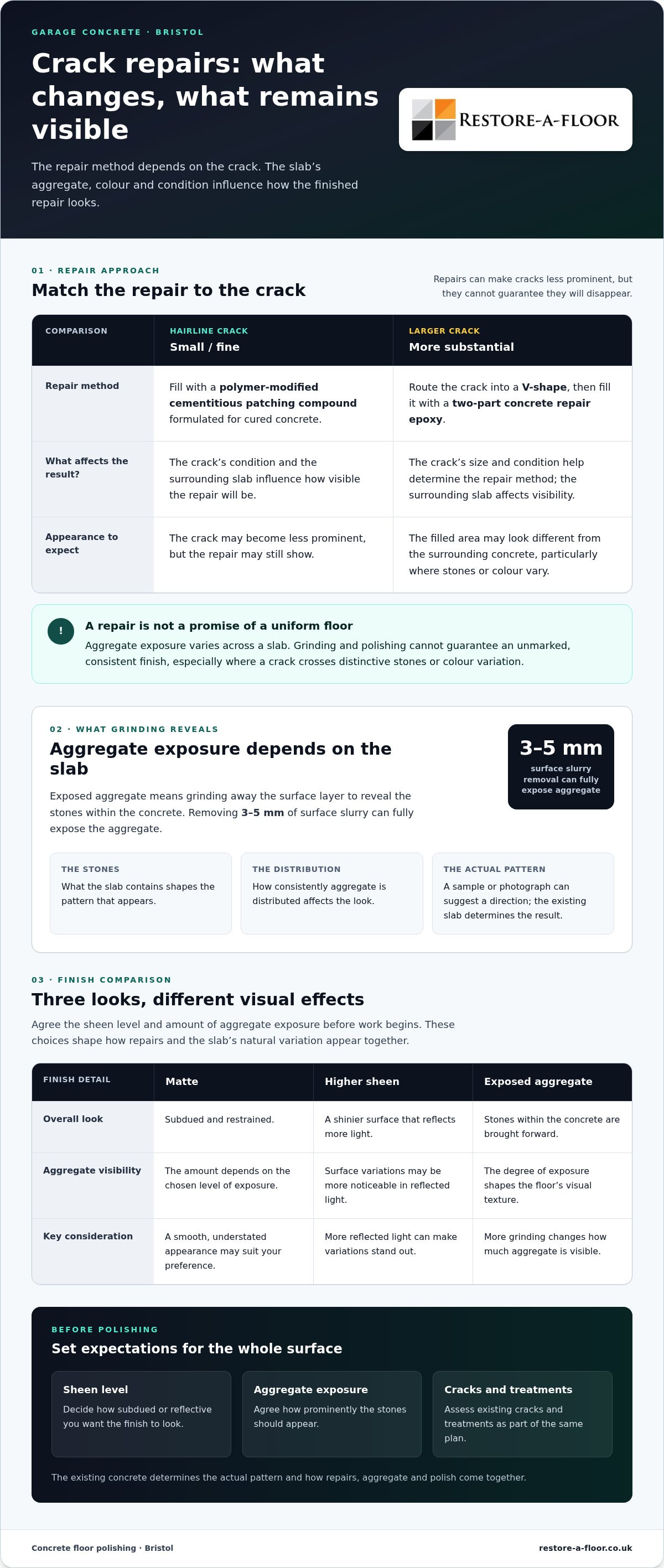
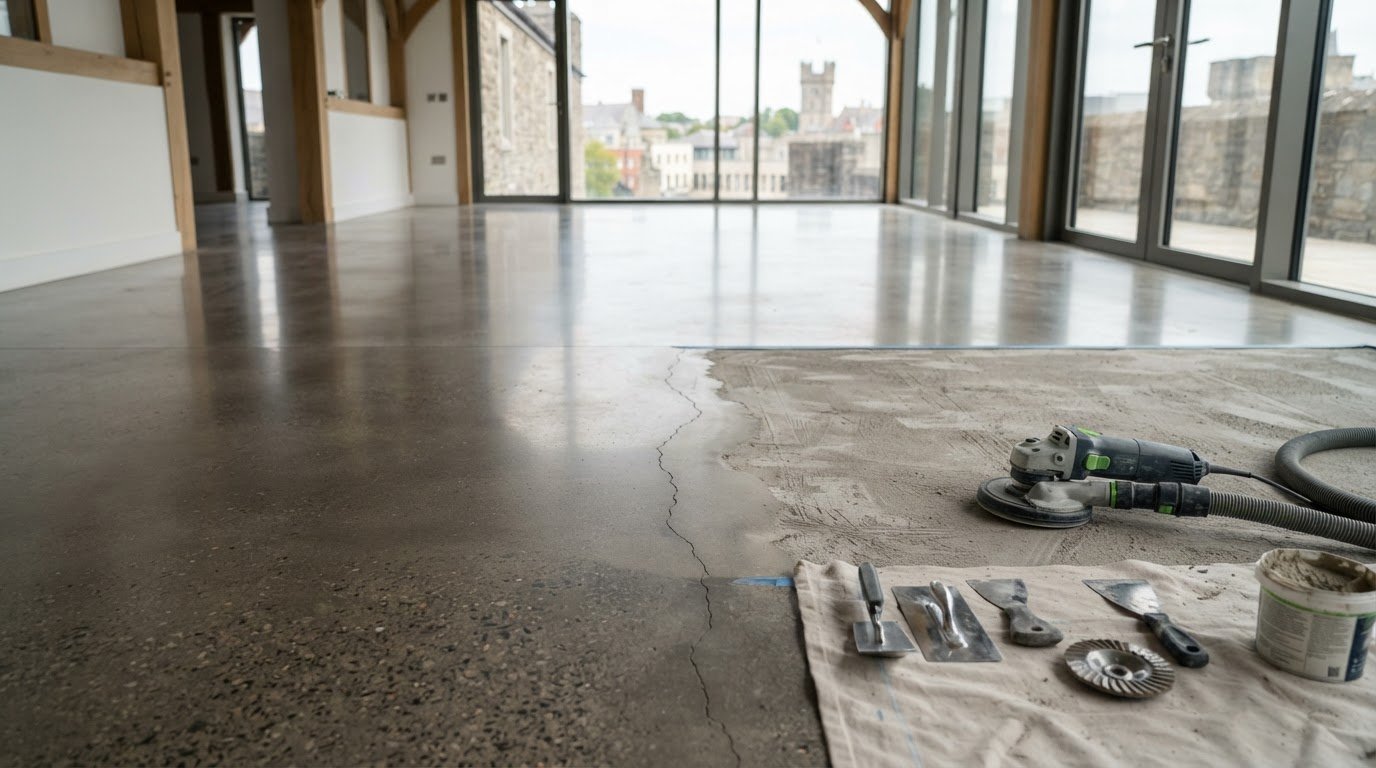
Yes. Small hairline cracks can be filled with a polymer-modified cementitious patching compound formulated for cured concrete. Larger cracks may need a different repair: route the crack into a V-shape, then fill it with a two-part concrete repair epoxy. The right method depends on the crack’s size and condition, while the surrounding slab affects how visible the repair will be.
A repair can make a crack less prominent, but it won’t necessarily make it disappear. Aggregate exposure varies across a slab, so a repaired area may look different from the concrete around it. Grinding and polishing can’t guarantee a uniform, unmarked finish. This is especially important where a crack crosses an area with distinctive stones or colour variation.
Exposed aggregate means grinding away the surface layer to reveal the stones within the concrete. Removing 3-5 mm of surface slurry can fully expose the aggregate, but the appearance depends on what the slab contains and how consistently it is distributed. A sample or photograph may suggest a direction, yet the existing slab determines the actual pattern.
Choose the finish with the desired aggregate visibility in mind. A matte finish has a subdued look; a higher sheen reflects more light and can make surface variations more noticeable. Exposed aggregate brings the stones forward, with the degree of exposure shaping the floor’s visual texture. These options aren’t interchangeable: more grinding changes how much aggregate is visible.
Before work begins, agree on two things: the sheen level and the amount of aggregate exposure. For example, you might prefer a smooth, restrained matte surface rather than a more prominent, fully exposed finish. Assess cracks and existing treatments as part of the same plan. This helps set realistic expectations for how the repairs, aggregate and polish will look together.
Is polished concrete flooring cold underfoot?
Polished concrete often feels cool underfoot because its hard surface has a different thermal profile from softer floor coverings. Underfloor heating changes that profile, so consider it when planning a garage used as a workshop or regular living space.
Polished concrete is the ground and hardened slab itself; epoxy resin forms a separate coating over concrete, while concrete sealing applies a protective treatment to the surface. An epoxy coating’s resistance to foot traffic, vehicles, oil and petrol depends on its resin specification and installation. Polished concrete naturally resists dust, dirt and oil stains.
For garage use, polished concrete is designed to withstand heavy vehicle traffic and dropped tools. Its hard-wearing surface is difficult to scratch, although heavy use and the slab’s condition still affect its appearance over time. A suitably finished and responsibly cared-for floor can provide traction for regular foot and vehicle traffic.
Moisture matters too. A sealed polished surface helps limit moisture absorption, reducing the risk of dampness and mould; polished concrete is also described as resistant to humidity and moisture damage. These characteristics make it a practical option where damp conditions are a concern.
How long does polishing a garage floor take? The duration depends on the slab’s size, condition, repairs, previous treatments and chosen finish. Newly laid concrete should be left for at least 28 days before polishing with a diamond grinder.
How should you maintain the finished floor? Sweep regularly to remove grit, then mop occasionally with water. Polished concrete garage floors need no wax or coatings for maintenance, so avoid adding routine treatments the surface doesn’t require.
For a garage floor needing assessment, levelling or a fresh finish, explore concrete floor polishing as a practical next step.
Why Are More People Opting For Polished Concrete in Bristol?
Across Bristol, polished concrete suits commercial and industrial spaces where a continuous, hard-wearing floor is practical. Offices benefit from a clean, level surface, while warehouses need floors that accommodate regular movement of people, equipment and vehicles. The right finish depends on the building’s use, the slab’s condition and the required appearance.
Preparation matters. On a commercial floor, grinding can remove high spots and tamp lines that interrupt the surface. Further grinding removes the resulting scratch pattern; hardening and sealing then help create a more even floor that’s easier to maintain. This sequence addresses surface imperfections without treating every slab as identical.
For example, a Bristol office may prioritise a smooth, consistent appearance, while a warehouse may place greater emphasis on a durable surface for ongoing traffic. In both settings, the concrete’s condition and previous treatments affect the work required. Levelling high points can improve consistency, but preparation must suit the slab rather than assume the same approach works everywhere.
Commercial and industrial polishing is also a matter of choosing the finish. Cream Finish, Salt and Pepper, and Full Exposure Finish describe different levels of aggregate visibility. The shine can also be selected to suit the space. Consider these choices alongside the floor’s use to align the final appearance with the demands of an office, warehouse or other working environment.
Do Bristol planning or building regulations apply to garage floor polishing? Requirements depend on the project’s scope: polishing an existing slab differs from altering a building, drainage or its use. If the work includes those changes, assess the relevant Bristol planning and building-control requirements before starting.
For a commercial floor in Bristol, a sound plan starts with assessing the concrete, identifying high spots and tamp lines, and agreeing on the required finish. This practical sequence helps determine whether grinding, levelling, hardening or sealing is needed, keeping the proposed work focused on the building’s actual use.
Concrete floor polishing services in Bristol
An existing Bristol garage floor can often be polished, provided the concrete is suitable for grinding. An assessment considers the slab’s condition and construction, previous treatments, cracks and any overlay. These factors help establish the preparation required and the finish the project can achieve.
The process uses mechanical grinding to refine the concrete, followed by hardening and polishing to the required shine. Each stage has a purpose: grinding removes surface imperfections, hardening strengthens the concrete surface, and polishing develops the chosen appearance. The sequence is tailored to the slab rather than applied as a standard treatment.
For an existing overlay, polishing may improve its appearance without completely replacing the surface. The overlay’s build-up, its bond with the base and adjoining details all matter. A raised threshold, for example, can affect how the finished floor meets the surrounding area. These details help determine suitability and inform the work plan.
Where a garage floor has high spots or tamp lines, grinding can help create a more level surface. The scratch pattern left by the work is then removed before the concrete is sealed. This preparation can make routine maintenance easier, while the selected sheen determines how much light the finished floor reflects.
Finish choices include subdued matte surfaces, higher-shine results and different levels of aggregate exposure. The concrete beneath the surface, including its composition and condition, determines its natural appearance. Agree on the desired sheen and aggregate visibility before work begins to give the project a clear visual direction.
A useful starting point is to identify the slab type, visible damage, previous coatings, and the intended garage use. Those details guide the polishing method and finish, rather than relying on the appearance of a photograph of another floor. For a considered next step, arrange an assessment of your garage floor.
Restore-A-Floor: Wood Floor Sanding & Refinishing
Restore-A-Floor is a natural next step if your garage slab needs polishing or you’re considering how to improve its appearance. Its concrete floor polishing service can transform existing floors, with the preparation and finish shaped around the slab’s condition and the result you want.
For other areas of your property, Restore-A-Floor also offers wood floor sanding and refinishing, parquet floor supply and installation, and tiled floor restoration and cleaning. Each service is suited to a different floor type, helping you plan work around the surfaces that need attention.
If you’re ready to discuss your garage floor or another flooring project, contact Restore-A-Floor or visit restore-a-floor.co.uk.
Plan the next step for your garage floor
Before committing to garage concrete floor polishing in Bristol, consider how the space needs to work as well as how you want it to look. A garage used for storage has different priorities from one used as a workshop, and its intended use can guide choices about finish and upkeep. Setting those priorities gives the flooring project a clear direction.
If the work forms part of a wider home refresh, Restore-A-Floor also offers wood floor sanding and refinishing, parquet floor supply and installation, and tiled floor restoration and cleaning. Consider each surface on its own terms while keeping the overall plan coherent.
For a conversation about your garage floor and the finish that suits your space, contact Restore-A-Floor. A considered starting point can help turn your plans into a practical next step.
Frequently Asked Questions
What does garage concrete floor polishing involve?
Garage concrete floor polishing mechanically grinds the slab, hardens the concrete and refines it to the chosen sheen. A newly laid floor needs at least 28 days before diamond grinding. For an existing floor, earlier coatings and repairs affect preparation. Restore-A-Floor uses M-class dust filters on grinding and polishing operations, helping maintain a virtually dust-free work environment.
How much does garage concrete floor polishing cost in Bristol per square metre?
The cost depends on the floor and the work required, so a per-square-metre figure won’t suit every garage. The quotation considers factors such as the slab’s condition, existing treatments, repairs, preparation and chosen finish. Restore-A-Floor provides a project-specific quotation covering the flooring work requested. The company responds with a quotation and advice within one working day.
Which Bristol companies offer garage concrete floor polishing, and what are their reviews?
Restore-A-Floor provides concrete floor polishing in Bristol. Its published customer feedback includes a testimonial from Tracey Litchfield, a Swansea customer, who praises the transformation of downstairs floors, along with the team’s punctuality and efficiency. This offers an example of a customer’s experience, but it isn’t a Bristol-specific review or a rating for garage polishing.
What preparation and repairs are needed before polishing a garage floor?
Clear stored items and vehicles so the floor can be inspected and prepared across its full surface. Note where cracks, patches, paint, oil marks or previous coatings appear, as these can affect grinding and the final finish. The slab’s construction and any overlay matter too. Recording these details helps establish the preparation sequence and identify repairs before polishing begins.
How durable and slip-resistant is a polished concrete garage floor?
A properly finished and responsibly cared-for polished concrete floor can provide traction for regular foot and vehicle traffic. Its hard surface is designed to withstand heavy vehicle use and dropped tools, although the slab’s condition and chosen finish affect its performance. For practical use, keep the floor clean and consider how vehicles, foot traffic and workshop tasks will use the space.
Comments