

Non-Toxic Floor Finishes: A Healthy Home Guide
What if the 'freshly finished' scent you associate with a renovated home is actually a warning sign for your family's respiratory health? For many homeowners across the UK, the fear of volatile organic compounds (VOCs) often turns the excitement of a floor restoration into a period of genuine anxiety. You shouldn't have to choose between a hard-wearing, beautiful surface and the well-being of your children and pets. We understand that whilst you demand a professional, high-end aesthetic, you also require the absolute security that comes with non toxic floor finishes that leave zero chemical odour within a day of application.
This guide cuts through the confusing marketing jargon to provide expert clarity on selecting finishes that offer uncompromising durability without the toxic trade-off. By combining advanced, dust-free sanding technology with high-performance plant-based oils and waxes, you can achieve a bespoke result that stands up to the rigours of daily life. We will explore the technical advantages of modern sustainable products, explain how to identify genuine safety certifications, and demonstrate why a professional application is the key to a healthy, long-lasting home environment.
Table of Contents
What are Non-Toxic Floor Finishes and Why Do They Matter?
The term 'non-toxic' is often used loosely in the home improvement industry, yet for a professional restorer, it represents a rigorous technical standard. Whilst many homeowners focus on the aesthetics of their timber, the chemical composition of the sealant determines the long-term health of the indoor environment. Selecting non toxic floor finishes involves looking beyond the 'eco-friendly' stickers to understand the technical data sheets. When researching Sustainable flooring options, it's vital to recognise that the finish acts as the primary barrier between your family and the raw materials underneath.
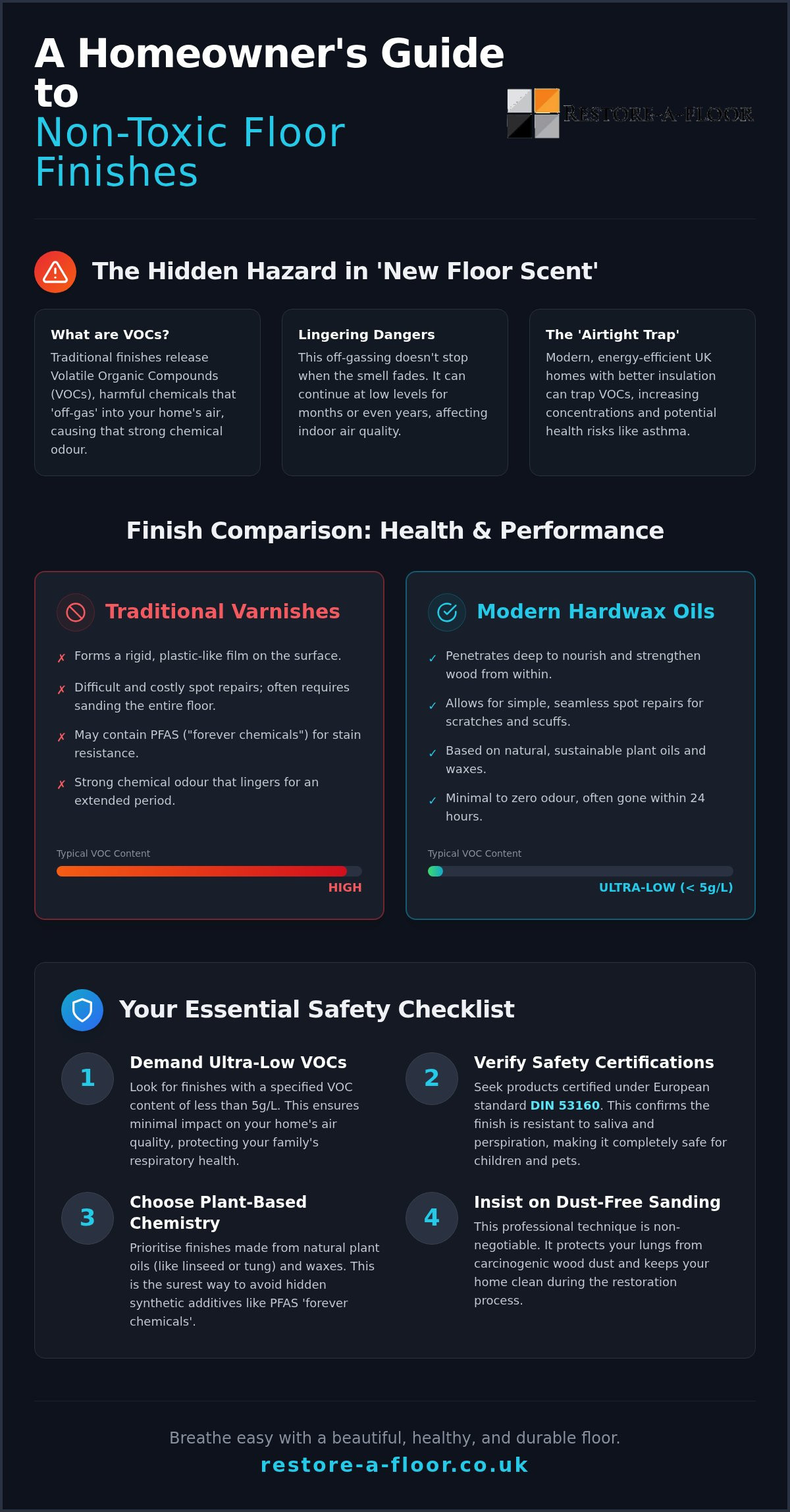
Traditional polyurethane varnishes have long been the industry standard due to their plastic-like durability, but this performance comes at a significant cost to respiratory health. These finishes rely on heavy solvents that release volatile organic compounds (VOCs) through a process called off-gassing. This chemical release doesn't stop once the 'new floor smell' fades; it can continue at low levels for months or even years. For families with young children who spend time playing on the floor, these lingering fumes represent a direct source of exposure that can exacerbate asthma and other respiratory sensitivities.
The Problem with VOCs in British Homes
Modern UK homes are designed to be incredibly energy efficient, with high levels of insulation and sophisticated double glazing. Whilst these features keep our properties warm, they also significantly reduce the rate of air exchange compared to older, draughtier buildings. When traditional high-VOC finishes are applied in these airtight environments, chemical concentrations can reach levels that are much higher than they would be in less insulated spaces. Choosing non toxic floor finishes with a VOC content of less than 5g/L ensures that your home remains a sanctuary rather than a trap for airborne pollutants.
Identifying PFAS and "Forever Chemicals" in Flooring
A common misconception is that all water-based finishes are inherently safe. Some manufacturers use per- and polyfluoroalkyl substances (PFAS), often called 'forever chemicals', to achieve high levels of water and stain resistance. These substances don't off-gas like VOCs, but they are incredibly persistent in the human body and the wider environment. To ensure a truly healthy home, look for finishes that are certified under European standard DIN 53160. This accreditation confirms the product is resistant to saliva and perspiration, making it safe for use on children's toys and floors where toddlers crawl. True safety requires a commitment to plant-based chemistry that avoids these synthetic shortcuts entirely.
The Primary Types of Healthy Floor Finishes
Selecting a sealant for your home shouldn't be a compromise between aesthetics and safety. Modern chemistry has evolved to provide several categories of non toxic floor finishes that perform as well as, if not better than, their solvent-heavy predecessors. Understanding how these products interact with different timber species is the first step toward a successful restoration project. From traditional plant extracts to advanced water-borne resins, the choice depends on your floor's traffic levels and your desired maintenance routine.
Natural Oils and Hardwax Blends
Natural oils, such as linseed and tung oil, have been used for centuries to nourish and protect timber. Unlike synthetic lacquers that form a rigid plastic film on the surface, these oils penetrate deep into the wood grain. This saturation strengthens the timber from within whilst allowing the wood to breathe. When evaluating the various types of wood floor finishes, it's clear that hardwax oils represent a significant advancement. By combining the deep-penetrating properties of plant oils with the surface protection of natural waxes, these blends offer a sophisticated, matte aesthetic that is particularly effective on open-grained woods like Oak and Pine.
One of the most practical benefits of a hardwax oil finish is the ease of maintenance. If a specific area becomes scratched or worn, you can perform a spot repair without the need to sand the entire room. This localised treatment is impossible with traditional varnishes, which usually require a full strip-back to fix minor imperfections. For homeowners seeking a bespoke look, these oils can be tinted to enhance the wood's natural character. If you're unsure which oil-based solution is right for your project, the experts at Restore-A-Floor can guide you through the selection process based on your specific timber type.
Modern Water-Based Finishes
For those who prefer a clear, non-yellowing appearance, modern water-based polyurethanes offer a high-performance alternative. These eco-lacquers have come a long way since their inception; today's professional-grade versions rival industrial coatings in terms of scratch and chemical resistance. They are particularly popular in busy UK households because they dry quickly. You can often apply multiple coats in a single day, meaning your family can return to the room much sooner than with oil-based products. These finishes don't release the pungent chemical odour associated with old-fashioned solvent lacquers, making them an ideal choice for well-insulated properties where ventilation might be limited. They preserve the 'scandi' look of light woods like Maple or Ash, ensuring the timber stays bright and natural for years.
Performance and Durability: Debunking the "Weak" Eco-Finish Myth
Many homeowners hesitate to specify non toxic floor finishes because they assume a lack of harsh chemicals equates to a lack of strength. This misconception is a relic of the early days of eco-friendly products. Today, professional-grade plant-based finishes are engineered to withstand the rigours of busy UK households. Whilst traditional solvent-based varnishes create a brittle plastic film that sits on top of the timber, modern hardwax oils and eco-lacquers work with the wood's natural properties to provide a resilient, long-lasting surface.
The primary advantage of hardwax oils in high-traffic areas like hallways and kitchens is their unique reaction to wear. A traditional varnish acts like a sheet of glass; once it is scratched or breached, water can get underneath the film, causing it to peel and flake. In contrast, non toxic floor finishes based on natural oils become part of the timber's cellular structure. They don't crack or delaminate. Over a decade of use, an oiled floor often maintains its aesthetic integrity far better than a varnished one because it ages gracefully rather than failing catastrophically.
The Science of Curing vs Drying
Understanding the technical difference between drying and curing is essential for long-term durability. Drying is merely the evaporation of the carrier liquid, such as water or natural solvents, which usually happens within hours. Curing is the subsequent chemical reaction where the finish hardens and bonds to the wood fibres. The first seven days after application are critical. During this window, the finish is still reaching its maximum hardness. We advise clients to avoid heavy foot traffic and keep pets off the surface whilst the chemical bond fully matures. Professional application ensures the product is laid at the correct thickness to facilitate this process without trapping uncured material beneath the surface.
Eco-Friendly Care and Maintenance
Maintaining a healthy home environment requires moving away from the aggressive, bleach-based cleaners found in most supermarkets. These harsh chemicals can strip the natural waxes from your floor, leaving the timber vulnerable to stains. Instead, we recommend pH-neutral soaps designed specifically for natural finishes. These cleaners gently lift dirt without degrading the protective layer. For floors that begin to look tired after years of service, you can apply a maintenance coat. A maintenance coat is a thin, cost-saving application of fresh oil or wax applied directly over the existing finish to restore its lustre and protection without the need for a full, disruptive sand-and-seal process.
The Homeowner’s Checklist for Choosing a Safe Floor Finish
Selecting the right sealant involves more than just picking a colour from a swatch. You need a structured method to evaluate the technical specifications of non toxic floor finishes to ensure they meet your family's health requirements. Start by examining the VOC content on the product's technical data sheet. Whilst UK regulations allow for higher limits, we recommend aiming for a concentration of less than 5g/L. This level virtually eliminates the risk of lingering chemical fumes in your living spaces.
Beyond VOC levels, verify that the product carries the DIN 53160 certification. This European standard tests for resistance to saliva and perspiration, providing a high degree of confidence for households with toddlers or pets. If a finish is safe enough for children's wooden toys, it's suitable for your floors. You should also assess the expected odour during application. Many modern eco-finishes allow you to remain in the property whilst the work is being carried out, avoiding the cost and disruption of temporary relocation.
Pre-Purchase Technical Checklist
Before committing to a specific product, consider the botanical compatibility with your timber. Different species react uniquely to various oils; for example, tannin-rich woods like Oak may require specific primers to prevent 'tannin bleed' when using certain non toxic floor finishes. Always check the manufacturer's stated coverage rate, measured in m²/L. High-quality professional finishes often have superior spread rates, meaning you'll need less product to achieve a superior result. For nursery or playroom floors, look for the EN 71-3 'Toy Safety' accreditation, which ensures the dried finish is free from heavy metals and harmful chemicals.
Lifestyle and Aesthetic Considerations
Your choice of sheen level, whether matte, satin, or gloss, will significantly impact the room's atmosphere and maintenance requirements. Matte finishes are excellent at hiding micro-scratches and dust, making them a practical choice for busy family homes. Slip resistance is another critical factor, particularly if you have elderly residents or energetic pets. Professional-grade finishes can be specified with anti-slip properties to enhance safety without compromising the wood's natural beauty. Finally, think about future-proofing your investment. Natural oils allow for easier colour changes in the future compared to traditional lacquers. To ensure you select the perfect system for your specific project, contact our specialist restoration team for a bespoke assessment of your flooring needs.
Professional Application: Why Dust-Free Sanding is Essential
A truly healthy floor restoration involves more than just the liquid sealant applied at the final stage. The preparation phase is the most critical part of the project, yet it's often where the greatest health risks occur. Fine wood dust is a known human carcinogen that can remain suspended in the air for days and settle deep into carpets or upholstery for months. Without professional-grade containment, this dust represents a persistent respiratory threat to your family. Our commitment to using non toxic floor finishes begins with the complete elimination of these airborne particles at the source.
The Dust-Free Restoration Process
We utilise advanced HEPA-filtered extraction systems that are designed to capture 99.9% of all airborne particles. Unlike the standard drum sanders found in hire shops, which often act as dust-distribution machines, our professional equipment creates a closed-loop environment. This level of cleanliness is why our service for wood floor sanding Swansea is considered the gold standard for health-conscious homeowners. A dust-free environment isn't just about cleanliness; it's about ensuring the timber surface is perfectly prepared. Even microscopic dust left on the grain can prevent non toxic floor finishes from bonding correctly, leading to premature wear or an uneven aesthetic.
Expert Finishing in Local Heritage Homes
Homes across Cardiff, Bristol, and Swansea often feature historic timber that requires a delicate, bespoke touch. When restoring Victorian floors, we prioritise the use of breathable, plant-based oils that honour the original character of the building whilst meeting modern safety standards. These period properties often lack the modern ventilation of newer builds, making the choice of a zero-VOC finish even more vital. Our teams manage large-scale residential projects with a focus on precision, ensuring that the transition from raw, sanded timber to a protected, bespoke finish is seamless. By choosing a professional application, you're not just buying a product; you're investing in a technical process that guarantees a beautiful, hard-wearing, and safe environment for your children and pets.
Secure a Healthier Future for Your Home
Achieving a beautiful, durable floor no longer requires compromising the air quality of your living space. By understanding the technical shift toward plant-based chemistry, you can select non toxic floor finishes that rival traditional varnishes in strength whilst offering superior repairability and aesthetic depth. The foundation of any successful restoration remains the total elimination of carcinogenic wood dust through advanced extraction technology, ensuring your home remains safe from the very first day of application.
With over 20 years of industry experience, Restore-A-Floor specialises in delivering these bespoke, health-conscious results across Cardiff, Bristol, and Swansea. We provide dust-free sanding as standard, combining meticulous craftsmanship with expert technical guidance to protect your family's respiratory health. You don't have to interpret complex eco-certifications alone. Request a free, professional quotation for your non-toxic floor restoration and discover the security that comes with choosing a master of the craft. Your home deserves a finish that is as healthy as it is hard-wearing.
Frequently Asked Questions
Are non-toxic floor finishes as durable as traditional polyurethane?
Modern non toxic floor finishes such as hardwax oils are exceptionally durable and often outlast traditional polyurethane in residential settings. Whilst polyurethane creates a brittle surface layer prone to scratching, plant-based oils penetrate the timber to strengthen it from within. This prevents the peeling or flaking seen in older varnishes. Because these finishes are easily repairable, you can maintain a pristine appearance for decades without the need for a full, disruptive sand-and-seal.
How long does it take for non-toxic floor finishes to stop smelling?
Most professional-grade eco-finishes lose any noticeable odour within 24 hours of application. Unlike traditional solvent-based lacquers that off-gas for weeks, these products use natural carriers that don't irritate the respiratory system. You might notice a faint, earthy scent similar to linseed or citrus whilst the product cures, but this is entirely safe. This rapid dissipation of odour is a primary reason why health-conscious families choose these high-performance, sustainable solutions for their homes.
Can I stay in my house whilst the floors are being refinished with eco-friendly products?
You can usually remain in your property whilst the restoration work is being carried out. Because these finishes have minimal VOC levels and zero pungent chemical odours, there is no requirement for temporary relocation. However, you must ensure the treated rooms are not accessed until the finish is touch-dry. We recommend planning your movement around the house to avoid the work zone for the first 8 to 12 hours after the final coat is applied.
Are water-based floor finishes always non-toxic?
Water-based does not automatically mean non-toxic. Some water-borne products still contain significant levels of solvents or hidden "forever chemicals" like PFAS to enhance stain resistance. To ensure you're using truly non toxic floor finishes, you must examine the technical data sheet for a VOC content below 5g/L. Look for specific safety credentials such as the EN 71-3 toy safety standard to confirm the product is completely safe for a family environment.
What is the best non-toxic finish for a kitchen floor?
A high-quality hardwax oil is generally considered the superior choice for kitchen environments. Kitchens endure frequent spills and heavy foot traffic, which can eventually breach a traditional lacquer. Hardwax oils provide excellent liquid resistance whilst remaining breathable. If a specific area near the sink or cooker becomes worn, it can be spot-repaired and refreshed in minutes. This avoids the need to strip the entire floor, saving significant time and expense over the long term.
How much more do non-toxic floor finishes cost compared to standard ones?
Non-toxic finishes typically have a higher price per litre than mass-market varnishes, but they offer superior coverage and lower long-term costs. Because professional-grade oils are more concentrated, you often require less product to achieve a bespoke result. When you consider that you won't need to pay for temporary accommodation or frequent full restorations, the total cost of ownership is often lower than that of traditional, chemical-heavy alternatives found in DIY stores.
Can I apply a non-toxic oil over an old solvent-based varnish?
You cannot apply a non-toxic oil directly over an old solvent-based varnish. Oils require an open wood grain to penetrate and bond effectively, whilst old varnishes create a plastic seal that blocks this process. To achieve a professional and durable result, the floor must be sanded back to raw timber using dust-free technology. This ensures the new finish can fully saturate the wood fibres, providing the protection and aesthetic depth you expect from a premium restoration.
Is dust-free sanding really 100% dust-free?
Professional dust-free sanding systems capture approximately 99.9% of airborne particles. Whilst no system is technically "100%" in a laboratory sense, our HEPA-filtered extraction equipment prevents visible dust from settling in your home. This is a vast improvement over DIY sanders, which can leave carcinogenic wood dust in your soft furnishings for months. For families with asthma or allergies, this professional containment is essential for maintaining a healthy and clean indoor environment during the restoration process.


Comments