

Polished Concrete Floor Bristol: The Ultimate Guide to Modern Finishes
- info089907
- 1 day ago
- 12 min read
The industrial grit of Bristol's heritage is undergoing a sophisticated transformation, where the very foundation of your home becomes its most striking architectural feature. You likely appreciate the minimalist elegance of a polished concrete floor Bristol homeowners are increasingly adopting; however, the prospect of invasive dust and technical jargon often stalls the dream before it begins. It's natural to worry that your existing slab is too damaged to save or to feel overwhelmed by the choice between a muted satin and a high-gloss finish.
This guide will demystify the entire restoration process, showing you how professional grinding can turn even a weathered surface into a seamless, high-value asset whilst maintaining a strictly dust-free environment. We'll explore the spectrum of modern finishes, assess the viability of restoring older concrete, and explain why this durable choice has become the gold standard for high-traffic modern living. By the end, you'll understand how to achieve a bespoke floor that balances technical precision with a high-end aesthetic that lasts for decades.
Table of Contents
Why Polished Concrete is Bristol’s Favourite Modern Flooring Choice
Bristol’s architectural landscape is a unique tapestry of maritime history and cutting-edge urban design. From the sprawling Victorian terraces of Clifton to the converted industrial warehouses of Southville, homeowners are seeking surfaces that honour this heritage whilst providing contemporary performance. A polished concrete floor Bristol property owners choose isn't merely a decorative coating; it's a structural transformation. To truly understand the technical foundations, one might ask, What is Polished Concrete? Essentially, it involves a meticulous mechanical process of grinding, honing, and polishing the existing slab to reveal a dense, reflective surface that feels both ancient and futuristic. This "industrial-chic" aesthetic has moved from commercial boutiques into the heart of the home, offering a clean, minimalist foundation that highlights other design elements.
Performance is where concrete truly outshines traditional timber or ceramic tiles. It doesn't suffer from warped boards, moisture damage, or stained grout lines that inevitably darken over time. In high-traffic urban environments, where boots, pets, and busy lifestyles are the norm, this material offers a level of resilience that's difficult to match. By using the building's own foundation, you eliminate the need for additional floor coverings, significantly reducing the environmental impact of your renovation. It is a pragmatic choice for those who value longevity over temporary trends.
The Aesthetic Versatility of Concrete
One of the most compelling reasons for its popularity is the sheer range of visual outcomes. You aren't limited to a single, monolithic look. We can tailor the finish from a soft, organic matte to a high-gloss, gallery-style reflection that bounces light into darker period rooms. Stains and dyes allow for deep customisation, ensuring the floor complements your specific interior palette. Whether you're aiming for a raw, industrial vibe in a loft or a refined, ultra-modern look in a new extension, the finish is bespoke to your vision.
Sustainable Flooring for Modern Living
Sustainability is no longer an afterthought for Bristol’s conscious renovators. By refining the existing slab, you're embracing a low-carbon approach that avoids the manufacturing and transport costs associated with new materials. Concrete also possesses exceptional thermal mass. It's the ideal partner for underfloor heating systems, as it absorbs heat efficiently and radiates it slowly, keeping your home comfortable whilst potentially lowering energy consumption. With a lifespan that far exceeds wood or traditional tiling, it represents a permanent, high-performance solution for the modern home.
Selecting Your Finish: From Subtle Cream to Exposed Aggregate
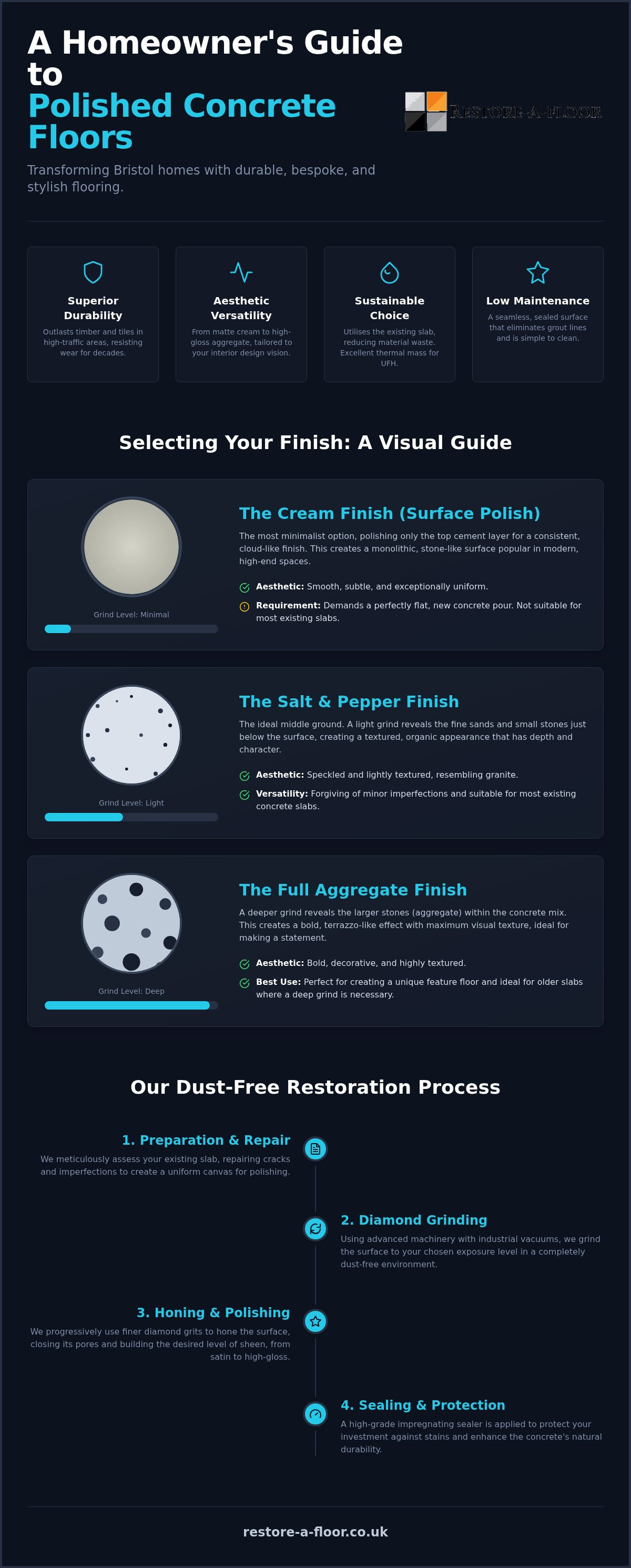
The visual character of a polished concrete floor Bristol homeowners select is determined by the depth of the initial grind. We categorise these finishes into three primary levels of exposure, each offering a distinct aesthetic that can completely redefine the atmosphere of a room. Whether you're aiming for a monolithic, stone-like surface or a vibrant, speckled texture, the choice of finish must balance your design aspirations with the physical reality of the concrete slab itself. It's a technical journey that turns a standard foundation into a bespoke architectural feature.
The Cream Finish (Surface Polish)
A cream finish is the most minimalist option available. It involves polishing the very top layer of the concrete, known as the laitance, without exposing any of the underlying stones or sand. This results in a consistent, cloud-like movement across the floor that's exceptionally popular in modern Bristol apartments and high-end retail units. However, achieving this look is technically demanding. It requires a nearly perfect initial pour, as any dips or ridges in the concrete will be revealed if we have to grind too deep. If you're planning a new extension, it's vital to coordinate with your installers early to ensure the slab is finished to the high standard required for a cream polish.
Salt and Pepper vs. Fully Exposed Aggregate
For many, the "Salt and Pepper" look represents the ideal middle ground. By lightly grinding the surface, we reveal the fine sands and small pebbles sitting just beneath the cream layer. This creates a textured, organic appearance that's far more forgiving than a cream finish, as the variation in the surface helps to mask minor imperfections or repairs in the slab. It's a versatile choice that suits both period properties and contemporary renovations.
If you desire a bold, architectural statement, fully exposed aggregate is the ultimate choice. This process involves removing approximately 3-5mm of the surface to showcase the large stones within the concrete mix. The result is a stunning, terrazzo-style aesthetic that's particularly effective for restoring older Bristol slabs where the surface might be too damaged for a lighter polish. Regardless of the exposure level you choose, following a structured care routine is essential; you can find detailed guidance in the official maintenance plan from the ASCC.
Deciding which finish suits your property requires a balance of technical assessment and design intuition. If you're unsure which level of exposure your existing slab can support, our team provides bespoke concrete finishing consultations to help you navigate these choices. By understanding the unique characteristics of your concrete, we can ensure your polished concrete floor Bristol project results in a surface that's both durable and visually spectacular.
The Restoration Process: How We Grind and Polish Existing Slabs
While new builds offer a blank canvas, the true test of craftsmanship lies in restoring the existing slabs found amongst Bristol’s historic and mid-century properties. Transforming a neglected foundation into a polished concrete floor Bristol owners can take pride in requires a methodical approach that prioritises structural integrity before aesthetic refinement. This journey isn't a simple buffing exercise; it's a heavy-duty mechanical refinement that permanently alters the concrete's molecular structure. By treating the slab as a raw material rather than just a sub-floor, we can unlock a level of sophistication that traditional coverings simply cannot replicate.
The refinement process involves a series of progressive passes with specialised equipment. We begin with coarse metal-bond diamonds to open the surface and remove deep-seated imperfections. As we advance through the grit levels, we switch to fine resin-bond pads that gradually hone the surface to your desired sheen. During this transition, we apply liquid chemical densifiers. These silicates penetrate the pores, reacting with the free lime to create a denser, harder surface that significantly increases stain resistance and prevents the common issue of concrete dusting from within the slab.
Sub-Floor Preparation and Repair
Before the first diamond segment touches the floor, we conduct a thorough assessment to identify structural vulnerabilities. Many older properties in areas like Redland or Bedminster hide decades of history beneath layers of old adhesive, bitumen, or self-levelling latex compounds. We meticulously remove these residues and repair structural cracks or divots using high-strength epoxy resins that bond seamlessly with the original matrix. Ensuring the slab is level and structurally sound is a non-negotiable step for achieving a high-end finish that won't fail over time.
Dust-Free Diamond Grinding Technology
Homeowners often hesitate to choose concrete because they fear a property filled with fine silica dust. To alleviate this anxiety, we utilise industrial-grade vacuum systems that capture 99.9% of airborne particles directly at the source. This signature dust-free approach ensures a clean residential environment and allows commercial projects to proceed without disrupting adjacent work zones. By employing these expert concrete floor grinding and polishing techniques, we deliver a pristine site alongside a flawless floor. Our commitment to cleanliness is as meticulous as our commitment to the final aesthetic outcome.
Durability and Maintenance: Keeping Your Floors Pristine
One of the most significant advantages of a polished concrete floor Bristol is its sheer resilience against the city's damp climate and urban grit. Unlike carpets that trap allergens or wood that swells with moisture, polished concrete remains stable and hygienic. Its longevity isn't accidental; it's the result of the densification process we discussed earlier, combined with high-performance penetrating sealers. These sealers don't sit on the surface like a wax; instead, they live within the concrete's pores to repel liquids, preventing common spills from becoming permanent stains.
Maintaining that distinctive high-gloss or satin sheen requires a shift in mindset from traditional scrubbing to gentle, consistent care. The goal is to preserve the mechanical polish we've achieved through diamond grinding. If you follow a structured routine, your floor will likely outlast any other surface in your property.
The Daily Care Checklist
Microfibre dust mopping: Perform this daily to remove abrasive grit. Left unchecked, fine dirt acts like sandpaper underfoot, slowly grinding away the reflective finish.
pH-neutral cleaning: Use a dedicated concrete cleaner for your weekly damp mop. Avoid "all-purpose" sprays which are often too alkaline or acidic.
Chemical avoidance: Never use bleach, vinegar, or citrus-based cleaners. These substances react chemically with the concrete and will etch the surface, dulling the shine instantly.
Long-Term Maintenance and Re-Sealing
While residential floors are exceptionally durable, high-traffic areas may eventually show signs of "traffic patterns" where the lustre begins to fade. We typically recommend a professional high-speed burnish every two to three years to restore the original clarity. If water no longer beads on the surface, it's a clear indication that your protective sealer needs a fresh application. For those managing multiple properties or larger stone surfaces, our stone floor deep cleaning Swansea guide provides further technical insights into maintaining mineral-based flooring.
Protecting your investment is a simple process when you have the right guidance. If your surface has lost its edge or you're unsure about the current state of your polished concrete floor Bristol, you can book a professional floor assessment to determine if a simple re-seal or a light re-polish is required to bring it back to life.
Bespoke Concrete Polishing Services in Bristol
Restore-A-Floor isn't merely a contractor; we're partners in your renovation journey. With over 20 years of industry experience, our family-owned business has refined the art of the polished concrete floor Bristol residents demand for high-end interiors. Our legacy is built on a foundation of technical precision and an uncompromising commitment to cleanliness. We understand that your home or business is a significant investment, which is why we've pioneered a dust-free refinishing process that protects your environment whilst we transform your floors into architectural features. This results-oriented approach ensures that the final aesthetic is as clean as the process used to achieve it.
Tailored Solutions for Bristol Homeowners
Every concrete slab tells a different story, and our personalised consultations are designed to identify the unique potential within your property's existing floor. We don't believe in "one size fits all" solutions. Instead, we work closely with you to determine if a subtle cream finish or a bold aggregate exposure best suits your aesthetic vision. Our local presence across Bristol, Cardiff, and the surrounding areas means we're familiar with the regional variations in concrete mixes, allowing us to provide accurate guidance from the outset. We also recognise that renovation can be stressful, so we organise our workflow to minimise disruption, ensuring your project stays on track and fits around your busy schedule.
Commercial and Industrial Excellence
For our commercial and industrial clients, we bring the same level of meticulous detail to large-scale environments. Retail spaces, offices, and galleries require flooring that meets rigorous health and safety standards without sacrificing style. Our team utilises industrial-grade grinding equipment capable of handling vast square footage with efficiency and speed. We're fully focused on long-term durability, ensuring your business remains operational with a floor that withstands heavy footfall whilst maintaining its lustre. If your project involves a mix of surfaces, our expertise extends to tiled floor restoration Cardiff services, providing a comprehensive solution for diverse property portfolios.
Choosing a specialist for your polished concrete floor Bristol project is about more than just finding a service provider; it's about trusting an advisor who values your property as much as you do. We invite you to experience our results-oriented approach firsthand. Whether you're at the planning stage of a new build or looking to revive a weathered industrial slab, our team is ready to provide the technical guidance you need. Contact us today to request a free, no-obligation quotation and discover how our bespoke polishing services can elevate your Bristol property to a new standard of modern elegance.
Elevate Your Property with a Permanent Architectural Feature
Choosing a polished concrete floor Bristol homeowners can trust involves balancing technical performance with high-end aesthetics. We've explored how a methodical restoration process turns existing slabs into seamless assets, from the minimalist appeal of a cream finish to the bold texture of exposed aggregate. By prioritising dust-free technology and precision grinding, you ensure a clean installation that increases your property's value whilst significantly reducing long-term maintenance. This is more than a flooring choice; it's a structural upgrade that defines the character of your space.
Our highly qualified local team brings over 20 years of bespoke flooring experience to every project, acting as seasoned experts who guide you through each technical decision. We don't just provide a service; we deliver a durable, sustainable foundation designed to withstand the demands of modern living. If you're ready to transform your residential or commercial space, our dust-free restoration specialists are here to help you achieve a flawless result. Your vision for a sophisticated, industrial-chic interior is entirely within reach.
Request a Free Quotation for Your Bristol Concrete Project and take the first step toward a floor that combines timeless craftsmanship with contemporary resilience.
Frequently Asked Questions
Is my existing concrete floor suitable for polishing?
Most structural slabs are suitable for refinement, but the final aesthetic depends on the concrete's density and age. We assess your slab's surface integrity to determine if it can support a high-gloss finish or if a more textured aggregate exposure is required. Even older Bristol slabs with minor damage can often be restored through our specialised grinding and repair techniques to create a durable, bespoke architectural feature for your home.
How much does a polished concrete floor cost in Bristol?
The total investment for a project varies based on the slab's current condition, the desired level of aggregate exposure, and the total square meterage. Factors such as the complexity of the room's layout and the requirement for extensive crack repairs will also influence the project's scope. We recommend a professional assessment to provide a tailored quotation that reflects the specific architectural requirements and finish preferences of your Bristol property.
Will the concrete polishing process create a lot of dust in my house?
No, our signature restoration process is virtually dust-free thanks to advanced industrial vacuum systems. These high-performance extractors connect directly to our grinding machinery, capturing 99.9% of silica dust at the point of creation. This ensures a clean residential environment and protects your household's health whilst allowing us to maintain a meticulous workspace. You won't need to worry about fine particles settling on furniture or heritage features during the work.
How long does the concrete polishing process typically take?
A standard residential project usually takes between three to five days depending on the floor's size and the chosen finish. This timeline includes the initial grinding passes, structural repairs, chemical densification, and the final polishing stages. Larger commercial spaces or projects requiring extensive sub-floor preparation may require additional time. We provide a detailed schedule during our initial consultation to ensure your polished concrete floor Bristol project aligns with your renovation plans.
Is polished concrete slippery, especially in kitchens or bathrooms?
Professionally polished concrete is surprisingly slip-resistant and meets standard safety requirements for most indoor environments. Whilst the surface appears highly reflective, the mechanical grinding process maintains a level of friction that is comparable to natural stone or ceramic tiles. For areas prone to moisture, such as kitchens or bathrooms, we apply specialised anti-slip sealers that enhance grip without compromising the floor's sophisticated visual clarity or high-end aesthetic.
Can you polish concrete with underfloor heating?
Yes, polished concrete is an exceptional partner for underfloor heating systems due to its high thermal mass. It absorbs heat efficiently and radiates it slowly throughout the room, creating a consistent and comfortable temperature. This combination is particularly popular in modern Bristol extensions, as it provides a minimalist look whilst improving the property's energy efficiency. The concrete's ability to retain warmth makes it feel remarkably comfortable underfoot during the colder months.
What happens if my concrete floor has cracks or holes?
We utilise high-strength epoxy and polyurea resins to repair structural cracks and divots before the polishing begins. These repair materials are colour-matched to your slab to ensure the final finish remains as seamless as possible. In many cases, these markings are embraced as part of the floor's industrial-chic aesthetic, adding unique personality to the surface. Our expert team ensures all repairs are flush and polished to the same level as the surrounding concrete matrix.
How do I clean and maintain my new polished concrete floor?
Maintenance is straightforward and involves regular dust mopping with a microfibre pad followed by a damp mop using pH-neutral cleaners. It's vital to avoid acidic or alkaline chemicals, such as bleach or vinegar, which can etch the surface and dull the mechanical polish over time. For long-term protection, we recommend a professional high-speed burnish every few years to maintain the lustre and ensure the protective sealers continue to repel spills and stains effectively.


Comments